Introduction: The Perpetual Quest for Regional Dominance
Throughout human history, regional powers have pursued territorial expansion and border reorganization as fundamental expressions of national ambition and strategic necessity. From ancient empires to modern nation-states, the drive to dominate one’s geographic neighborhood remains a constant feature of international relations. These regional hegemons employ strategies that, while adapted to contemporary contexts, draw from an eternal playbook of power projection, territorial manipulation, and sphere-of-influence construction.
The early 21st century has witnessed a resurgence of border conflicts and territorial disputes as emerging regional powers challenge the post-World War II international order. Nations like Russia, Turkey, Iran, Saudi Arabia, India, and China actively pursue strategies to reorganize borders, expand influence zones, and establish regional dominance. Understanding these eternal strategies illuminates not only current conflicts but also the likely trajectory of future geopolitical competition in an increasingly multipolar world.

Historical Foundations of Border Reorganization
The Imperial Legacy
Modern strategies for border reorganization draw heavily from imperial precedents. Historical empires—Roman, Ottoman, Persian, Mongol, British, and others—developed sophisticated methods for territorial expansion and control that continue to influence contemporary regional hegemons. These methods included divide-and-rule policies, client state systems, cultural assimilation, strategic marriage alliances, and the exploitation of ethnic and religious divisions.
The colonial era particularly shaped current border disputes. European powers drew arbitrary boundaries that ignored ethnic, religious, and historical realities, creating artificial states with built-in tensions. Regional hegemons today exploit these colonial legacies, claiming rights to “reunify” artificially divided peoples or “correct” historically unjust borders. This rhetoric provides powerful legitimacy for territorial ambitions while resonating with nationalist sentiments.
The Westphalian System Under Pressure
The Peace of Westphalia in 1648 established principles of territorial sovereignty and non-interference that dominated international relations for centuries. However, regional hegemons increasingly challenge this system, arguing that historical claims, ethnic connections, and strategic imperatives justify border modifications. The tension between Westphalian sovereignty and revisionist territorial ambitions defines much of contemporary geopolitical competition.
Regional powers reject the notion that borders, once established, must remain permanent. They argue that changing power dynamics, historical injustices, and demographic realities necessitate border adjustments. This challenge to territorial permanence creates fundamental instability in international relations, as no border can be considered truly secure when powerful neighbors harbor revisionist ambitions.

Core Strategies of Territorial Expansion
The Doctrine of Strategic Depth
Regional hegemons consistently pursue strategic depth—territorial buffers that protect core national territories from external threats. This doctrine justifies expansion into neighboring territories under the guise of defensive necessity. Russia’s actions in Ukraine, Turkey’s interventions in Syria, and Iran’s influence across the Middle East all reflect this strategic depth imperative.
The strategic depth doctrine transforms aggressive expansion into defensive posturing. By claiming that border states must remain within their sphere of influence to prevent hostile powers from approaching core territories, regional hegemons rationalize interventions, occupations, and puppet governments. This framing makes territorial expansion appear as reasonable security policy rather than naked aggression.
Ethnic and Religious Justifications
Perhaps the most powerful tool for border reorganization involves ethnic and religious claims. Regional hegemons position themselves as protectors of co-ethnic or co-religious populations beyond their borders, creating justifications for intervention. Russia’s “protection” of Russian speakers in former Soviet territories, Turkey’s concern for Turkic peoples across Central Asia and the Caucasus, and Iran’s championing of Shia populations throughout the Middle East exemplify this strategy.
These ethnic and religious justifications serve multiple purposes. They mobilize domestic nationalist support, create fifth columns within target states, provide moral cover for intervention, and establish long-term claims to territory. The strategy proves particularly effective in multi-ethnic states where national identities remain contested and ethnic loyalties cross international boundaries.
Proxy Warfare and Indirect Control
The Art of Plausible Deniability
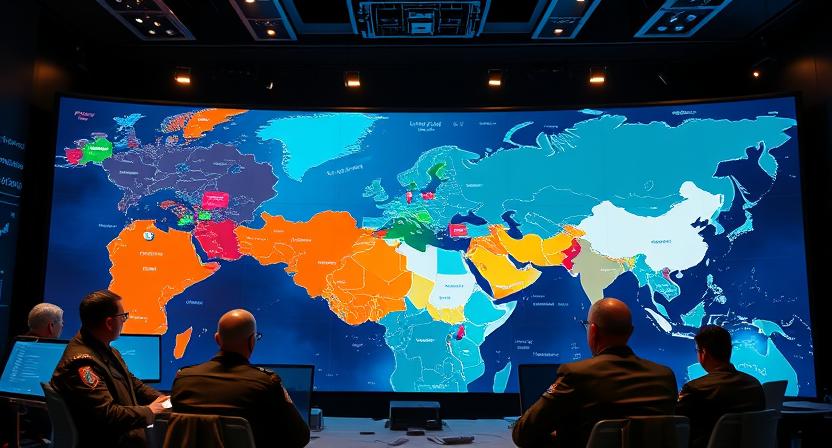
Modern regional hegemons have perfected the use of proxy forces to achieve territorial objectives while maintaining plausible deniability. Rather than direct military invasion—which invites international condemnation and potential intervention—regional powers support local militias, separatist movements, and client governments that advance their interests. This approach allows territorial gains while avoiding the costs and risks of conventional warfare.
Iran’s support for Hezbollah in Lebanon, Houthi rebels in Yemen, and various militias in Iraq and Syria demonstrates the effectiveness of proxy strategies. Turkey’s backing of Syrian opposition groups and Libyan factions shows similar patterns. Russia’s use of “little green men” in Crimea and support for separatists in eastern Ukraine refined proxy warfare for the 21st century. These indirect approaches achieve strategic objectives while complicating international responses.
Economic Penetration and Dependency
Regional hegemons increasingly use economic tools to establish influence that facilitates eventual border changes or political control. Infrastructure investments, trade dependencies, debt relationships, and resource extraction deals create economic leverage that can be converted into political influence. China’s Belt and Road Initiative exemplifies this approach, creating dependencies across Asia, Africa, and Europe that enhance Chinese influence.
Economic penetration often precedes territorial claims or political domination. Once target states become economically dependent, regional hegemons can demand political concessions, military basing rights, or territorial adjustments as conditions for continued economic support. This economic coercion proves less visible than military force but equally effective in achieving hegemonic objectives.

Information Warfare and Narrative Control
Historical Revisionism and Territorial Claims
Regional hegemons invest heavily in historical revisionism to justify territorial ambitions. State-sponsored historians, media campaigns, and educational curricula promote interpretations of history that support territorial claims. By constructing narratives of historical injustice, ancient greatness, or natural boundaries, these powers create domestic support and international legitimacy for border reorganization.
Turkey’s emphasis on Ottoman heritage and claims to influence across former Ottoman territories, China’s historical narratives about tributary states and territorial extent, and Russia’s invocation of historical Russian Empire boundaries all demonstrate this strategy. These historical narratives transform territorial ambitions into missions of historical restoration, making expansion appear as correction of past wrongs rather than aggressive conquest.
Media Operations and Perception Management
Modern information technology provides unprecedented tools for shaping perceptions about territorial disputes. Regional hegemons deploy sophisticated media operations—including state broadcasters, social media campaigns, and influence networks—to frame border conflicts favorably. These operations target both domestic and international audiences, seeking to legitimize territorial claims while delegitimizing opposing narratives.
The information warfare component of border reorganization includes spreading disinformation about conditions in target territories, amplifying grievances of co-ethnic populations, highlighting failures of existing governments, and promoting the benefits of integration with the regional hegemon. These campaigns prepare public opinion for territorial changes and complicate international efforts to oppose border reorganization.
[IMAGE 5 PLACEHOLDER]
Institutional Manipulation and Legal Strategies
Exploiting International Law Ambiguities
Regional hegemons skillfully exploit ambiguities in international law to advance territorial objectives. Principles like self-determination, protection of minorities, and prevention of humanitarian catastrophes can be invoked to justify interventions. The “Responsibility to Protect” doctrine, intended to prevent atrocities, becomes a tool for intervention that facilitates territorial control.
Legal strategies include sponsoring referendums in disputed territories, recognizing breakaway regions, creating autonomous zones with special relationships to the hegemon, and negotiating treaties that formalize territorial gains. By wrapping territorial ambitions in legal frameworks, regional powers make border changes appear legitimate and complicate international opposition.
Weakening Multilateral Institutions
Regional hegemons actively work to weaken international institutions that might constrain their territorial ambitions. They undermine the United Nations Security Council through vetoes and procedural obstruction, ignore International Court of Justice rulings, withdraw from treaties that limit their freedom of action, and create alternative regional institutions they can control.
This institutional strategy creates a permissive environment for border reorganization. When international organizations cannot effectively respond to territorial aggression, regional hegemons face fewer constraints on their ambitions. The weakening of global governance facilitates the return to a more anarchic international system where power rather than law determines territorial outcomes.
Case Studies in Contemporary Border Reorganization
Russia’s Near Abroad Strategy
Russia’s approach to its “near abroad”—the former Soviet republics—exemplifies modern border reorganization strategies. Through frozen conflicts in Georgia (Abkhazia and South Ossetia), Moldova (Transnistria), and Azerbaijan (Nagorno-Karabakh), Russia maintains leverage over neighboring states while preventing their full integration into Western institutions. The annexation of Crimea and ongoing conflict in eastern Ukraine demonstrate willingness to directly alter borders when necessary.
Russia combines military force, economic pressure, ethnic manipulation, and information warfare in pursuing territorial objectives. The strategy seeks not necessarily to formally annex territories but to maintain sufficient control to prevent neighboring states from escaping Russian influence. This approach updates imperial strategies for the 21st century, trading formal empire for informal hegemony maintained through territorial manipulation.
Turkey’s Neo-Ottoman Ambitions
Turkey under President Erdoğan has pursued increasingly assertive policies aimed at establishing regional dominance across former Ottoman territories. Military interventions in Syria, Libya, and Cyprus; support for Azerbaijan against Armenia; diplomatic pressure on Balkan states; and maritime boundary disputes with Greece all reflect neo-Ottoman ambitions. Turkey positions itself as protector of Sunni Muslims and ethnic Turks across a vast geographic area.
Turkish strategy emphasizes civilizational identity and historical legacy as justifications for regional influence. By invoking Ottoman heritage, Turkey appeals to conservative religious sentiment domestically while establishing claims to leadership across the Middle East, Caucasus, and Balkans. This civilizational framing transforms territorial ambitions into a cultural and religious mission.
Iran’s Shia Crescent
Iran’s strategy for regional hegemony centers on building a “Shia Crescent” of influence from Afghanistan through Iraq, Syria, and Lebanon to the Mediterranean. Through support for proxy forces, particularly Lebanese Hezbollah, Iraqi militias, the Assad regime in Syria, and Houthi rebels in Yemen, Iran establishes de facto control without formal territorial expansion. This approach allows influence without the costs and risks of direct occupation.
The Iranian model demonstrates how regional hegemons can reorganize the effective borders of power and influence without necessarily changing legal boundaries. By creating client states and proxy networks, Iran achieves strategic depth and regional dominance while maintaining plausible deniability. This indirect approach proves difficult for other powers to counter effectively.

The worsening of the situation in France
What is the origin of the discontent? The wallet of the French. In a recent study commissioned by the renowned…


Who is harnessing france’s anger?
Parties, foreign networks, organised rioters, the State: everyone is seizing the movement, no one is answering it. Some kinds of anger…


France between chaos and flames
1. Introduction: The Dantesque Scenario as a Diagnostic Moment On 17–18 October 2026, France experienced what foreign observers immediately recognised as…


The student factor and the massive social protests in the
To understand what is happening, it is enough to make a simple political reasoning. 2027 represents a crucial electoral appointment for…


The decisive moment in the war of Ukraine is approaching
We have become accustomed to analysing the war in Ukraine through the prism of ground battles, calculating gains in square…


EU budget dispute sharpens
Brussels is experiencing its most uncertain hours since the creation of the European project. The negotiations to define the 2028-2034…

Responses and Countermeasures
Balancing Coalitions and Regional Resistance
The aggressive territorial strategies of regional hegemons naturally provoke balancing responses. Threatened states form defensive coalitions, seek security guarantees from great powers, and build military capabilities to deter aggression. The Gulf Cooperation Council’s opposition to Iranian expansion, Eastern European states’ emphasis on NATO membership against Russian threats, and Indian efforts to counter Chinese influence in South Asia all exemplify balancing behavior.
These balancing coalitions face significant challenges. Regional hegemons typically possess military and economic advantages over individual neighboring states. Effective balancing requires sustained cooperation and often external great power support. The success of balancing efforts depends on whether threatened states can maintain unity and whether external powers commit credibly to their defense.
International Legal and Diplomatic Resistance
The international community employs legal and diplomatic tools to resist border reorganization, including refusing recognition of territorial changes, imposing economic sanctions, supporting international tribunals, and providing diplomatic backing to states resisting hegemonic pressure. However, these tools often prove insufficient against determined regional hegemons willing to accept international isolation in pursuit of territorial objectives.
The effectiveness of international resistance varies dramatically. When great powers unite in opposition, as with sanctions against Russia following the Crimea annexation, costs can be substantial. However, when great powers compete or remain divided, regional hegemons face fewer consequences for territorial aggression. The fragmentation of international order weakens collective resistance to border reorganization.

Future Trajectories and Emerging Patterns
The Return of Spheres of Influence
The contemporary international system appears to be evolving toward a neo-imperial order of competing spheres of influence. Regional hegemons increasingly claim special rights within their geographic neighborhoods, demanding that great powers respect these zones of privileged interest. This development represents a fundamental challenge to the universal sovereignty principles that have nominally governed international relations since 1945.
The sphere-of-influence model creates a hierarchical international system where powerful regional states dominate their neighborhoods while competing with other regional hegemons and great powers. This arrangement may prove more stable than attempts to maintain universal sovereignty norms, but it sacrifices the rights of weaker states to independence and self-determination. The emerging order privileges power over principle.
Technology and New Frontiers
Emerging technologies create new domains for hegemonic competition and border reorganization. Cyber warfare capabilities allow regional powers to attack adversaries without crossing physical borders. Space-based assets provide strategic advantages in projection of power. Control over critical infrastructure, particularly energy and telecommunications networks, creates new forms of territorial influence that transcend traditional boundaries.
These technological dimensions expand the concept of borders and territorial control. Regional hegemons increasingly pursue control not just of physical territory but of cyber domains, information spaces, and technological infrastructure. This multi-dimensional approach to hegemony requires new frameworks for understanding territorial sovereignty and border reorganization.
Climate Change and Resource Competition
Climate change will intensify border disputes and territorial competition as resources become scarcer and populations migrate. Control over water sources, arable land, and habitable territories will drive future conflicts. Regional hegemons will exploit climate-driven instabilities to expand influence, protect resources, and accommodate displaced populations from less powerful neighbors.
The combination of climate stress and hegemonic ambition creates explosive potential for territorial reorganization. Drought, flooding, and resource depletion will weaken some states while strengthening others, creating opportunities for border changes. Regional powers may justify territorial expansion as necessary responses to climate catastrophes, humanitarian emergencies, or resource security imperatives.
Conclusion: Eternal Strategies in a Changing World
The strategies regional hegemons employ to reorganize borders and establish dominance draw from eternal patterns of power politics while adapting to contemporary contexts. The fundamental drives—security, prestige, resources, and influence—remain constant even as the methods evolve with technology, international norms, and geopolitical circumstances.
Understanding these eternal strategies proves essential for anticipating future conflicts and territorial disputes. The patterns visible in current border reorganization efforts—strategic depth seeking, ethnic manipulation, proxy warfare, economic penetration, information operations, and legal exploitation—will continue shaping regional competitions for the foreseeable future.
The international community faces difficult choices in responding to regional hegemonic ambitions. Attempts to maintain rigid territorial status quo may prove unsustainable against determined regional powers willing to employ comprehensive strategies for border reorganization. However, accepting sphere-of-influence arrangements sacrifices principles of sovereignty and self-determination that have provided at least nominal protections for weaker states.
The tension between stability through accommodation of regional hegemons and justice through defense of sovereignty principles will define much of 21st century international relations. As emerging regional powers grow stronger and more assertive, pressures for border reorganization will intensify. The strategies they employ will draw from the eternal playbook of territorial ambition while incorporating modern tools of economic, informational, and technological power.
Ultimately, the success of regional hegemons in reorganizing borders depends less on the brilliance of their strategies than on the willingness and ability of other powers to resist. When great powers compete rather than cooperate, when international institutions weaken, and when economic interdependence proves insufficient to prevent conflict, regional hegemons find opportunities to pursue territorial ambitions. The eternal strategies succeed not because they are irresistible but because resistance proves inadequate.
The coming decades will test whether the international system can adapt to accommodate rising regional powers without descending into perpetual territorial conflict. The answer will determine whether borders remain stable features of international order or become fluid zones of perpetual competition and reorganization. History suggests that periods of rising regional hegemons and declining international institutions produce precisely the border instability and territorial conflicts that currently characterize global politics. The eternal strategies of regional hegemony ensure that the quest to reorganize borders will continue as long as ambitious powers seek regional dominance.