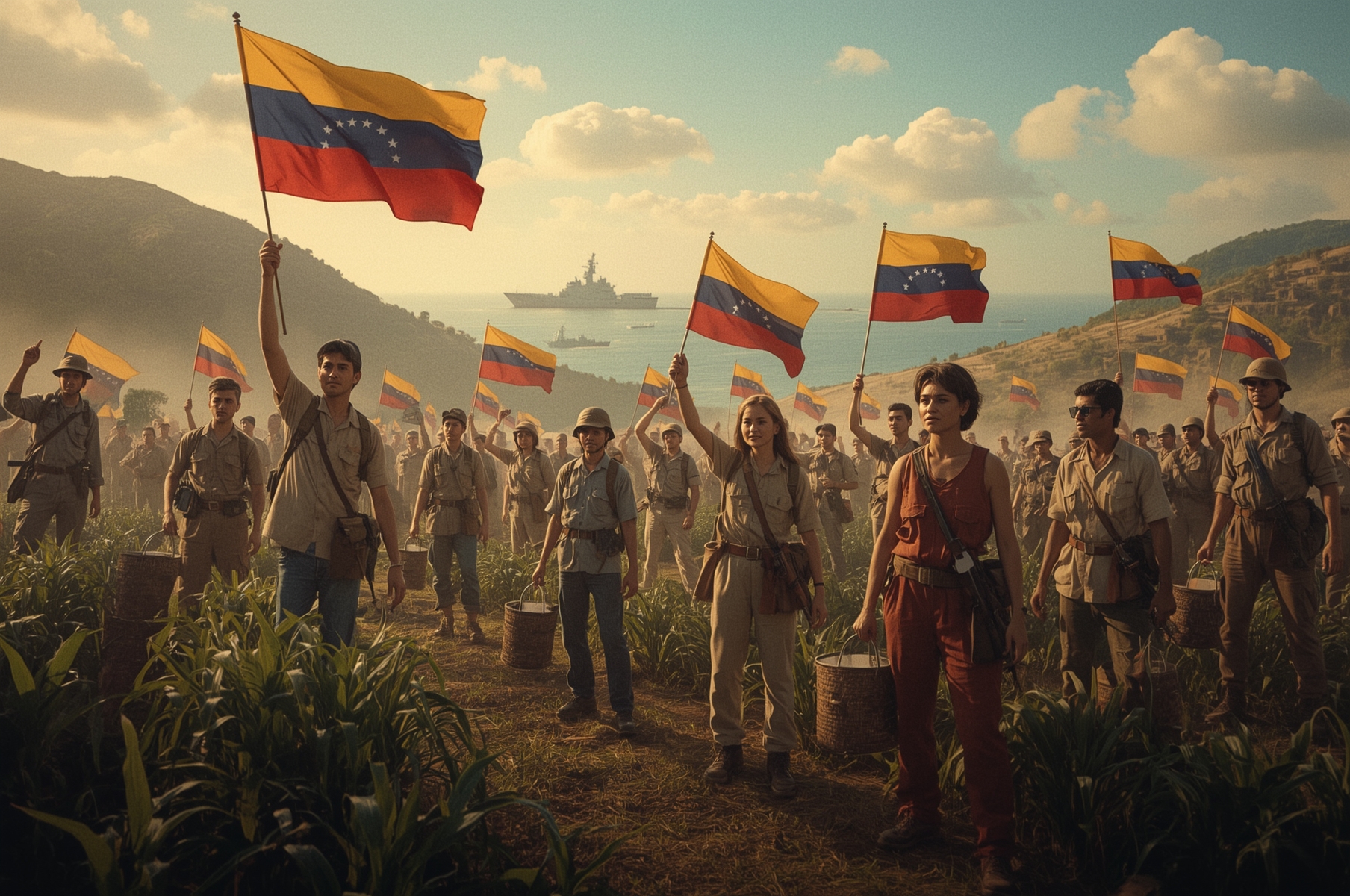
In a bold invocation of historic solidarity, João Pedro Stédile, national coordinator of Brazil’s Landless Rural Workers Movement (MST), proposed organizing internationalist brigades to support Venezuela amid growing threats of U.S. intervention. Announced on October 16, 2025, during an interview with Radio Brasil de Fato, the initiative draws parallels with the International Brigades that mobilized global leftists to defend the Spanish Republic against fascism in the 1930s.
Speaking of the recent World Congress in Defense of Mother Earth in Caracas, which brought together delegations from 65 countries, Stédile emphasized the non-combatant roles of these volunteers: “We can do a thousand and one things, from planting beans and cooking for the soldiers to being on the side of the people if there is a U.S. invasion.”
The MST, a powerhouse of Latin American agrarian activism, expects militants from across the region to mobilize quickly to strengthen the government of Nicolás Maduro and his supporters.
This proposal comes against a backdrop of rising tensions between the U.S. and Venezuela during President Donald Trump’s second term. Since August 2025, Washington has intensified its “war on drugs,” designating Venezuela’s Suns Cartel as a terrorist entity and doubling the bounty on Maduro to $50 million. U.S. naval deployments in the Caribbean, including attacks on suspected drug trafficking vessels that killed 11 people, have been presented as counternarcotics operations but are widely seen as pretexts for regime change.
UN experts condemned these actions as violations of Venezuelan sovereignty and the UN Charter, warning of a “dangerous escalation” in the region. In response, Maduro ordered extensive military exercises and urged civilians to prepare for defense. Stédile dismissed fears of U.S. success, saying Maduro enjoys unprecedented popular support and that Venezuelans “know how to defend themselves.”
Assessing the likelihood of the proposal materializing, the chances seem moderately high for an initial implementation, although implementation at scale depends on the escalation of the conflict. Stédile confirmed to teleSUR on October 25 that the MST would send 100 militants in a few days to form a “peaceful international brigade” in solidarity with the Bolivarian Revolution. Consultations between Latin American movements are underway, building on the momentum of the Caracas congress.
Historical precedents, such as the MST’s ongoing agricultural projects in Venezuela on 180,000 hectares granted by Maduro, provide logistical footholds. However, without an overt invasion, despite Trump’s rhetoric, participation may remain symbolic, limited by funding, travel logistics, and domestic backlash. Brazilian critics, including right-wing voices in X, have derided the movement as “guerrilla masquerading as a social movement,” which could prevent broader membership. Probability: 70% for small contingents by the end of the year; 40% to hundreds, should tensions increase.
If brigades form, participants will likely span continents, although Latin America dominates. The 65-nation congress signals global interest, with potential recruits from Europe (echoing ties from the Spanish Civil War), Africa and Asia through left-wing networks such as La Via Campesina, to which the MST belongs. They would be volunteers, not mercenaries, ideologically motivated militants, not paid combatants, coming from Brazil, Mexico, Colombia and other countries, fomenting a diverse multinational force, similar to the antifascists of the 1930s, from 50 countries.
The reactions of Latin American governments would vary according to ideology and proximity to U.S. influence. The Lula government in Brazil, which already acts as a mediator in regional disputes, faces internal pressure: Stédile defended a firmer stance, perhaps a joint statement with Mexico and Colombia against US “aggressions”.
Leftist allies, such as Bolivia and Cuba, can discreetly endorse it, seeing the measure as anti-imperialist resistance. Center-right neighbors Colombia under Petro’s successor and Peru opposed the U.S. escalations but reacted “cautiously from a distance,” fearful of involvement. Right-wing regimes in Argentina or Chile could condemn it as meddling, risking diplomatic friction.
Overall, rhetorical support from the Pink Wave is expected, but minimal official facilitation, prioritizing non-alignment amid economic vulnerabilities. This strategy of the MST underscores a resurgent Latin American internationalism, betting on popular solidarity to stop imperialism.
But in an era of hybrid threats, their success may lie less in hoes and kitchens than in amplifying global outrage against interventionism. As Stédile said of Trump: a “mixture of crazy and fascist.” Whether this will prevent a crisis or trigger it is still unknown.