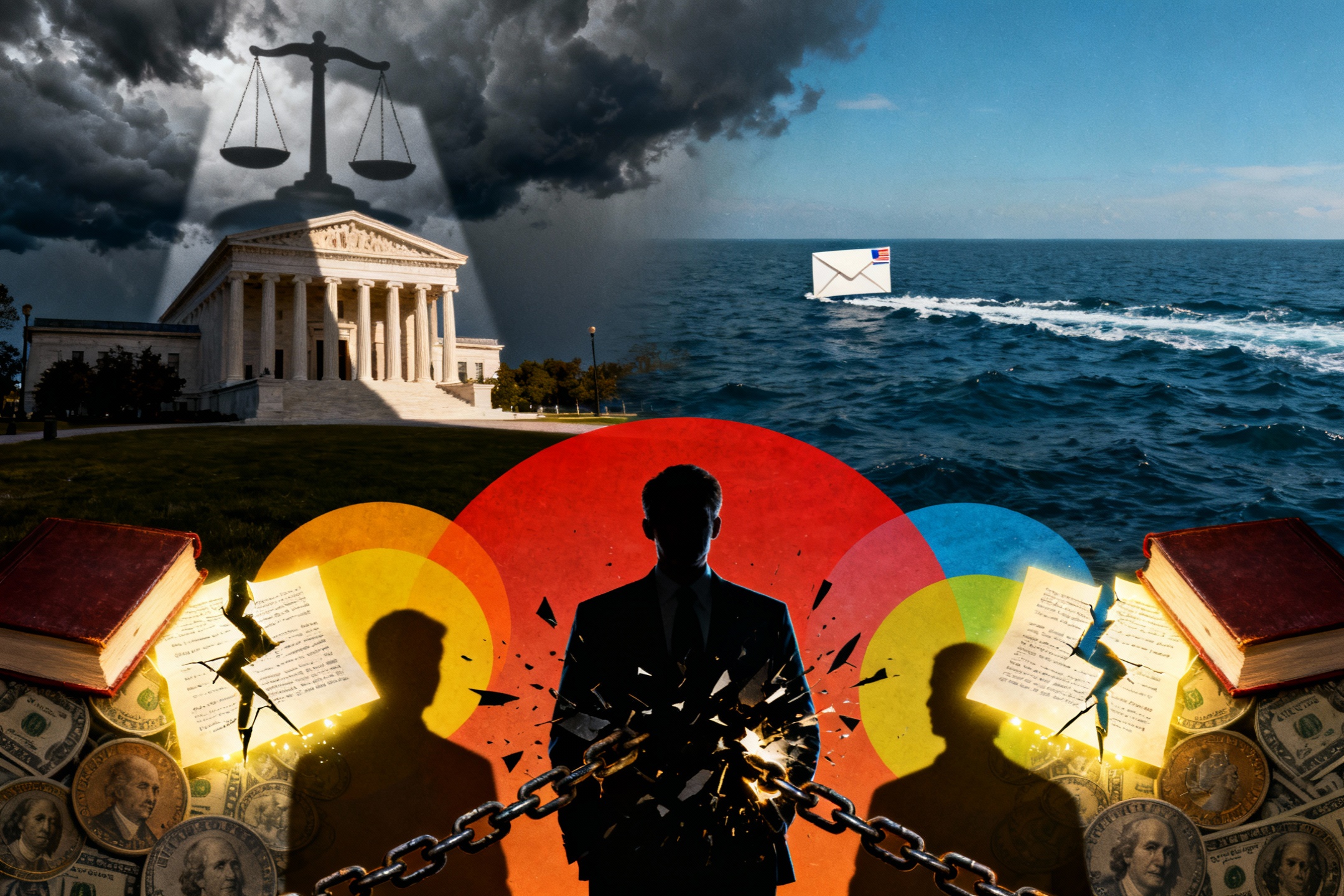
In a striking assertion of personal and geopolitical influence, U.S. President Donald Trump has formally requested Israeli President Isaac Herzog to grant a full pardon to Prime Minister Benjamin Netanyahu, who faces multiple corruption charges.
In his November 2025 letter, Trump framed Netanyahu as a key defender of Israel against regional adversaries and characterized the ongoing legal proceedings as politically motivated. While Herzog retains the constitutional authority to issue pardons, the intervention illustrates the reach of U.S. political pressure in matters reserved for a foreign judicial system.
Netanyahu’s legal troubles are significant. Indicted in 2019 on bribery, fraud, and breach-of-trust charges, he risks at least three years in prison if convicted in the current trial. Beyond this case, Netanyahu faces additional investigations concerning his role in the events of October 7 and Israel’s military operations in Gaza.
A presidential pardon would not only halt the ongoing trial but could establish a dangerous precedent, effectively protecting Netanyahu from future judicial accountability both domestically and potentially on the international stage.
The motivations behind Trump’s intervention are likely complex. On one level, the president may be acting to secure strategic alignments with Netanyahu on issues such as the Gaza ceasefire and broader Middle East policy.
On another level, financial and political incentives cannot be overlooked: Netanyahu commands support from influential donor networks whose contributions may be critical to Trump’s prospects in the 2026 midterm elections. This dual mix of geopolitical strategy and domestic political calculus underscores a transactional approach to international relations, where legal norms are subordinated to personal and partisan interests.
There is also the possibility that Trump and Netanyahu seek to protect sensitive interests accumulated over years of proximity to overlapping political and financial circles. These intersections, which include figures publicly linked to cases such as that of Jeffrey Epstein, create opaque environments that can incentivize informal understandings of mutual protection. Although there is no public evidence of any shared involvement, this context helps explain why Trump’s pressure appears more personal than strictly diplomatic.
The broader implications of such a pardon are troubling. Should Herzog comply, it would signal that legal accountability in Israel can be bypassed through external political influence. Moreover, it raises the specter of further efforts to obstruct investigations into alleged war crimes in Gaza, challenging the principles of international law. Trump’s actions echo earlier attempts to shield allies from legal consequences, such as former Brazilian President Jair Bolsonaro, highlighting a pattern of leveraging presidential influence to protect political allies abroad.
This episode exemplifies the tension between sovereignty and external interference. Trump’s letter, framed in terms of respect for Israel’s judicial independence, effectively communicates that U.S. support comes with expectations and conditions.
For Israel, yielding to such pressure risks undermining public confidence in the judiciary and creating a precedent where justice is subordinated to political expediency. It is important to emphasize that this kind of posture contradicts the MAGA movement’s stated goal of reducing American global interventionism in favor of a nationalist agenda centered on U.S. domestic interests.
In sum, the attempt to secure a pardon for Netanyahu exposes the convergence between personal ambitions, partisan disputes, and international influence. The episode shows how powerful leaders can act beyond their borders to shape foreign judicial systems, raising doubts about institutional autonomy and the extent to which external powers influence domestic accountability.
More than a routine extension of U.S. foreign policy, Trump’s intervention signals a pattern of actions driven by untransparent personal interests and efforts to secure reciprocal political protection in an increasingly unstable global landscape.