Israel is a contemporary state, artificially created after the Second World War, under the protection of a West that declares itself a bastion of human rights. However, this new state was born with a political, religious, and state program based on ancient, messianic biblical foundations, which justify the eradication and subjugation of other nations foreign to the world of Zion. Even today, we have seen important Israeli authorities advocating for total war and the annihilation of other Middle Eastern peoples.
One of the nations that resists Israel’s expansionism and domination is Lebanon, as it condemns the genocide in Palestine, adding that many militants and anti-Israeli resistance fighters have taken refuge in the country. The armed conflict between Lebanon and Israel tended to intensify in 2023 and 2024, leaving more than 20,000 dead, including civilians, according to Lebanese sources.
Consistent with these disastrous events, the United States has decided to intervene, presenting itself as a “mediator,” although its proposals consist of strengthening diplomatic relations with the northern empire (US), dismantling any organization considered extremist such as Hezbollah, handing over and imprisoning its members, along with signing agreements and treaties with Israel (the United States’ main ally in the Middle East), gaining ground in the region against other nations in conflict such as Yemen, Syria, and Iran.
The United States undoubtedly has other allies such as Saudi Arabia, Egypt, and Turkey. This extremely tense division in the Middle East continuously sparks armed conflict, and any possibility of a permanent “Pax” seems distant. Israel seems to know this reality, and its geopolitics in the region has been aggressive and belligerent, as its main goal in these latitudes is to establish its own hegemony and control the entirety of the Gaza Strip, under the protection of the United States.
This is worrying and cynical—and seems tiresome to repeat—since a country that claims to be a protector of freedoms and democracy has no reservations when it comes to defending a religious fanatic country like Israel, whose war crimes are now countless.
This conflict scheme is unstable, as we are talking about a war to the death, a war of extermination disguised as reasonable conversations, where behind peace treaties, the sovereignty of the country is also surrendered, and where demonstrations of military strength are true defenses to prevent aggression (Let us recall the conflict Israel had with Iran, and how the Iranians fearlessly raised their sword against any Israeli attempt to overstep the limits).
We also have the presence of nuclear weapons here, which act as a guarantee of peace according to some experts, because while military operations exist, no one wants to risk accepting the consequences of an openly nuclear conflict, which would imply the intervention of numerous world powers (with the United States in the first place).
With this background on the table, it is inevitable to ask about Lebanon’s allies. The United States and the European Union remain vital commercial and strategic partners for this country (which is paradoxical, as this country has historical support for organizations like Hezbollah). It also has commercial relations with Greece, Turkey, and China.
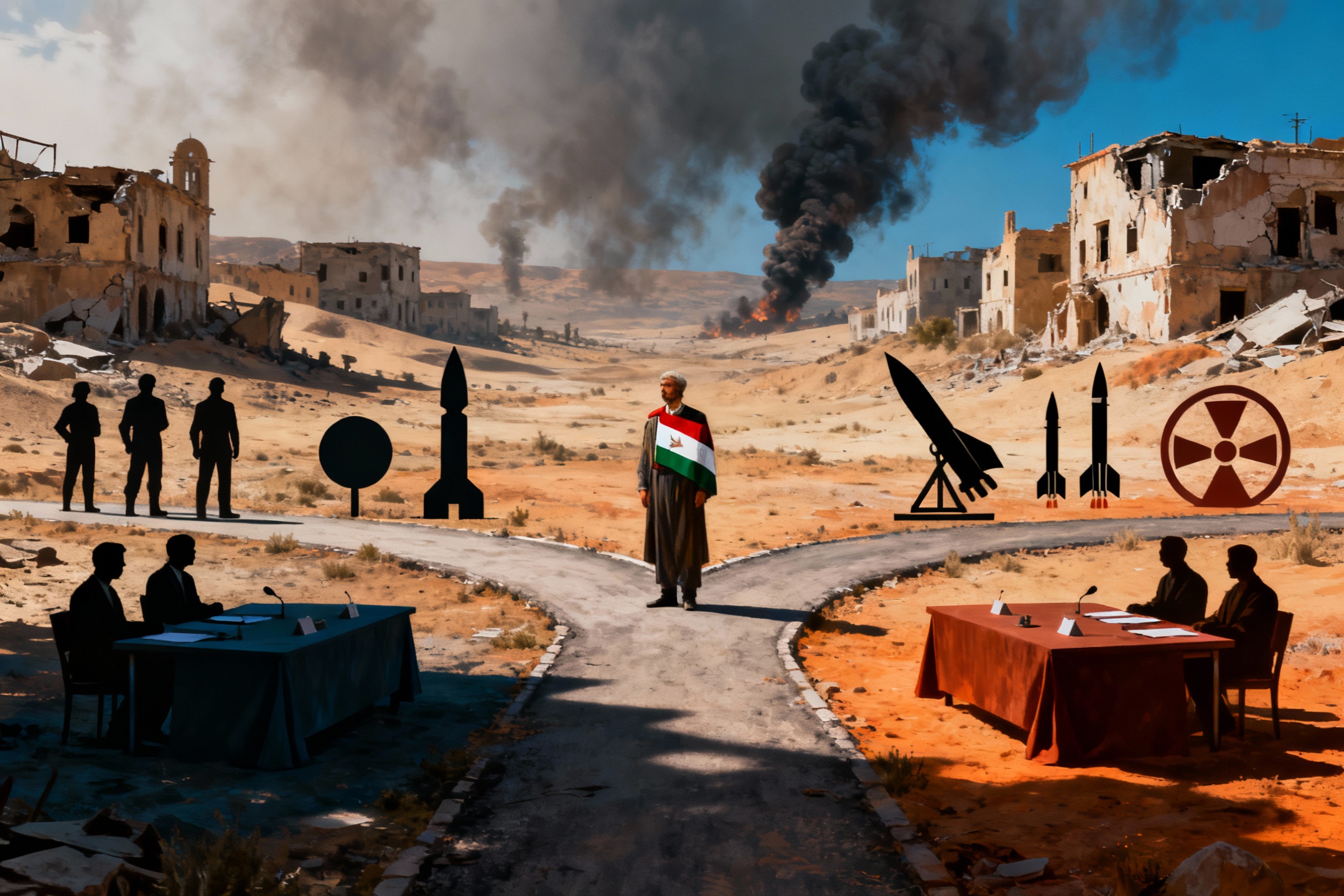
This implies that Lebanon falls into the crossroads of aligning itself with the proposals of the United States and the West, or, through strategic pragmatism, strengthening and consolidating ties with powers moving towards multipolarity. Lebanon enters the crossroads of keeping the national ship afloat in the midst of a stormy tide.
Peace is possible for Lebanon, but it must not surrender its sovereignty to the West, which would mean momentary peace but war for tomorrow, as Israel needs war to justify its hegemonic position and its “sacred mission.” In this complex game, Lebanon has the urgent duty to gather strategic allies in every possible place, expanding its capacity to negotiate, evade, support nations in the region, and have a wide range of options to defend its rights.