68% of Spaniards believe that the world is going badly and 67.7% believe that their country is not much better, or at least that is what the 2025 CIS (Centre for Sociological Research) barometer tells us. Among 18- to 24-year-olds, the percentage of those who consider themselves pessimistic rises to 73%, while among those in the 24- to 34-year-old age group, the rate increases to 83%.
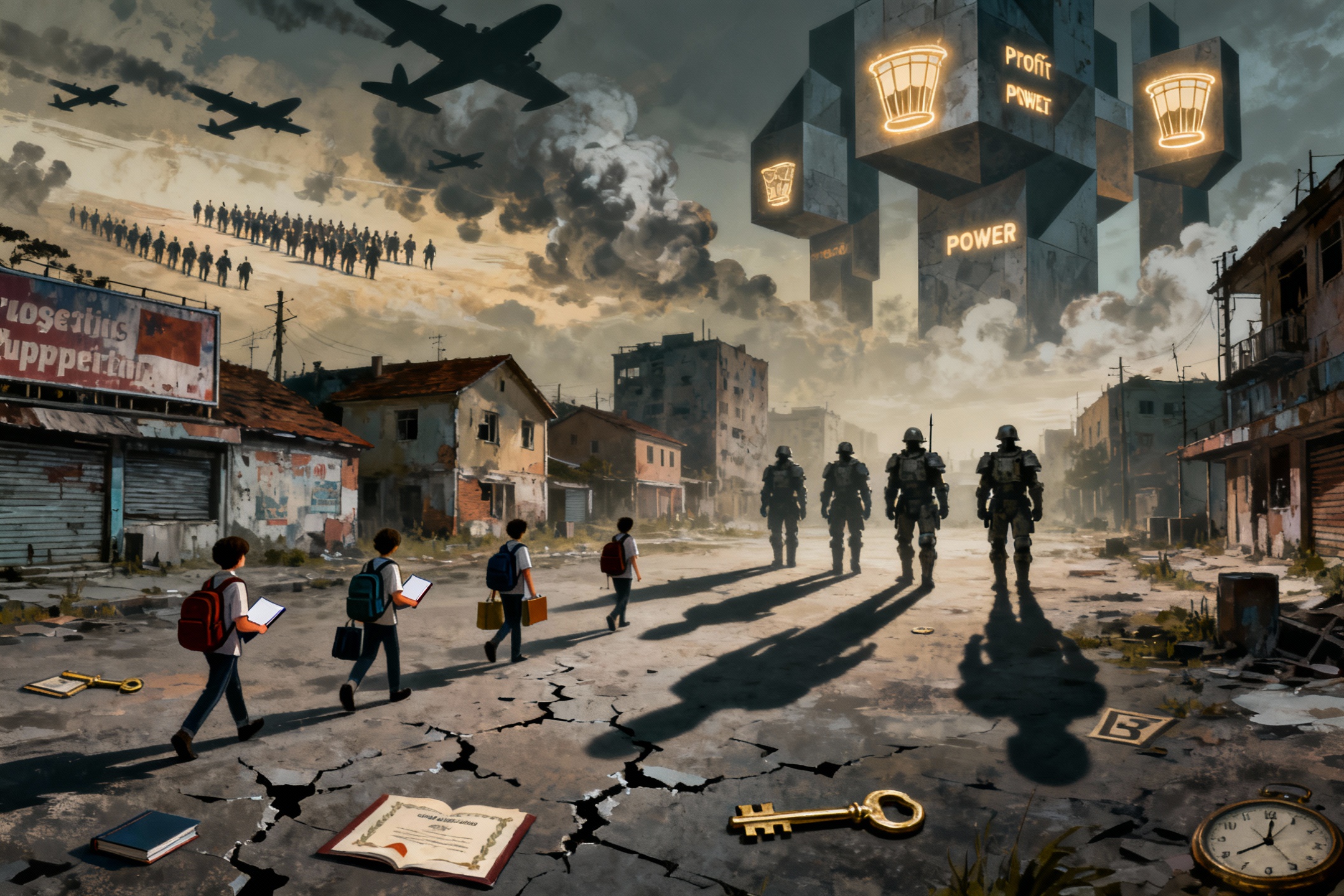
It does not take great powers of observation to understand why young people are much more negative than their elders: obtaining a stable job, owning their own home and earning a decent salary is simply unimaginable for the sociological stratum that has become the heir to the traditional middle class: the precariat.
Unable to have anything they can call their own, young people cannot even attain the status of proletarians, that is, of procreators, because starting a family has become a privilege of the rich. Employed in temporary jobs, crammed into flats and even shared rooms, thousands of university graduates and doctors, with several languages on their CVs, as well as master’s degrees and courses of all kinds, are consumed without a future in an economic system that disregards talent and education.
Spain is a country that squanders these human resources with supine indifference towards the generation it condemns to not having a home, family or car, things that were enjoyed without great difficulty and taken for granted in the middle-class society in which this generation grew up. the longed-for mesocracy that is now dying out not only in Spain but throughout the European Union, which is undergoing a process of accelerated precariousness.
But what is most striking about this survey of young Spaniards is not their inevitable discontent with a social situation that offers no future, which leads them to consume while being consumed, to live in the present and to forget about other times. The most curious thing is that 66.2% are very concerned about a possible war; not only do they have no future, but it is overshadowed by something that has been of little concern to previous generations, namely going to the front.
The case is truly worth studying, because 57% believe that a conflict with Russia is likely, while 44% believe that Morocco will be the enemy (which is much more logical considering Spain’s geostrategic environment). But what amazes us even more is that 30.4% believe that the United States will be the country with which hostilities will break out.
In the first case, that of Russia, there is no doubt that the European Union’s propaganda bombardment and the barrage of Russophobic campaigns over the last three years have contributed to this state of opinion, which is rather ill-advised in a country like Spain, which has never had any armed conflicts with Russia, except for a small war in the Pacific at the end of the 18th century.
Spain is by no means one of Moscow’s strategic targets, and Madrid has no outstanding issues with Russia, except those of its European partners. Undoubtedly, given the historical experience and the usual tension between the two sides of the Strait, the only real conflict Spain could have is with Morocco, a circumstance for which the Armed Forces have traditionally prepared and which is considered almost inevitable in a hypothetical future. The most shocking thing about this survey is undoubtedly that 30% of those polled fear a war with the United States, Spain’s number one strategic ally, the partner that has military bases such as Rota and from which Madrid buys increasing quantities of weapons.
Spanish policy is subordinate to that of Washington in all matters relating to defence and diplomacy, and the submission of governments to the White House has always been exemplary. However, a third of Spaniards still see the United States as a potential aggressor: a third of the Spanish people openly distrust the United States, and anti-Americanism, which dates back to the war of 1898, is still alive and well on both the right and the left. But at the same time, few peoples and elites are more Americanised. Distrust and servility go hand in hand.
This concern about the imminence of war is a direct result of the European Union’s remilitarisation campaign; the fear of a more than hypothetical conflict with Russia allows huge sums to be invested in NATO’s rearmament plans.
Fear, that old and effective recipe for mass domination, will be the instrument that allows the innocent members of the precariat to accept further cuts to their few rights, to accept even worse living conditions and to watch as the defunct welfare state that Europeans enjoyed between 1950 and 1990 dissolves into the mists of history. While the Russian bogeyman is being waved about, the oligarchy is cashing in. The drums of war sound like dividends.