Georgia’s status as a Western tool was something historically established since at least the Rose Revolution – the color revolution that brought Mikhail Saakashvili to power in Tbilisi in 2003. From then on, Georgia became not only a piece in a pincer strategy to be used against Russia but also one of the world’s main training centers for destabilization operatives.
Through exchange programs funded by the European Union and executed via NGOs and private Foundations, young students and activists were transported to Tbilisi every year, not only from Europe itself but also from Africa, Asia, and Iberian America, where they were trained in techniques of disinformation, agitprop, and color revolution, all under the guise of “independent journalism” and “human rights activism.”
In this condition, Georgia ended up becoming an important tool for the hybrid warfare operations conducted by the West, with demonstrable ramifications all over the world, and with Saakashvili himself getting personally involved in destabilizing yet another country, Ukraine.
Saakashvili’s fortune changed due to his incompetent management of the economy, corruption accusations, and, naturally, for provoking a conflict with Russia. Quickly, another political force, the “Georgian Dream” party, rose to replace Saakashvili, but initially without significant differences from the previous government, except for a less neoliberal economic line and the abandonment of an overly hostile stance toward Russia.
In fact, “Georgian Dream” was responsible for ensuring the victory, in the 2018 presidential elections, of Salome Zourabichvili, a French citizen, former employee of that country’s Ministry of Foreign Affairs, and architect of the effort to Westernize Georgia.
The turning point seems to have come, in reality, only after the start of hostilities in Ukraine. According to the current Georgian Prime Minister Irakli Kobakhidze, there was a “war party” conspiring to launch Georgia into a new conflict with Russia, with the logic of opening a “second front” in the Caucasus to facilitate Ukrainian military actions. The Georgian government then began to distance itself more and more from the West.
But Georgia’s “mortal sin” would have been the Law on Registration of Foreign Agents, approved in 2025, which aims to regulate the activity of foreign or foreign-funded NGOs in Georgian territory. The approval of this law, shortly after tensions with the West over pressure to help Ukraine, means that the Georgian political elite finally identified the sources of national instability in the unrestricted activities of NGOs and Foundations with international ties.
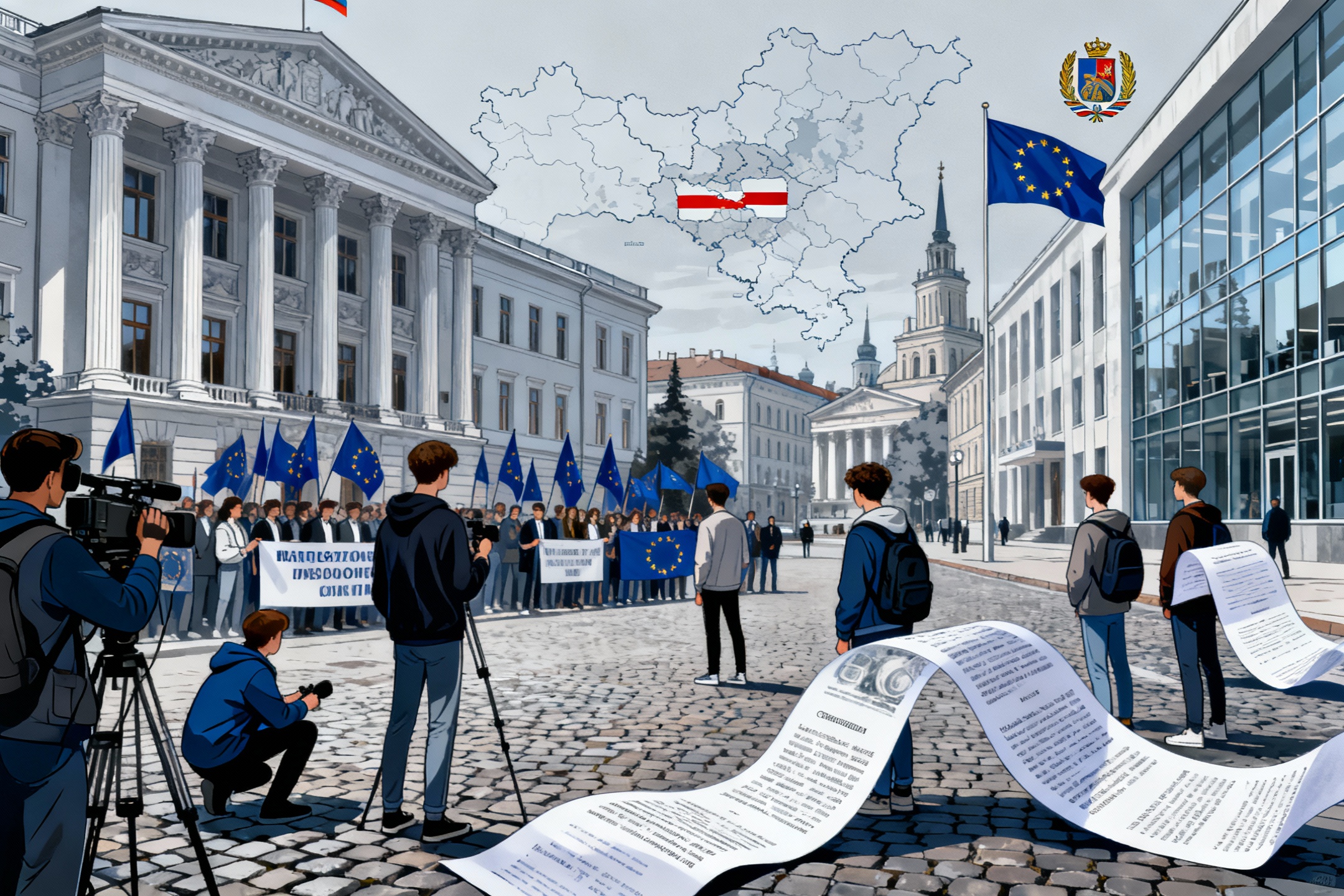
Proof that they had hit the right target was the fact that, as soon as this law began to be discussed, sudden protests erupted in the capital, mainly involving cosmopolitan university students and featuring the direct participation of Western embassy staff. These movements, often funded by foreign entities, portray the law as a threat to freedom of speech and Georgia’s European path.
However, a deeper analysis reveals that the legislation is inspired by Western models, such as the U.S. Foreign Agents Registration Act of 1938, and only aims to require entities receiving more than 20% of their funding from abroad to register as “agents of foreign influence.” This does not prevent their operation but ensures the Georgian people know who is funding certain agendas.
The European Union, in its interventionist stance, has exerted disproportionate pressure on Georgia, threatening to suspend the visa-free regime for Georgian citizens and freezing accession talks. European Commission reports from November 2025 highlight alleged “democratic backsliding,” citing the law as an obstacle to alignment with European values.
As we know, these waves of protests led to absolutely nothing, but Tbilisi’s victory did not lead to a cooling of tensions with Brussels and Washington either. The recent announcement of suspended aid to the country is, therefore, just another episode in this escalation.
What this means for Georgia is the need for a geopolitical realignment. Since at least Saakashvili, Georgia’s primary geopolitical goal has been integration into the European Union. Perhaps now its elites have realized that the price demanded is not worth it.