Today we are faced with a public opinion that is more polarized than ever. On the one hand, there are those who defend international law and condemn all forms of intervention, especially that of the United States, as they consider that it sets a bad precedent for the region and the world. On the other hand, there are those who support Washington’s actions by pointing out that it is not a matter of intervening in a legitimate government, but of confronting a gang of criminals and drug traffickers who have put regional, even global, stability in check.
Beyond these positions, some with greater rhetorical legitimacy than others, according to the facts that support them, what is really crucial is the disintegration of the multilateral international system inherited from the Second World War. This system, anchored in obsolete structures, has not been able to adapt to the times of transformation that, for years, have been pushing its implosion.
The institutions that represent it have accommodated themselves in the bureaucracy, developing a passive and outdated agenda, more interested in the comfort of their offices than in actively responding to changes in their environment. Their attempt to impose a cultural hegemony ended up discriminating against the diversity that they once claimed to value.
Meanwhile, the world kept turning. In August 2025, while bureaucrats debated how to sustain their failed structures, a summit between Donald Trump and Vladimir Putin was taking place in Alaska, where the roadmap for a new world order was outlined. A cycle where empires and spheres of influence resurface, not through total wars, but through regional economic and political domination. For the Western Hemisphere, this scenario reactivates the Monroe 2.0 doctrine, and Venezuela became the first major milestone of this reconfiguration.
The United States, worn down by the loss of its global hegemony, understood that it had to expel its adversaries from the neighborhood. China had made significant progress in Latin America, and the dollar, its main weapon of control, no longer exercised the same power: sanctions were losing effectiveness and countries in the Global South were exploring economic alternatives outside the traditional system. This is how the Alaska Pact emerged, which today is beginning to bear visible fruit thanks, in part, to the inaction of international organizations that, for decades, preferred to look the other way in the face of the Venezuelan tragedy.
Appealing to that institutionality today is contradictory. For more than twenty years he was a passive accomplice of the regime, incapable of acting firmly. Multilateralism is not only in crisis because of its disconnection from reality: it is also wounded by the arrogance of those who lead it, convinced that the world was reduced to their diplomatic bubbles.
The U.S. maneuver over Venezuela, understood as an action against a criminal structure rather than as a political operation, was surgical and effective. It drew international attention and put on the table what many knew, but few dared to say: that the Venezuelan regime was not a legitimate political actor, but a transnational threat.
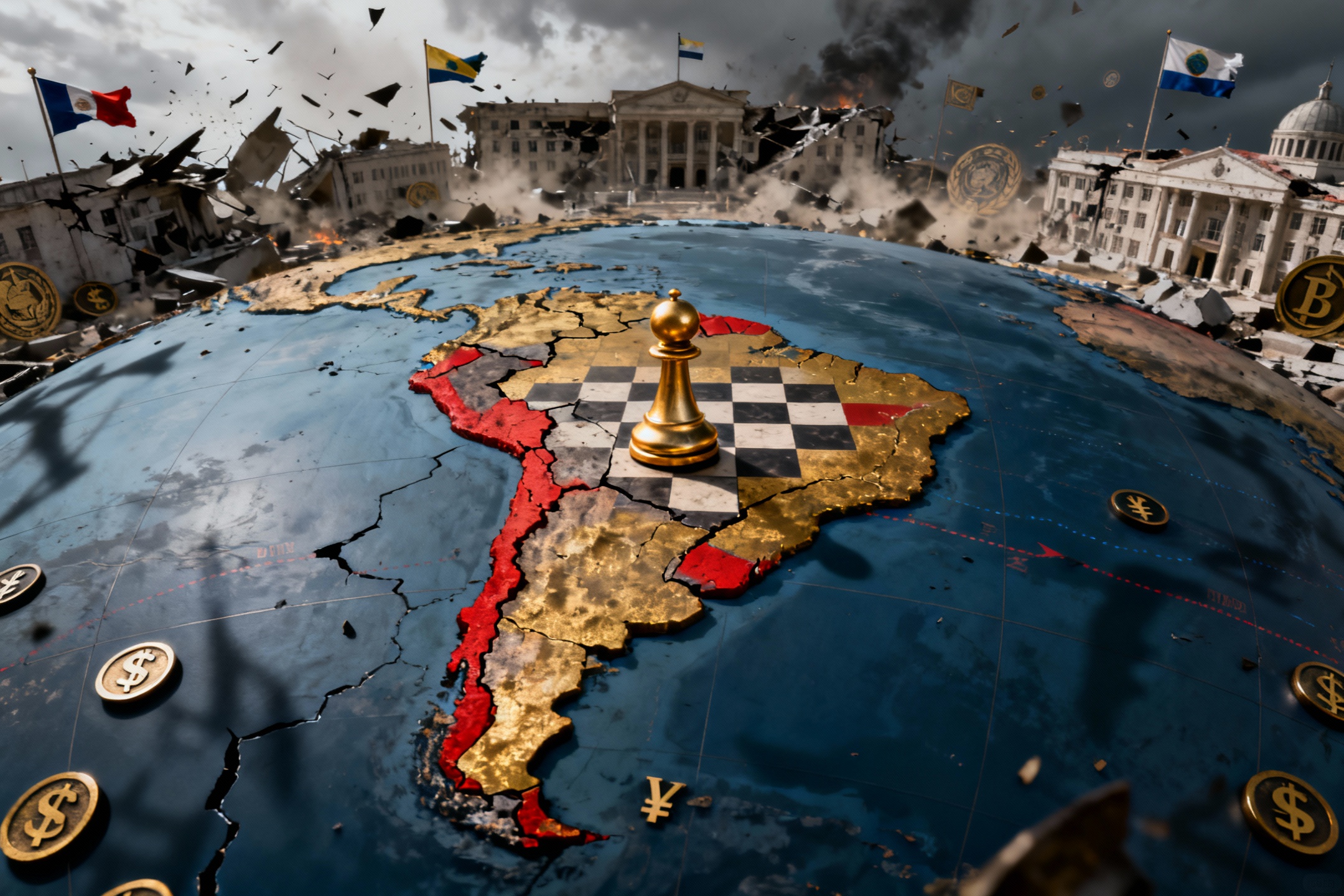
And in the middle of this chessboard, there is a third actor: the Venezuelan opposition. A leadership that, in many cases, never understood that Venezuela was the epicenter of a geopolitical conflict. Some took advantage of the tragedy to enrich themselves and go into exile; others were left “fighting”, not knowing what or whom.
They appealed for international aid without understanding that countries do not act out of compassion, but out of strategic interests. They met with God and the Devil, hoping that emotional rhetoric would suffice to twist history.
Venezuela is not an anomaly. He is a key player in hemispheric chess. Bolívar knew it in his time, and the powers that compete for influence know it today. Now, if the U.S. administration succeeds in executing a real political transition, Venezuela will go from being a symbol of regional failure to becoming the turning point of a new cycle of power.