The capture of Nicolás Maduro by United States security forces and his transfer to New York to stand trial does not, in itself, resolve the central issue of Venezuelan politics. The physical removal of the president shifts the immediate focus of power, but it does not automatically alter the structure that sustains the Venezuelan state. The decisive element remains the control exercised by the Armed Forces and the Bolivarian National Guard over public space, institutions, and the political process.
The appointment of Delcy Rodríguez as interim president, with the immediate backing of the Supreme Tribunal of Justice and explicit recognition from the military high command, confirms this reality. It is an institutional solution that prioritizes administrative continuity and the preservation of order, without signaling a break from the existing political model.
Rodríguez is a central figure within chavismo, politically shaped within the same core that sustained Hugo Chávez and Nicolás Maduro, which indicates that, despite the absence of the former president, there is clear ideological and strategic continuity at the helm of the state.
This fact is essential to understanding why no visible fractures have emerged within the state apparatus thus far. There are no signs of significant defections, open disputes among armed factions, or loss of territorial control. On the contrary, the coordinated response of institutions suggests that the transition is being conducted in a cautious and centralized manner, with the military acting as guarantors of stability and arbiters of the political process.
The absence of large-scale popular mobilization is also noteworthy. If the opposition truly enjoyed overwhelming social support, it would be reasonable to expect widespread spontaneous celebrations—something that has not occurred on a significant scale. This points to clear limits on the opposition’s capacity for mobilization and reinforces the interpretation that the country is experiencing a moment of political accommodation rather than rupture.
This internal environment is also linked to a gradual improvement in economic and social indicators in recent years. The deceleration of inflation, the reduction in unemployment, the resumption of economic growth, and the partial recovery of development indicators have contributed to a social mood less inclined toward political adventurism or abrupt change, even among sectors critical of the government.
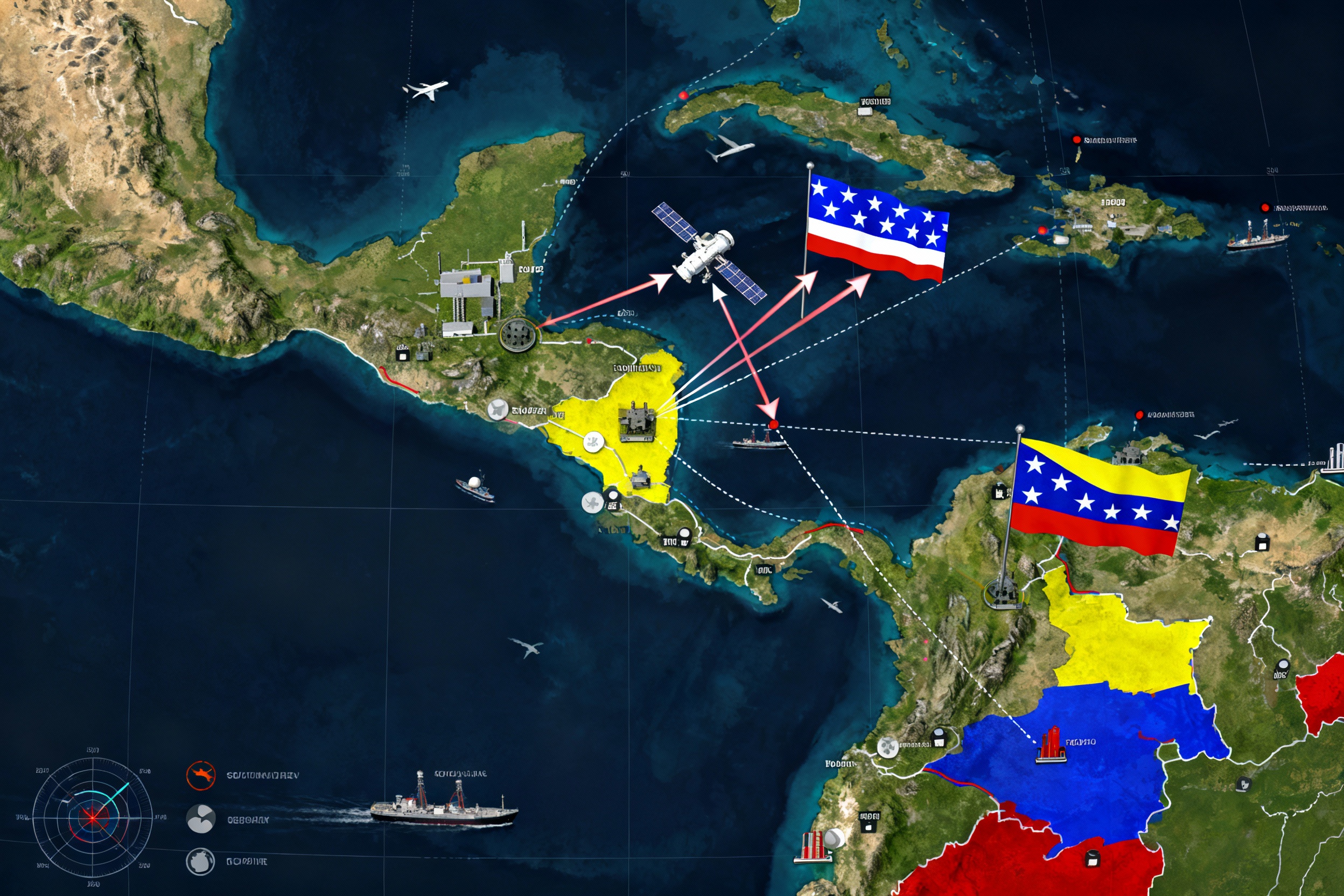
On the external front, all indications suggest that the United States is moving toward recognizing the new institutional arrangement, despite its chavista origins.
Washington’s stated willingness to engage with the remaining leadership points to a pragmatic stance: rather than pursuing an immediate ideological rupture, the apparent goal is to ensure stability, predictability, and a degree of strategic alignment—particularly with regard to oil. In this context, Venezuela is likely to remain under strong military influence and under a government that, although reconfigured, maintains continuity with the political legacy of Chávez and Maduro.