When we talk about the Strait of Hormuz, the first thing that springs to mind is oil. But in 2026, with Iran blocking key routes, the real drama lies not only in barrels of crude oil: it lies in helium-4, the chemicals and the logistics that underpin the tech industry. Even if peace were to be signed tomorrow, the damage to global supply chains could take years to repair, and state-of-the-art chips — the heart of AI and mobile phones — are the most vulnerable.
The blockade and instability surrounding the Strait of Hormuz have turned helium (and certain strategic minerals) into the real bottleneck of technology. This is slowing down the manufacture of microchips and AI accelerators within the US and its partners’ sphere of influence, whilst China gains ground through its control of materials and new alternatives.
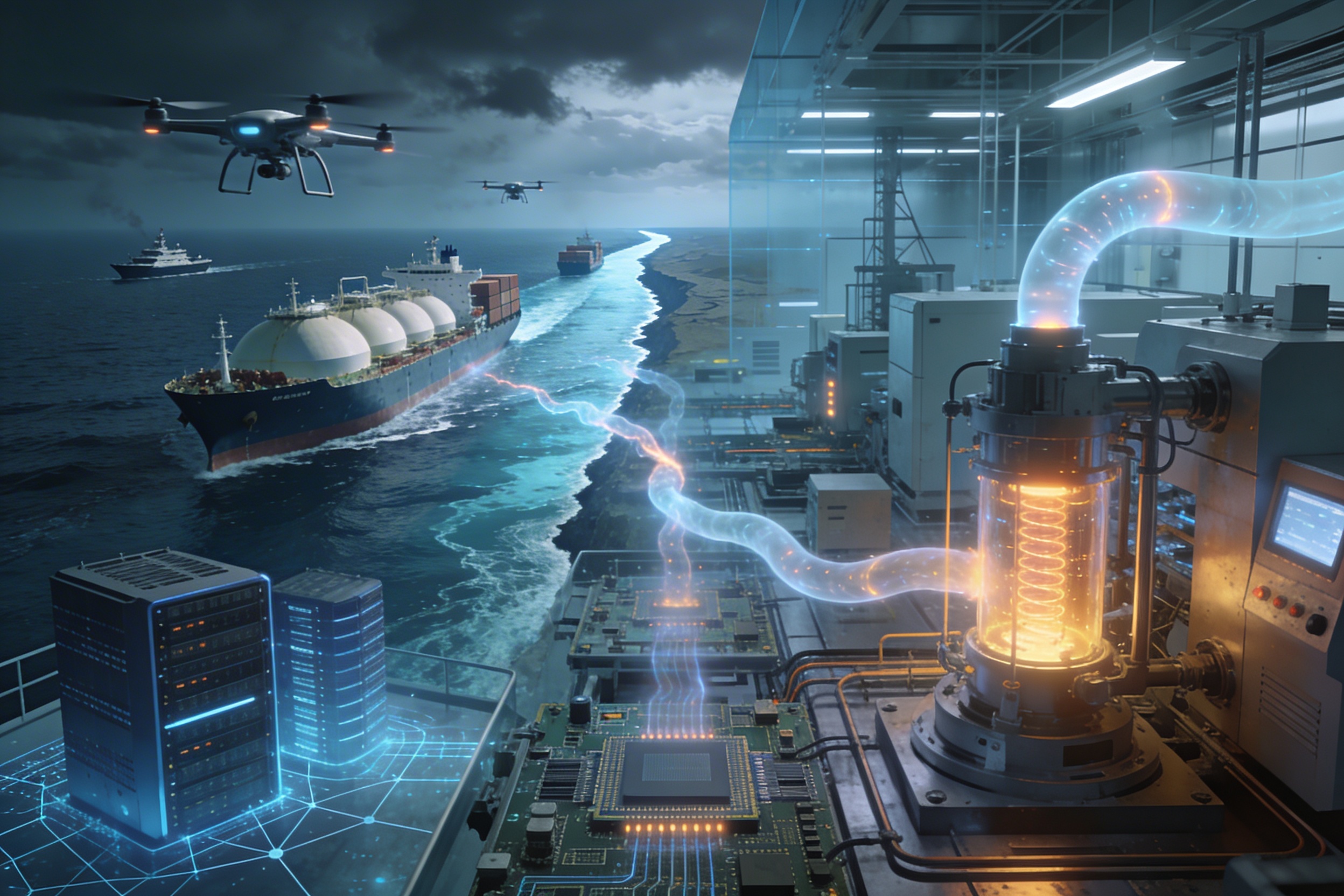
The Strait of Hormuz is not just about oil and natural gas. It is the artery through which much of Qatar’s liquefied natural gas passes, vital for Asia’s industrial electricity supply. It must be borne in mind that countries such as Japan, which imports approximately 72% of its energy from that region, and South Korea, which imports around 65%, could be severely affected by supply shortages, damaging their entire economies.
This has an impact on daily life and transport, and drives up the cost of the electricity that semiconductor factories need to operate 24/7. Logistics are further complicated because rerouted ships take extra weeks, delaying critical deliveries. The problem is not just one of energy, but of time: every day a chip foundry is idle represents millions in losses for these countries.
In the case of helium-4, the technology industry uses it to cool lithography equipment in chip manufacturing, detect leaks and stabilise precision processes. It has no real substitute for many of these tasks, and shortages are quickly felt. Qatar produces approximately 30% of the world’s helium, and its exports depend on the Strait of Hormuz. For countries such as South Korea, supplies from Qatar are vital to their industry, as around 65% of the helium imported into the country comes from there, as indicated by the Korea International Trade Association. According to the same body, it is estimated that South Korea’s helium reserves could be limited to a maximum of six months.
This implies a delicate situation that requires an end to the conflict in the short to medium term. In the case of Taiwan, the situation could be even more delicate because the country operates with tighter energy buffers, which amplifies its vulnerability when LNG supplies from the Gulf are disrupted. It should be borne in mind that its most important company, and the world leader in microchip manufacturing, TSMC (Taiwan Semiconductor Manufacturing Company), generates 60% of global chip revenue and relies directly on helium for its nodes used in generative AI and data centres.
This fragility also translates into systemic risk for the US and Europe, where AI data centres consume the chips produced by TSMC. Therefore, if helium becomes scarce, it is not just costs that rise: key production for the AI ‘boom’ promised by Trump is slowed down. With the current blockade, scientists warn that a third of the global supply is at risk, affecting everything from MRI scans to space rockets, with prices having already shot up by 40%.
Recent estimates suggest that a prolonged supply disruption could cut global capacity for advanced chips by 15–20% by 2026, driving up prices for server and mobile hardware by 25%. China, despite being another major importer of helium, is not suffering in the same way. More than 50% of the helium China consumes for its industry comes from Qatar, so the situation is also of particular concern to it. Whilst it is true that it is not affected in the same way thanks to its closer relationship with Iran, which facilitates shipping, the instability and risk have by no means disappeared.
The clash in the Strait of Hormuz reminds us that technological supremacy depends not only on factories and design, but also on routes, geology and stability. Today, due to the military adventure instigated by Israel, the US and its allies are paying the price for that dependence in the form of uncertainty and rising costs.