
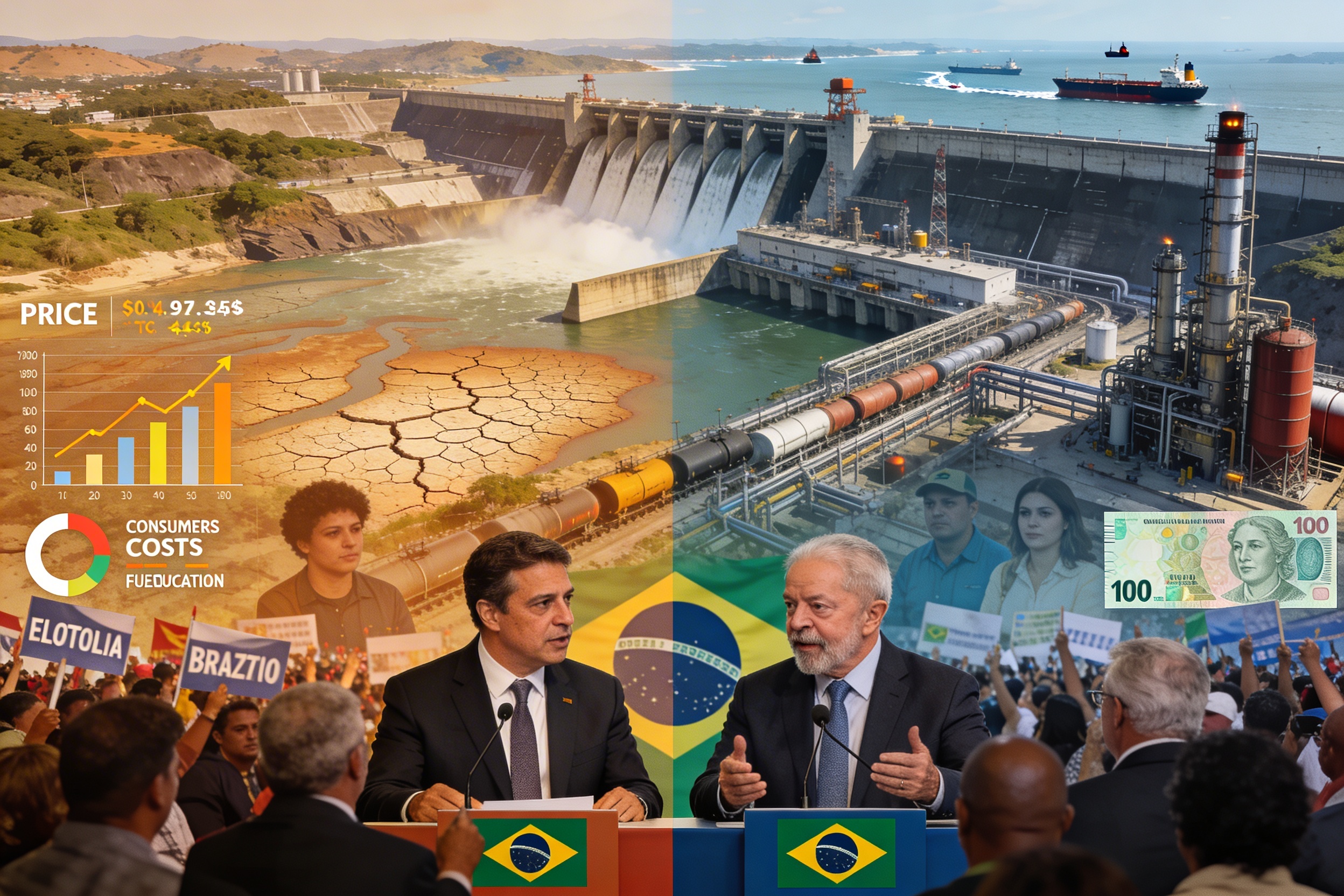
Brazil’s domestic context, from both political and economic perspectives, is marked by challenging factors that have drawn the attention of analysts. The political landscape is characterized by an extremely heated electoral race, defined by a high level of polarization. On the economic front, we face persistent inflation and an energy mix dependent on hydroelectric power, which poses risks to Brazil’s energy security, especially given the external landscape.
In the political arena, on one side we have a president seeking reelection, potentially securing a fourth presidential term—an unprecedented event in Brazilian political history. And, on the opposing side, the son of former President Jair Bolsonaro, Flávio Bolsonaro, is seeking victory, potentially bringing a “breath of hope” to the Brazilian right, especially following its political weakening due to Jair Bolsonaro’s imprisonment, stemming from alleged attempts at a “coup d’état.”
It is worth noting that among the candidates positioning themselves as a “third way” is Aldo Rebelo, a former minister of state who held portfolios such as Defense and Sports, and whose electoral platform features a nationalist agenda combined with moral conservatism and economic interventionism.
Regarding the Brazilian economy, although the country still has a high Selic rate (currently at 14.75%), inflation remains resilient, which is once again taking center stage in the Brazilian debate. In February and March of this year, the indicator rose (0.7% and 0.4%, respectively), exceeding market expectations, which had been projecting a more moderate trend. Specifically, the increase was due to rising costs in areas such as education, services, and energy, the latter directly linked to the oil crisis, a direct consequence of the closure of the Strait of Hormuz.
Still on the topic of energy, the predominantly renewable electricity matrix is heavily dependent on hydroelectric power and imported petroleum products, which makes fuels an important channel for inflationary transmission, since fluctuations in international oil prices impact logistics costs and industrial production, with repercussions on the IPCA.
Given this, it is essential that presidential candidates present proposals aimed at diversifying the energy mix and exploiting our energy potential. In this regard, it is worth noting that the only candidate with clear and firm proposals on this issue is Aldo Rebelo. Regarding oil exploration, the politician has distinguished himself by advocating for exploration in the Equatorial Margin and by denouncing the actions of non-governmental organizations that, in his view, exert influence contrary to national interests.
In summary, Brazil is currently experiencing a moment in which politics, inflation, and energy are intertwined. The conduct of monetary policy in an election year and the strategic utilization of the energy mix will be decisive in mitigating inflationary risks, strengthening national energy security, and enhancing the competitiveness of domestic production complexes in the medium term.