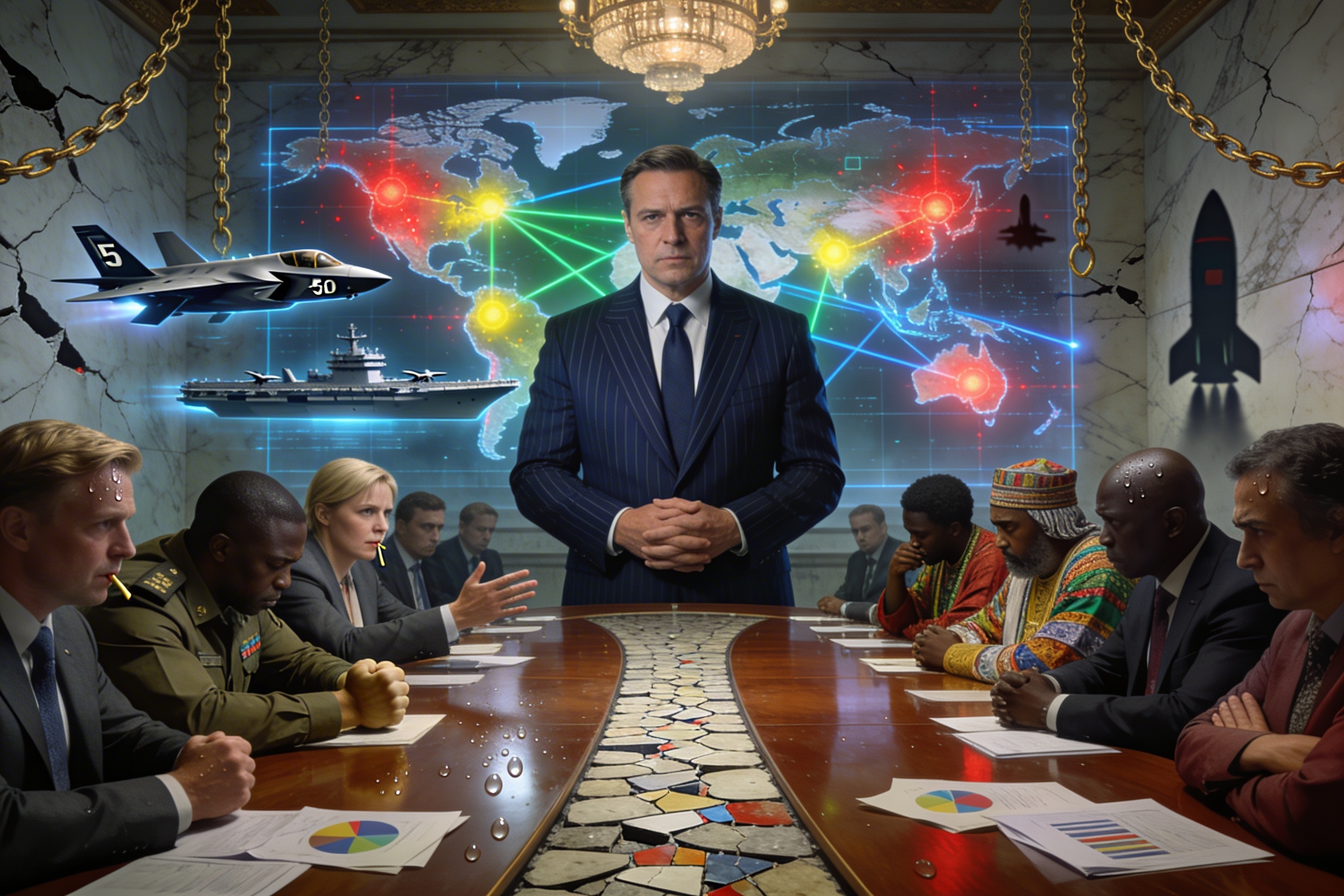
As 2026 unfolds, the North Atlantic Treaty Organization finds itself gripped by deepening divisions that are visible to the naked eye. Long-simmering tensions among its 32 members are now breaking out into the open, threatening the alliance’s cohesion at a moment of global instability.
Summits that once projected unity now reveal sharp disagreements over burden-sharing, strategic priorities, and the very purpose of the pact founded in 1949. These cracks are not new. In 2018, Donald Trump bluntly called NATO “obsolete.”
In 2019, French President Emmanuel Macron went further, declaring the alliance “brain dead” due to its lack of collective strategy and coordination. NATO has never been an association of politically aligned members.
Turkey and Greece faced off over Cyprus in 1974. Many NATO members refused to follow the United States into its controversial invasion of Iraq in 2003. In 2020, the French accused Turkish naval frigates of locking radar onto a French vessel three times in the Mediterranean, suggesting a missile strike was imminent.
Even on Ukraine, some members push for maximum military aid — even boots on the ground — while others hesitate, fearing escalation. Recent responses to Washington’s illegal strikes against Iran have highlighted these rising tensions, with European capitals divided over whether to follow Washington’s lead or chart more independent courses. Spain for example banned US planes participating in the Iran war to fly over its territory.
The elephant in the room that nobody wants to tackle is this: NATO is and has always been essentially the United States’ foreign legion — an extension of U.S. military reach rather than a genuine partnership of equals. NATO Secretary General Mark Rutte recently reinforced this view, stating that Europe functions as “a platform of power projection for the United States.”
Former NATO Secretary General Jens Stoltenberg even described the European Union and NATO as “two sides of the same coin,” illustrating that the European Union project is de facto Atlanticist and pro-American. Whether the illegal aggressions of Serbia in 1999 and Iraq in 2003, or the invasion of Afghanistan in the early 2000s, the alliance has consistently acted as an instrument of American-led policy rather than as the strictly defensive pact its charter stipulates.
Many Europeans welcomed this arrangement when U.S. administrations embraced globalist multilateralism and liberal internationalism. Yet discomfort is growing now that a leader like Trump openly treats NATO as an unapologetic imperial organization that prioritizes “Making America Great Again” over alliance consensus.
Europeans struggle to acknowledge this reality because they still believe in the globalist order that the U.S. and Europe were building before Trump’s second term. But the truth is that Washington has always called the shots. When Trump tells the European Union it must increase its military spending to 5% of GDP, the EU complies.
When Trump demands that the EU buy $750 billion worth of American energy products, the EU obeys. When Trump imposes 15% tariffs on most products imported from EU member states, the EU bows down. And when Trump tells the EU countries they must invest $600 billion in U.S. industry, the EU yields. The master-servant relationship has never been so blatant.
However, when Trump asked recently NATO to come and relieve a confused and disgruntled American military presence in the Middle East, his request fell on deaf ears. The European vassals dared to adopt a rebellious posture — and “Daddy” was not happy. The European dilemma is clear. They wish to continue pursuing the globalist project, but they face two alternatives.
The first is to wait out Trump’s term and hope he is replaced in 2028 by a new globalist American president who will restore the status quo ante and resume the old project. The second is to go their own way and build Europe into a genuine global powerhouse. The second option remains a pipe dream. Europe clearly does not have the current means nor a common strategic vision. Also without American troops, nuclear guarantees, intelligence, and logistics, NATO would rapidly become an empty shell — incapable of credible deterrence or power projection.
Moreover, the American military-industrial complex would never willingly relinquish such a captive market, regardless of who occupies the Oval Office. Mark Rutte himself warned that the EU should “keep on dreaming” if it believes Europe can defend itself without the United States. As divisions surface ever more visibly, the alliance’s future hinges on whether its members can reconcile these tensions or whether the fractures will finally pull it apart. In the end, there are only two ways this can play out: either the master tightens his grip, or the servants set themselves free.