Iran and the End of the Illusion: The Day the International Order Stopped Working
For decades, the world operated under a premise that was as invisible as it was powerful: the great arteries of global trade could not be closed. Not because it was impossible, but because the international system—backed by U.S. hegemony—ensured that no one dared to do so without paying an unbearable price.
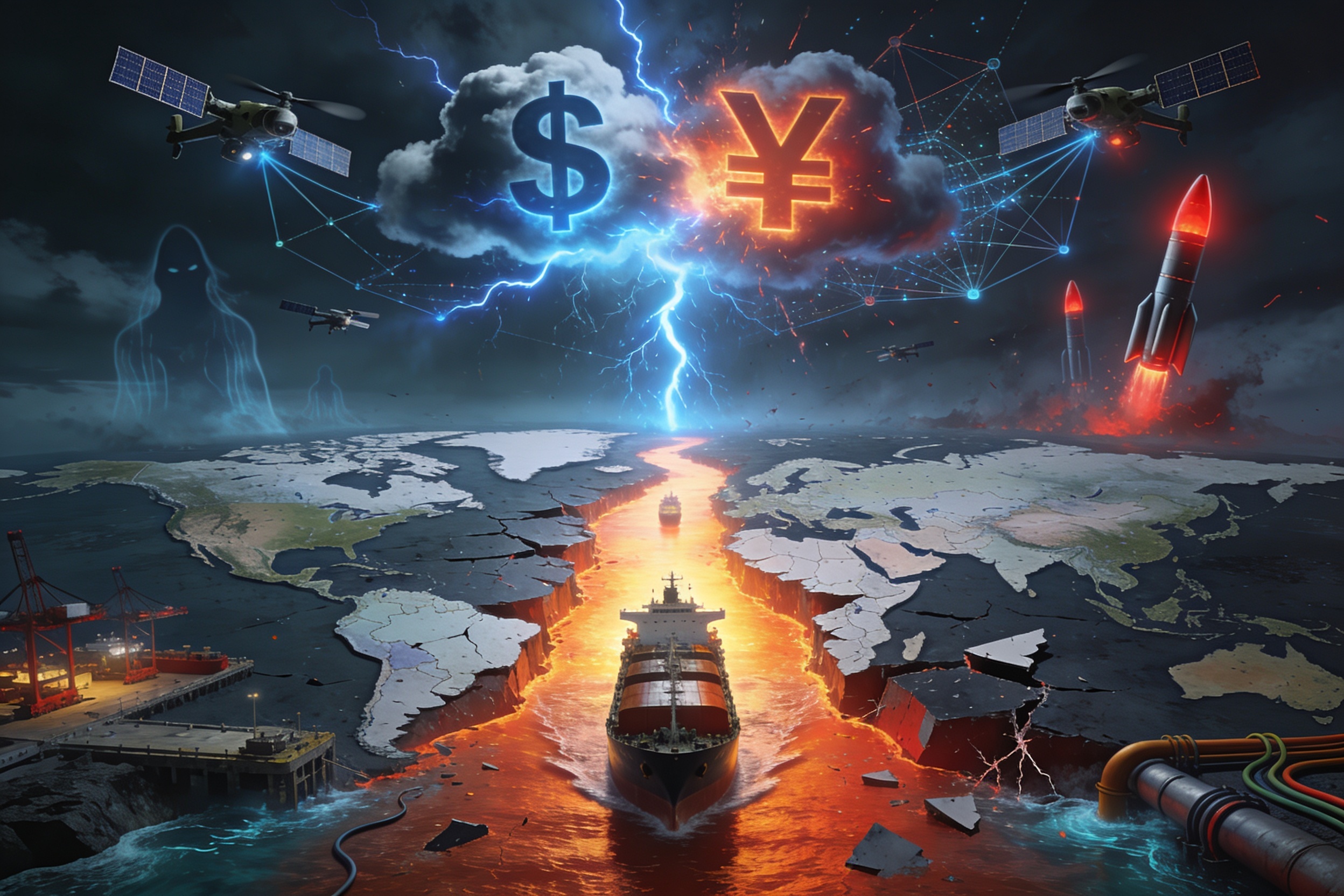
That illusion has just been shattered. What is happening today in the Strait of Hormuz is not just another episode in the long history of tensions in the Middle East. It’s something else. It is the moment when the international order, as we knew it, stops working in real time.
Iran has not defeated anyone. He has not won a conventional war. But it has achieved something more disruptive: it has shown that it is possible to alter the functioning of the global system without the need to impose itself militarily on the world’s leading power. It has been enough to condition a critical bottleneck through which a substantial part of the world’s energy circulates.
During the post-Cold War period, the international order was based on three pillars: U.S. naval supremacy, the security of trade routes, and a globalization based on open flows. That model—often called “rules-based order”—was not perfect, but it was predictable. The crises existed, but they were contained. Conflicts broke out, but they did not paralyze the system.
Today that logic has been replaced by a cruder one: it is not necessary to dominate the world to have power; it is enough to be able to interrupt it.
Iran has inaugurated, perhaps without explicitly intending to, a new way of exerting global influence. One where medium-sized actors can exploit structural vulnerabilities of the system – energy, logistics, maritime routes – to generate disproportionate effects. In this new scenario, power is no longer measured only in military divisions or GDP, but in the ability to strangle critical nodes.
The message is disturbing. If one regional actor can stress the global energy flow from Hormuz, others could do the same in different parts of the planet. The Strait of Malacca, the Bab el-Mandeb, even the submarine cables that support the internet, become pieces of a chessboard where disruption is worth as much as domination.
The result is not a clear new order, but something more unstable: a transition. A world where the rules still exist, but they no longer organize the behavior of the actors. Where multilateral institutions lose arbitration capacity. And where security, previously globalized, begins to fragment into regional spheres.
This is, in essence, the practical end of the unipolar world. But it is also the beginning of something more complex: a harsh multipolarity, where powers compete not only to expand their influence, but to limit that of their rivals by disrupting the systems that sustain globalization.
For countries like Chile, deeply embedded in international trade, this change is not abstract. It’s existential. Because if the world ceases to be a space of relatively secure flows and becomes one of permanent frictions, then geopolitics ceases to be a distant issue and becomes an everyday economic variable.
Iran, in this sense, is not just an actor. It’s a symptom. The symptom that the international order can no longer guarantee what it promised: stability, predictability and openness.
And when a system ceases to fulfill its basic function, it is not reformed. It is replaced.
Hormuz, gunpowder and dollars: the turning point that unites war with money
There are moments in history when two systems that seemed separate reveal that they are actually one. War and money. Strength and confidence. Geopolitics and currency. That is what is happening today with Iran.
The crisis in the Strait of Hormuz is not only redefining the rules of war. It is exposing, in a brutal way, the fragility of the international monetary system built around the US dollar as the global reserve currency.
For decades, both systems worked in symbiosis. The military dominance of the United States guaranteed the security of trade routes – especially energy – and that security sustained confidence in the dollar. It wasn’t just a currency: it was an architecture of power.
Oil was traded in dollars. The routes were protected by the U.S. Navy. And the rest of the world accepted that order because it offered stability. Today that equation is beginning to crack.
Iran is not directly attacking the dollar. It is doing something more sophisticated: it is stressing the material conditions that make its domination possible. Because a reserve currency is not sustained only by the economy that supports it, but by the global infrastructure that allows that economy to function without interruption.
When a regional actor can jeopardize the most important flow of energy on the planet, it introduces a doubt that goes beyond the price of oil: it introduces uncertainty about the system’s ability to sustain itself.
And trust, in the monetary world, is everything. The implicit message is uncomfortable: if routes are not safe, if flows can be disrupted, if sanctions are used as a geopolitical weapon, then the incentives to seek alternatives to the dollar increase. Not for ideology, but for survival.
The deep connection between war and currency.
The geopolitics of disruption—blocking straits, sanctioning financial systems, fragmenting supply chains—is pushing states to diversify risks. This translates into bilateral agreements in local currencies, gold accumulation, and the strengthening of alternatives such as the Chinese yuan in certain trade circuits.
It is not the immediate end of the dollar. But it is the end of their comfort. Because the true privilege of the dollar was not only to be dominant, but to be unquestioned. Iran, along with other actors, is helping to erode that quality. Not by destroying the system, but by forcing it to coexist with others.
The result will not be a clean substitution – we will not see the yuan replace the dollar overnight – but something more disorderly: a hybrid, fragmented system, where different currencies compete in different geoeconomic spaces.
It is, in essence, the monetization of multipolarity. What is emerging is a world where war no longer necessarily seeks territorial occupation, but the disruption of systems; and where money ceases to be a universal standard to become just another strategic instrument.
Iran did not create this transition. But it is accelerating it in the worst possible place: the point where energy, trade, and military power meet. And when these three factors enter into crisis at the same time, what is redefined is not just a conflict. It is the order of the world.
Drones, algorithms and ports: war is no longer just war
For centuries, war had a clear language: armies, territories, decisive battles. Winning meant destroying the military capacity of the adversary and, eventually, occupying his space. That paradigm has not disappeared, but it is no longer enough to explain what we are seeing.
The war has expanded.
Today, the application of dual-use technologies – those designed for both civilian and military purposes – is redefining the way power is exercised. We are not only talking about advanced weapons, but about everyday tools: commercial satellites, digital platforms, artificial intelligence, global logistics systems.
A modified commercial drone can upset the tactical balance on the battlefield. A private satellite network can become critical military communications infrastructure. A financial platform can become a weapon of strategic pressure.
The boundary between the civilian and the military has become blurred.
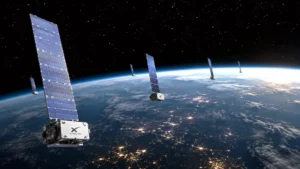
There are plenty of examples. Systems such as Starlink have shown that a private company can have a direct impact on the operational capacity of a state at war. The same goes for the use of low-cost drones, open-source software, or social media as spaces for narrative dispute.
But the most profound change is not technological. It is conceptual.
War is no longer exhausted in the classic military confrontation. It is deployed simultaneously in multiple dimensions: economic, informational, energy, technological. This is what is called hybrid warfare, but even that term is beginning to fall short.
Because what emerges is not a mixture of old and new forms, but a different logic: to win without the need to win on the traditional battlefield.
In this new environment, asymmetry becomes central. Weaker actors can exploit structural vulnerabilities of their adversaries: supply chains, energy dependence, digital infrastructure. They do not need to match capabilities; they need to identify critical points.
An attack on a port, a disruption on an undersea cable, a well-targeted disinformation campaign, or an effective financial sanction can generate effects comparable to—or even greater than—a conventional military operation.
This does not eliminate traditional warfare. It relegates it to being one more layer within a much broader conflict.
The result is a battlefield with no clear borders. Where States participate, but also companies, technological platforms and even individuals. Where the line between peace and war becomes blurred. And where conflicts do not necessarily end, but are transformed and prolonged over time.
For countries like Chile, this change is especially relevant. Not because they are going to fight conventional wars, but because they are deeply embedded in vulnerable global systems: maritime trade, strategic exports, digital infrastructure.
In this context, security can no longer be understood only as military defense. It is economic resilience, technological autonomy and the ability to adapt in the face of external disruptions.
The war, in short, no longer begins when the shots are fired. It starts much earlier. And many times, without anyone declaring it.
The end of the nuclear taboo (or its irreversible erosion)
For nearly eight decades, the world lived under a paradox: the most destructive weapons ever created existed, but they were not used. Not because of a lack of capacity, but because of the existence of an invisible but powerful limit: the nuclear taboo.
That taboo was not a treaty. It was a shared conviction. A tacit consensus that crossing that line would open a Pandora’s box that is impossible to close.
Today, that consensus is beginning to crack. The war in Ukraine reintroduced nuclear language into international politics. Threats, signals, strategic ambiguity returned to the center of the debate. But it is the crisis around Iran that pushes that trend a step further: not just as rhetoric, but as part of a transforming architecture of power.
We are not facing a detonation, but we are facing something more subtle and perhaps more dangerous: the normalization of what until a few months ago was unthinkable.
In Asia, this transformation is particularly visible. Countries such as Japan and South Korea, historically under the US nuclear umbrella, are beginning to debate – in an increasingly less marginal way – the need for their own nuclear capabilities. Not necessarily as an immediate decision, but as a strategic horizon.
The logic is clear: if the international system becomes more unstable, if external guarantees lose credibility, then deterrence becomes nationalized again.
Later, other actors could follow the same path. Saudi Arabia, in direct competition with Iran, has hinted that it will not be left behind. Australia, in an increasingly tense Indo-Pacific environment, is deepening its nuclear integration with the West through AUKUS. Even Germany, traditionally contained by its history, faces an environment where post-war certainties are blurred.
It is not immediate proliferation. It is something deeper: the legitimization of the debate. And this is happening in parallel with another major transformation: the interconnectedness of conflicts.
From Ukraine to the Middle East to an increasingly volatile Indo-Pacific, crises are no longer silos. They connect, feed off each other, scale each other. War ceases to be regional and becomes a multioceanic and intercontinental phenomenon.
In this framework, Iran appears as a critical node. Not necessarily as the origin of all tensions, but as a point of convergence where energy, strategic routes, regional rivalries and global competition intersect. It is what we could call “the sum of all wars”.
In this context, the nuclear taboo does not disappear all at once. It wears out. It becomes negotiable. It loses its absolute character. And therein lies the real turning point.
Because the danger is not just that tactical nuclear weapons will be used in a future conflict. The danger is that the world will begin to accept that possibility as part of the normal strategic repertoire. When that happens, the threshold is no longer the same.
Iran has not detonated a bomb. But by straining the international system in multiple dimensions—energy, military, geopolitics—it contributes to an environment where extreme decisions become more plausible.
This diagnosis does not arise in a vacuum. It is part of a broader line of analysis already developed in “IRAN: geopolitical clash and geoeconomic fracture”, a work of my authorship and recently published on Amazon and soon on Mercado Libre, which explores precisely how the convergence between war, energy and the financial system is accelerating a transition of global order. There it is anticipated that the erosion of the nuclear taboo would not be a one-off event, but the cumulative result of interconnected crises.
The nuclear taboo, then, is not dead, it is eroding. But he is no longer untouchable. And in geopolitics, sometimes, that’s enough to change everything.