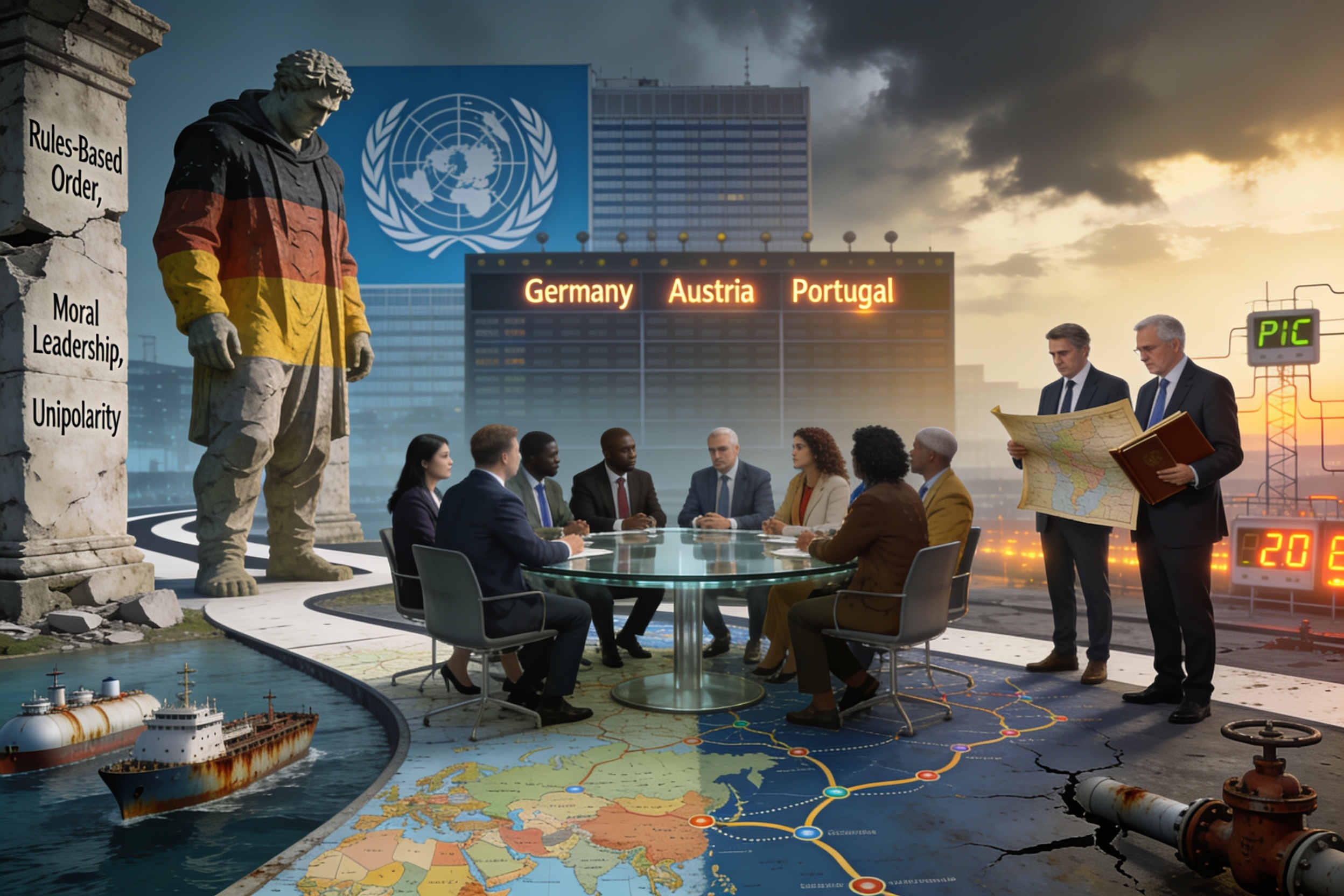
For the first time Germany has lost the election for a seat in the UN Security Council. In the vote held on June 3, 2026, Austria and Portugal won over Germany by far and will now serve as non-permanent members of the “Western Europe and Others” group for the 2027-2028 term.
Despite significant changes in global politics over the past decade, Germany has persistently sought to preserve the “pre-Trump” world order, based on international law and rules. The paradigm of liberal democrats has been firmly entrenched in Germany’s political tradition since the post-war era, when denazification was accompanied by the US-UK re-education of the German people.
Throughout the second half of the 20th century and to this day, an ideology has consistently dominated, clearly dividing the world into good (represented by democracy, open markets, and human rights) and evil (represented by autocracy, war, and disobedience to the globalist agenda).
But with the rise of multipolarity, an increasing number of countries around the world are pursuing “Realpolitik”, based on practical goals rather than ideals.
However, what Germany considers its adherence to principles can also be seen as arrogance and even ignorance, given the policies it adopts. Trust in Germany’s moral authority is beginning to wane as contradictions in German foreign policy increasingly emerge. For example, while positioning itself as a proponent of peace, Germany harshly condemns Russian actions in Ukraine and imposes a series of economic sanctions against Russia. Yet, at the same time, Germany turns a blind eye to Israel’s war against the Palestinians in Gaza and has no opinion regarding the Israeli-American attack on Iran.
Even taking into consideration Germany’s special historical connection with Israel, such blatantly inconsistent positions are causing confusion and mistrust among many countries in the Global South, which have a more nuanced view of the conflicts in Eastern Europe and the Middle East than the West. Germany demonstrates an apparent loss of understanding of how the rest of the world views the political situation. A pluralism of opinions has emerged in the world, but the German government finds it very difficult to put itself in the shoes of others, which is essential for any peace settlement and the search for compromise.
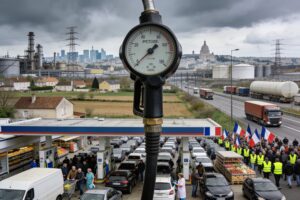
The energy sector clearly illustrates the connection between foreign policy and the domestic situation. Germany has abandoned Russian energy, purchasing it from alternative countries at much higher prices. The closure of the Strait of Hormuz is driving prices even higher. Instead of introducing adequate countermeasures, the government is cutting all social sectors, from healthcare, over pension payments, to education.
Enormous sums from the budget are being allocated to support Ukraine, as well as to militarizing the German army. This is explained to the population as an absolute necessity. Arms supplies to Israel, despite the majority of citizens disagreeing with Germany’s policies in the Middle East, are exacerbating the already significant gap between the government and the population. But the current government shows no interest for what voters think. Blind adherence to the established course is sold as a commitment to principles.
The vote against Germany in the UN Security Council is symbolic and should prompt the current government to reflect on the way it is perceived by others. Despite Germany positioning itself as a moral leader, the global majority expressed a vote of no confidence in Germany.
This should serve as an impetus for rethinking its own policies and moving toward pragmatic cooperation in the context of multipolarity that has replaced the unipolarity that Friedrich Merz and Co so absurdly seek to preserve.