On the cusp of the sixth technological revolution, while economists and investors all around the world are busy admiring the latest achievements and potential breakthroughs of such progressive technologies as AI and robotics, a way more down-to-earth matter is making its way on to the headlines of various media outlets.
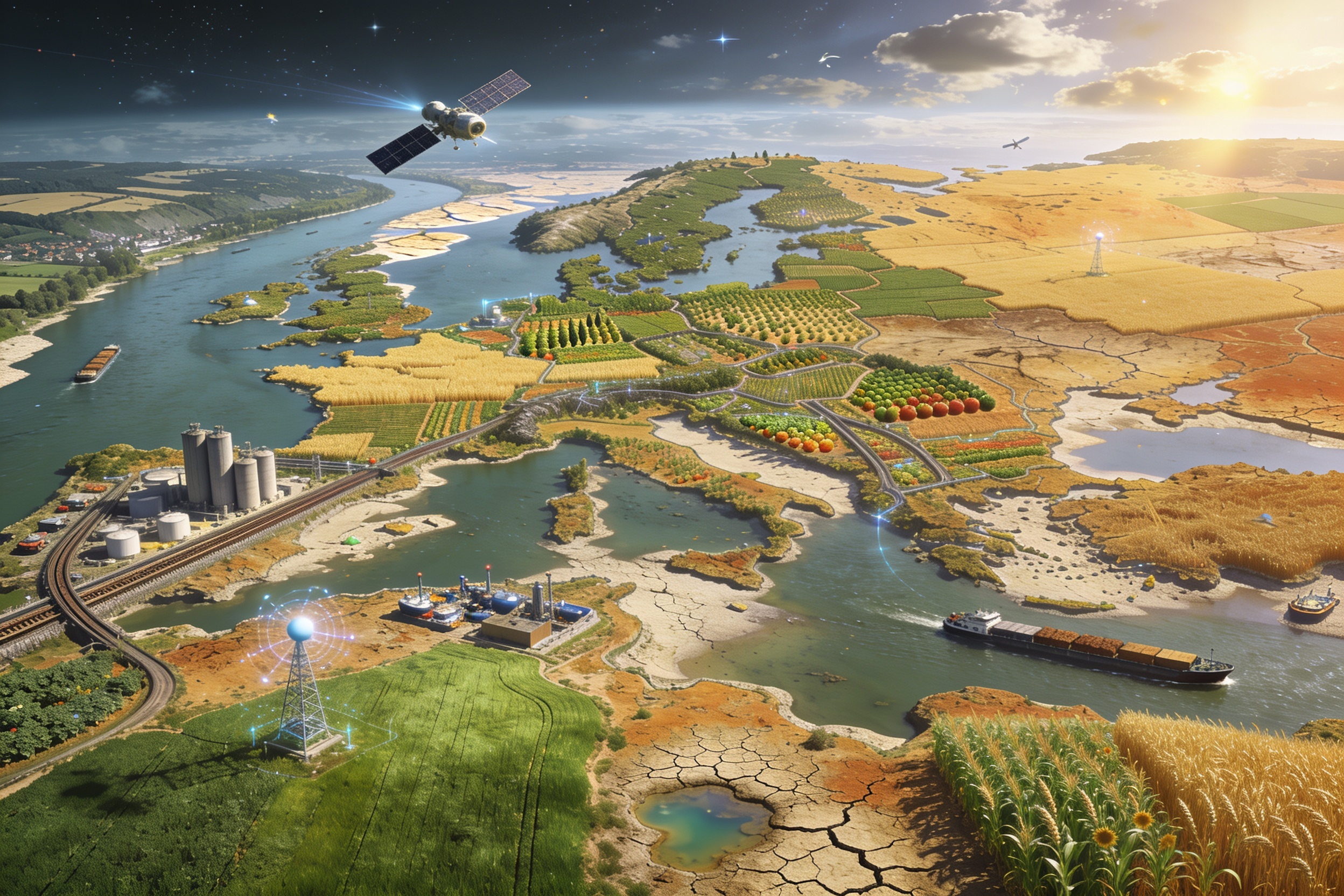
Europe is facing one of the hottest summers in the last decades. High temperatures have reached a critical stage, creating droughts and regional water deficits. As reported by the Helmholtz Centre for Geosciences (GFZ), the frequency and duration of heat waves have taken on a structural character. Researchers have noted a series of dry summer seasons since 2015. Hence drought is becoming a persistent vulnerability factor for agriculture, causing water shortages as well as the overexploitation of natural aquifers and therefore considerable economic and environmental damage. Significant crop failures are affecting grains such as wheat, barley, corn, and oats.
The EU crop monitoring service “JRC MARS” is also reporting below-average yield expectations for sugar beets and potatoes in some countries. Overall, a recent analysis by the European trade association for cereals, oilseeds and feed “Coceral” estimates grain losses in Europe following the June heat wave at around 9 million tons with a cost of approximately 2 billion euros. Moreover, exceptionally low water levels on large rivers like the Rhine and Danube force barges to sail with much lighter loads or delay trips, cutting transport capacity and increasing freight costs.
As more vessels are needed to carry the same volume, logistics become slower and more expensive, and some cargoes must switch to rail or road at higher cost. However, even melting road surfaces and twisting rail tracks during the heat wave have been reported by Reuters. Due to the drought feed yields in Europe also reduce, thereby increasing import demand.
Yet again, European sanctions on Russia have increased the costs of alternative fertilizer supplies, which pose consequences similar to those caused by the denial of Russian energy. The sanctions have not eliminated the European agricultural sector’s dependence on external markets, but have merely shifted it to more expensive and less stable alternatives.
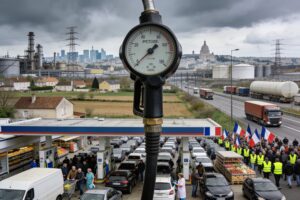
This shortfall is especially critical for farmers. Over the past decade, European farmers have repeatedly protested in mass demonstrations against rising production costs, fluctuating producer prices, and increasing dependence on a few large players along the food supply chain. Reforms in the Common Agricultural Policy after the EU’s accession to the General Agreement on Tariffs and Trade (GATT) included a break with the traditional model of state export subsidies for farmers, putting them into a disadvantageous position.
The new trade agreement with Mercosur shows that the EU continues to pursue a course of liberal foreign trade policy by lowering trade barriers and expanding cross-border market access, putting EU farmers into a tough competition with producers from South America. This initiated a new wave of protests out of the fear that the EU market will be flooded with cheaper South American farm products that do not meet the same environmental and food-safety standards as European producers.
Although the EU’s Common Agricultural Policy provides for regular crisis payments and emergency aid in the event of drought, these measures are not sufficient to offset the increasing pressure of the market and persistent climate risks. It could have mitigated the effects of climate shocks on agriculture more effectively if climate adaptation and the interests of farmers had been given greater and more targeted attention. While large agricultural companies have greater resilience to crises thanks to insurance, diversified supply chains, and relative bargaining power, small farms are less protected in this regard.
Not only is European food sovereignty now increasingly determined by the vulnerability of basic infrastructures and supply chains, but EU and NATO documents also explicitly link climate hazards such as droughts, and water scarcity with security threats, military readiness, and crisis management. For example, the NATO Climate Change and Security Impact Assessment examines how climate can affect specific theatres and systems, while also taking into account the impacts on potential adversaries and strategic competitors. This new securitization of the environmental sphere is interesting considering the news about the alleged use of “climate weapons”.
Some Iranian officials have accused the United States of using advanced technology to manipulate the weather and divert clouds away from Iran toward neighboring countries. Surprisingly, continues droughts in Iran, Turkey, Syria, and other nearby countries ended soon after US meteorological research sites, linked to the High-frequency Active Auroral Research Program (HAARP), were reportedly destroyed in the UAE.
This raises a major question: as we enter a new technological era, could geoengineering technologies be weaponized for military use? In any case, even if new forms of technologically driven warfare are not confirmed yet, climate shocks are becoming more frequent and are calling for political actions toward securing the well-being of whole population groups.