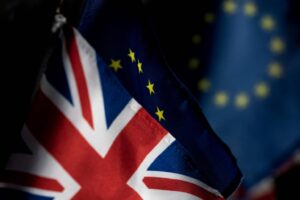
As of November 9, 2026, the rapprochement between the United Kingdom and the European Union appears pragmatic and sectoral: it aims to solve concrete problems, it is not equivalent to re-accession. Germany, the Netherlands, Denmark, Belgium and Luxembourg have called for negotiations to be accelerated to bring London back into the mechanisms of the European electricity market, especially enhancing the energy potential of the North Sea – as reported by Politico.
The United Kingdom already trades electricity with Europe: it is therefore not a question of opening connections that do not exist today, but of better organizing trade and infrastructure. The agreement would allow for more integrated participation in European platforms and better coordination of markets and the use of interconnectors. This could contain costs and risks, facilitate investment in renewables and support the development of clean energy in the North Sea. These are potential benefits, not an automatic guarantee of lower bills.
However, the British situation should not be described as a generalized energy shortage. The availability of supplies and economic convenience are different issues. The issue mainly concerns high prices, exposure to international shocks, dependence on imports and the need to strengthen networks and investments. Dependence on imported gas and limited storage capacity represent vulnerabilities even when supply remains possible. Greater European integration would help manage these problems, without eliminating the need for domestic intervention.
Access would still have counterparts. The negotiating framework provides for dynamic alignment with the relevant European rules, participation in common supervisory mechanisms and financial contributions. It would also include an arbitration system in which the Court of Justice would remain the ultimate authority on the interpretation of EU law. London could contribute to the preparation of the rules, but without participating in the Council of the Union: greater integration would therefore entail less regulatory autonomy in exchange for economic benefits.
A similar logic concerns the sanitary and phytosanitary agreement for the agri-food sector, which is still under negotiation. The aim is to eliminate the vast majority of certificates and controls currently required for the trade involved between Great Britain and the EU, easing the burden on food companies and farmers. The counterpart would be a dynamic alignment with European standards in the sectors covered by the agreement.
As for the hypothesis of the British elites, the available elements do not demonstrate a hidden strategy, nor a threat of re-accession used as a negotiating lever. The most cautious reading recognizes concrete and converging interests of government, energy companies, the food industry and farmers: reducing obstacles, costs and uncertainty does not necessarily mean wanting to cancel Brexit entirely.
On a political level, a return to the EU appears unlikely in the short term, possible but uncertain in the medium to long term. Internal consensus and political legitimacy, possibly electoral or referendum, would be needed; however, a referendum would not be a step automatically imposed by the European treaties.
It would require an application under Article 49 TEU, negotiations on conditions, unanimous approval of the Member States, consent of the European Parliament and national ratifications. The current framework therefore describes above all selective cooperation and a gradual correction of the most costly effects of Brexit, not yet a complete Brexit in reverse.