A structural war is a military conflict or a high geopolitical confrontation that transcends the mere tactical conjuncture or temporary military confrontation, becoming a factor of permanent alteration in the foundations of the international system.
The world is sailing on the edge of a recessive knife and a threshold of hybrid conflict with no return. As I state in my latest book “Iran: A Turning Point Between Two World Orders”, the total breakdown of ceasefires and the dangerous military escalation with Iran have transformed a Middle East crisis into a systemic earthquake of global scope. We are not facing just another regional conflict: the planet is witnessing the simultaneous strangulation of its two largest and most vulnerable logistical jugulars.
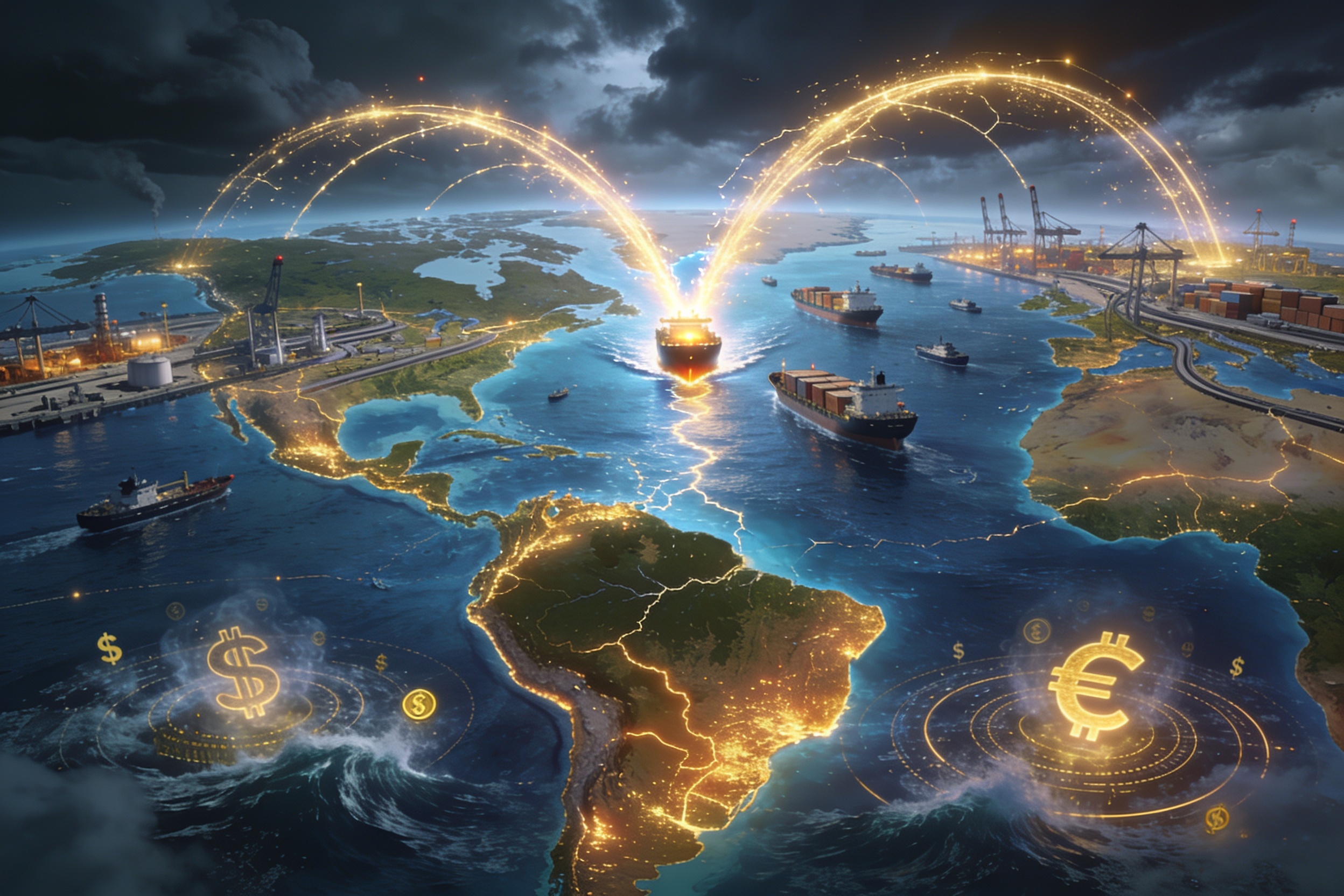
The geopolitical earthquake in the Middle East is not a distant problem; through the logistical collapse at Hormuz and Bab el-Mandeb, it impacts fully into South America with its geoeconomic and financial seismic waves. The result is a profoundly asymmetrical scenario: extraordinary rents for a few sectors, but a violent wave of inflationary and imported pressures for the region as a whole.
The Strategic Double Pincer: Hormuz and Bab el-Mandeb
On the one hand, the Strait of Hormuz, the artery through which a fifth of the planet’s oil and gas that feeds entire powers flows, is under latent threat of total paralysis. On the other, the Bab el-Mandeb Strait – the southern gateway to the Red Sea and the Suez Canal – has become an active war zone due to the offensive of the Houthis, allies of Tehran. It’s a perfect pincer: while Hormuz suffocates energy, Bab el-Mandeb decapitates 12% of the world’s manufactured trade connecting Asia to Europe.
The kilometre-long detour and logistical collapse
Faced with the terror of missile and drone attacks, the giant shipping companies have given the order to flee the area, opting for the titanic detour to the Cape of Good Hope. The result is devastating: 10 to 30 extra days per trip, collapsed containers, skyrocketing insurance premiums and a global supply shock that drives up freight costs. Brent soars to over $90 per barrel, energy inflation resurfaces strongly and the specter of stagflation is once again shaking central bank offices.
South America: exports and freight
On the other hand, the energy shock bites with a double edge: While net oil exporters (such as Colombia or Brazil) breathe temporary fiscal relief thanks to high Brent prices, the rest of the South American economies suffer an internal inflationary earthquake. The rise in the price of petroleum products dynamites the costs of land freight transport and shoots up the price of fertilizers, suffocating the margins of the agricultural and industrial sector throughout the region.
The energy double-edge: regional winners and losers
On the other hand, the energy shock bites with a double edge: while net oil exporters (such as Argentina, Ecuador or Brazil) breathe temporary fiscal relief due to high prices, the rest of the South American economies suffering from imports suffer immediately. Land freight transport is becoming more expensive and fertilizers are skyrocketing, suffocating internal margins.
A check on the currencies and central banks of the Southern Cone
To close the siege, global risk aversion and the massive flight to the dollar as a financial refuge erode Latin American currencies. The region’s central banks have less and less room for maneuver, cornered and forced to maintain restrictive interest rates.
In the short term, the crisis with Iran triggers global demand for dollars as a safe haven asset, stressing the economies of the Southern Cone; In the medium term, however, the use of the financial system as a geopolitical weapon accelerates the search for alternatives to the petrodollar and the accumulation of gold by external powers, undermining US hegemony. A structural scenario that South American governments and investors will have to anticipate in order to shield their finances.
The perfect geoeconomic storm that has been forming in recent months is about to explode, and no corner of the planet will be immune to its shock wave.