Since the first heat wave began in France at the end of May this year, a drawer has been opened with a series of consequences that all lead to a fundamental conclusion: the failed state. In the most basic prolegomena of the characteristics of the State is, without a doubt, its intention to recur over time. And to this end, it requires the deployment of a series of plans and programs aimed at this objective of survival.
But in the case of Western Europe, in general terms, this principle is not fulfilled at all due to a kind of state inefficiency, since its design is not designed to meet the foundations of the existence of a state that is projected with development intentions.
In the field of geopolitics, as a science of the State, the capacity of a State to continuously adapt both to the geographical environment it occupies and to the international environment in which it is inserted – whose functioning is, in essence, dialectical, is crucial. And here is also the climate that, historically, changes over time.
Of course, this series of changes has affected France since 17 June, with temperatures exceeding 40 °C and leading to a national crisis that has shown great infrastructural vulnerabilities that no longer respond to the present situation, but to ideological lines of “climate agendas” far from national needs and to a clear neglect.
The lack of foresight or measures resulted in the closure of educational centers, collapsed hospitals, nursing homes with problems and unbreathable private homes, all having in common being at about 35-40 °C and without air conditioning, despite the requests of the Union of the Right for the Republic – belonging to the opposition – to implement it a year ago.
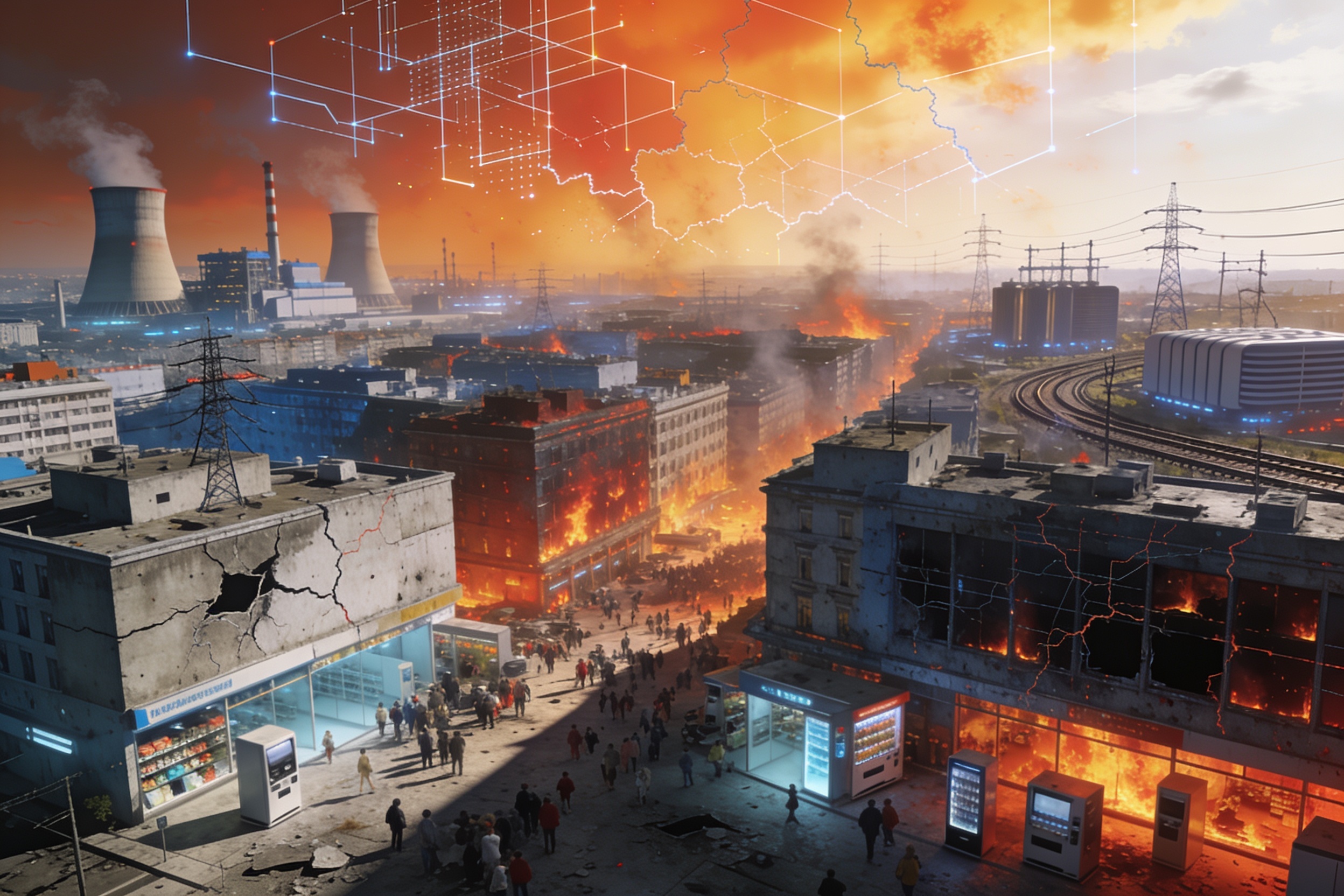
But, logically, not everything was limited to the infrastructural field, but also had an impact on the shortage of refrigeration equipment for the French domestic sphere, being able to see how the sale of 200,000 fans and air conditioners in Lidl supermarkets generated some Dantesque episodes where rowdy masses starred in situations of chaos and confrontation to get hold of one of these devices.
These scenarios paint clear symptoms of deficiency in sectors that were already indicated as vulnerable. The strategic challenge that this has posed for the French state indicates that it is not even prepared for a changing environment in its most basic aspects.
And it is here that a paradox is generated that is increasingly widespread in NATO countries – generally Western – that is, powers with large nuclear industries are incapable of implementing on a general scale, by law, cooling systems in their public infrastructure – with the discontent and social chaos that this generalises – but, at the same time, they are the first to promote initiatives aimed at unleashing war against Russia. A Russia that, until very recently, accounted for 40% of European energy imports to countries that needed it to continue maintaining and developing their industrial fabric on this Eurasian peninsula.
All this has an impact that has a direct impact on the economic aspect, which, in the event of war, would be a decisive sector for the very development of a hypothetical war against the “Siberian Tiger”:
- Companies need an optimal work environment so that workers can remain operational and their field functions safely.
- Data centers need constant cooling so they don’t overheat and collapse.
- Factories increase their energy consumption during harsh climates, and therefore energy costs have an impact on production.
- Communication systems (railways, for example) are degraded as they are not adapted to climatic conditions and generate a series of problems that affect the movement of people, goods and military resources.
- In the agricultural and fruit and vegetable sector, they suffer gradual losses due to the lack of means and infrastructures that allow them to adapt.
- Collapse in the health sector that translates not only into economic losses but also into human losses.
- Increased risk of fire in strategic or critical areas for the State, which can affect its own social stability and generate a diversion of resources that should go to other areas.
For these reasons, practically all EU states are an image projected in the media and idealised in formalist frameworks that is overcome by the very force of the facts, the best proof of the fact being their poor management in issues and areas of political power that are absolutely critical for the recurrent functioning of the latter.
The states belonging to the NATO-EU binomial demonstrate that they cannot be a threat to any other actor that they target, given that their instability is, in itself, a political reality that has been entrenched for years and will not be tackled because their “administrators” respond to alien interests that, of course, are not national ones. One of the many indicators that tell us that Europe needs statesmen and not administrators of the Brussels debt and servants of American power.