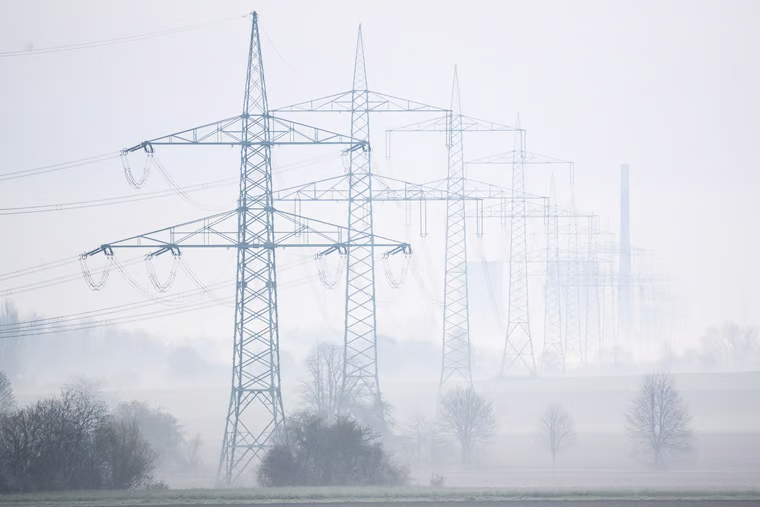
The consequences of lacking strategic autonomy have a significant impact on the structure of a political nation. And that is precisely what characterises the countries that are part of that “de-sovereignising” integration that is the European Union.
But one in particular is, unfortunately, the most worrying case of them all due to its importance in this political part of the continent that, moreover, was one of the “founding fathers” of the network: the Federal Republic of Germany (FRG).
Since the 1950s, the German state has been the “economic locomotive” of Western Europe and the vanguard of the NATO-EU binomial, due to its strategic positioning in the centre of Europe, its industrial production capacity, its political stability and a social market economy – of Ordoliberal influence – chiseled by the then Bavarian Christian Democrat Ludwig Erhard – one of the promoters of the well-known “German economic miracle”, between 1948 and 1966 – as Federal Minister for Economic Affairs (1949-1963) and Federal Chancellor (1963-1966).
Little mention is made of the fact that the historic Marshall Plan was involved in this German miracle, which, above all, was a geopolitical tool for the United States to integrate Western Europe into its sphere of influence—thus demarcating the boundaries between the Western-liberal World (Thalassocracy) and the Eastern-Socialist World (Telurocracy).
But, fortunately or unfortunately, that world was left behind and the transformations that Europe has gone through since then have taken it to the opposite place to that position of strength. And in this respect the policy of subordination of the FRG has contributed, which, in itself, is part of its structure as a state reborn on May 23, 1949 – under Anglo-French rule – and which was configured, a posteriori, in the face of the “other Germany” that emerged in the Soviet part of the current territory back on October 7, 1949, the German Democratic Republic (GDR). In the end, nothing has changed in this regard, even though in 1989 we were told that the Berlin Wall was torn down and Germany reached its reunification a year later. None of this was consolidated, and the “Two Germanys” (East and West) are still present in a sociological, political and and economic sense1
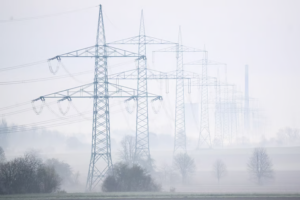
And from there we could continue to point out the consequences of having lost its connection and energy architecture with the Russian Federation. An energy model of a strategic nature – which was what allowed the FRG to develop as a great industrial power on a global scale – which had four main pillars, already explained in other articles, and which were those that provided lower-cost Russian energy and long-term supply to Central and Western Europe: Nord Stream 1 and 2, Yamal-Europe, Transgas Gas Pipeline and the Druzhba Pipeline.
Due to the start of the Special Military Operation in February 2022, these energy corridors have either been destroyed, as is the case with Nord Stream, or their supply and transit has been suspended.
And all this under the EU-NATO initiative, as the Russian side was ready to continue supplying energy, as a strategic partner for the economic sustainability of the central and western part of the continent2. To make matters worse, the war in Iran – on 28 February 2026 – only aggravated the energy situation due to the instability of the Strait of Hormuz and the destruction of energy production and refining infrastructures in the critical Persian Gulf region.
Now, let’s get back to the present day. Germany is not only a gas-consuming country, but it is also a central market within the European energy infrastructure, as it exports its surplus secondary energy (electricity) to neighboring countries such as Austria, the Netherlands, Switzerland, the Czech Republic, and Poland3
However, when it comes to primary energy (gas, oil and coal) Germany is a net importer, as detailed in its 2025 annual report by the AG Energiebilanzen, published on 9 July 2026. Let’s highlight some data in this regard:
As we can see, Germany has clear vulnerabilities in energy matters, to which we must add the turmoil that the energy market has been subject to since February 2026. It has led to a constant increase in the price of petrol and diesel due to the war and unstable situation in the Persian Gulf region in general and the Strait of Hormuz in particular, which has made the factors that affect the price of oil, such as its production, refining, transport and distribution, extremely expensive; this has been analysed and admitted by the International Energy Agency (IEA) in the report of 14 October 20265.
- Germany covered 65.5% of its energy needs through imports in 2025.
- Oil was a commodity that was imported in 96%.
- Natural gas, previously from Russia, was imported by 89%.
- Coal was almost 100% imported4.
With this picture, the German government of Mr Merz has introduced some regulatory measures to alleviate this situation, but they are completely insufficient.
The German Minister of Economy, Katherina Reiche (CDU), is preparing a bill to establish a cap on the price of fuel from January 1, 2027, since Germans have had prices ranging from €2 to €2.50 per liter of diesel and gasoline since February 2026 – which, by the way, has stagnated private consumption in 2026, according to the German Economic Institute (IW).6 This measure contemplates applying some of these regulations:
- Cap on the price of petrol and diesel in exceptional situations
- Apply this cap if German prices increase for three weeks in a row more than five percentage points above the average increase in other EU countries.
- Limit its application to a maximum of three months.
- Allow the suspension of this regulatory measure if it could jeopardise the security of fuel supply7.
As the beginning of 2027 approaches, the German Bundestag approved a temporary reduction in fuel prices (Tankrabatt) on 25 September 2026 for the period October-December of this year – as a measure prior to the law of the Minister of Economy – of 17 cents per litre, both diesel and petrol8. In other words, for every 50 litres there will be a saving of €8.50 in the pocket of each German family. This is nothing more than a temporary temporary reform, but it does not involve a change in the country’s energy structure, which can translate into a way forward that tries to maintain balance in a reckless way.
A situation that is not at all flattering for a political nation like Germany which, due to its industrial economy, needs huge amounts of energy to maintain a stable productive activity and with the possibility of reducing costs to keep its economic development afloat. Its previous relationship with Russia allowed it, as we have said, to meet its energy needs through large transport corridors and at a much more affordable price.
But, as expected, this “shot in the foot” caused by the severing of relations with Russia in this area has led it to have to reorganise the energy import framework, accelerate the Liquefied Natural Gas (LNG) infrastructure, introduce new logistics costs and consolidate relations, based on this matter, with other countries. This has placed it on a platform where it is more exposed to irregular international markets and, with it, to greater wear and tear generated by competition for the acquisition of energy resources.
The conclusion has remained the same since February 2022: compliance with the plan to cut off “energy dependence on Russia” has led Germany to a situation in which, after four years, it is still unable to resolve how to definitively guarantee a stable, affordable supply with strategic value on a “world map” where geopolitical breakpoints proliferate.
However, as Chancellor Friedrich Merz said on October 21, 2026 at the Berlin Global Dialogue:
“My biggest concern at the moment is not our economy, nor the European Union, nor the US, nor China. My biggest concern is Russia’s influence on our societies and how successful it is in destabilizing them.”9
Delenda Est Deutschland.
References
1-De la Cruz, Sergio (2019, November 9). An invisible wall still separates the two Germanys 30 years later. elEconomista.es. https://www.eleconomista.es/economia/noticias/10189195/11/19/Un-muro-invisible-separa-todavia-las-dos-Alemanias-30-anos-despues.html
2 Newsroom. (2022, December 12). Putin says Russia is ready to supply energy to
Europe, but “the ball is on their side” – Cubadebate, For Truth and Ideas.
http://www.cubadebate.cu/noticias/2022/10/12/putin-afirma-que-rusia-esta-dispuesta-a-suministrar-
energia-a-europa-pero-la-pelota-esta-de-su-lado/
3 Bundestnetzagentur. (2026, 5 de enero). SMARD | The electricity market in 2025. SMARD | SMARD –
Strom- und Gasmarktdaten. https://www.smard.de/page/en/topic-article/217400/219038.
4 Newsroom. (2026, July 9). AG Energiebilanzen veröffentlicht Jahresbericht. AG Energiebilanzen e.
V. https://ag-energiebilanzen.de/ag-energiebilanzen-veroeffentlicht-jahresbericht/
5 International Energy Agency. (2026, October 14). Oil Market Report – October 2026.
Internacional Energy Agency (IEA). https://www.iea.org/reports/oil-market-report-october-2026.
-6 Grömling, Michael. (2026, 7 de mayo). Iran-Krieg: IW halbiert Wachstumsprognose für 2026. Institut
der Deutschen Wirtschaft (IW). https://www.iwkoeln.de/presse/pressemitteilungen/michael-groemling-
irankrieg-iw-halbiert-wachstumsprognose-fuer-2026.html.
7 Newsroom. (2026b, November 2). Ministerin Reiche legt ersten Entwurf für Spritpreisdeckel-Gesetz
vor. tagesschau.de. https://www.tagesschau.de/wirtschaft/verbraucher/reiche-spritpreisdeckel-entwurf-
100.html.
8 Writing. (2026b, September 19). Maßnahmen gegen hohe Spritpreise | Bundesregierung. Die
Bundesregierung informiert | Startseite. https://www.bundesregierung.de/breg-de/aktuelles/massnahmen-
gegen-spritpreise-2410850.
9- Lemkemeyer, Sven. (2026, 12 de noviembre). Treffen mit USGesandten: Putin schlägt „humanitäre“
Mission für ukrainische Frontstadt vor. Aktuelle News: Nachrichten aus Berlin und der Welt.
https://www.tagesspiegel.de/internationales/liveblog/treffen-mit-us-gesandten-putin-schlagt-humanitare- mission-fur-ukrainische-frontstadt-vor-16206302.html.