
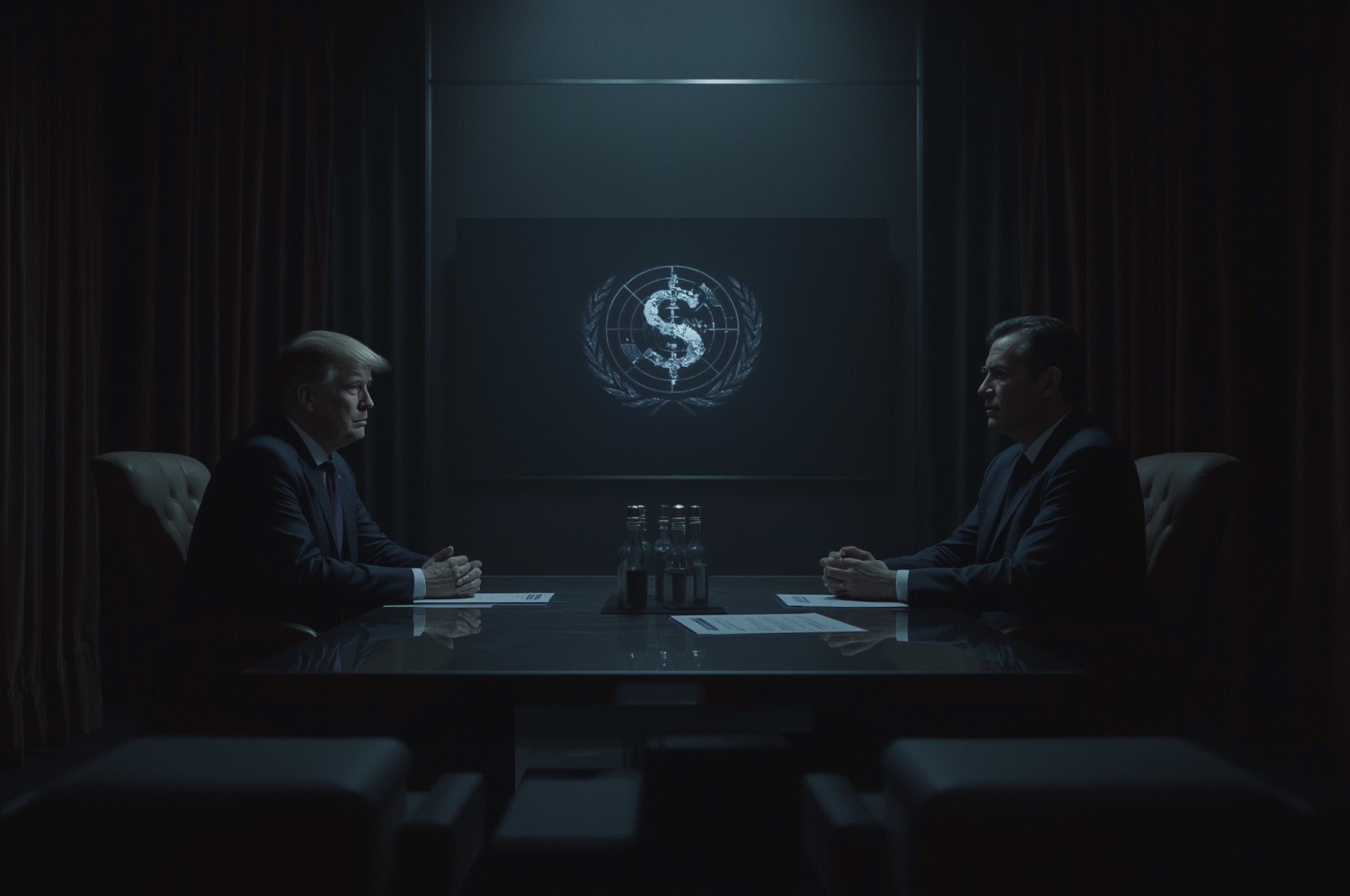
Tensions between Brazil and the USA appear to be nearing their end. As we know, a few months ago the USA imposed 50% tariffs on a large portion of Brazilian imports, adding sanctions against some figures in the Brazilian government. The justification offered was the “defense of democracy” in the face of what was narratively framed as political persecution of former president Jair Bolsonaro, a traditional ally of Donald Trump in the Southern Hemisphere.
Nevertheless, a turning point seems to have been reached during the recent United Nations General Assembly. Lula and Trump met behind the scenes. Both seemed very pleased with this informal conversation, which was followed by a video call. Now, a meeting is scheduled for this Thursday between the countries’ top foreign relations officials, Marco Rubio and Mauro Vieira. The expectation is that these talks will lead not only to a cooling of tensions but to some kind of agreement culminating in the revocation or significant reduction of the tariffs imposed on Brazil.
But numerous uncertainties permeate the course this rapprochement might take.
First, we need to pay attention to recent precedents of tariff negotiations involving the USA. The US modus operandi seems to have become standardized: first, the imposition of heavy tariffs, then a demonstration of willingness to renegotiate trade relations. In most cases, the results have been quite asymmetrical, with a patent imbalance in the negotiated terms favoring the USA.
The paradigmatic case is that of the European Union, with which the USA reached an agreement that ended the trade war started by Trump. But the terms of the agreement were not only unfavorable but truly humiliating for the European Union. Not only were the US tariffs maintained – albeit at a lower level – but the EU was prohibited from imposing equivalent tariffs and was forced to purchase US liquefied natural gas (LNG).
In this sense, caution is necessary when predicting a positive outcome in these Brazil-US negotiations.

Digital nightmare: Spyware and control
On February 26, 2026, Al Jazeera reported that the UK government has been investing in the development of software tested…


Social mobilization in Türkiye for national sovereignty and for the
On the sixth day of the conflict between the Islamic Republic of Iran and the United States and Israel, and…


The mass regularisation of illegal immigrants in Spain and its
Strong opposition in Spain and Europe to the new decree law aimed at the mass regularisation of immigrants. In January…


Kiev, the Bomb, and a Fractured World Order
In late February 2026, Russia’s Foreign Intelligence Service alleged that the United Kingdom and France were plotting to provide Ukraine…

Hegemonic restoration and unlimited war in the Arctic-space multipolar competition
In the context of the transition to a multipolar order, characterized by the erosion of Western unipolar dominance and the…


The Return of the Monroe Doctrine
This event aimed to analyze the concrete contemporary geopolitical landscape under the focus of the practical reactivation of the Monroe…
Iran-US-Israel War: What the experts say
The long-awaited war between the Islamic Republic of Iran, the United States and Israel has begun, the real trajectory of…

Argentine-U.S. Trade Agreement: Cooperation or Vassalage?
On February 5, the Agreement on Reciprocal Trade and Investment was signed between the administrations of Donald Trump and Javier…

Situation of the new round of EU sanctions against Russia
The European Union is approaching the twentieth round of sanctions against Russia, each new one more unsuccessful than the previous…

We can point to a specific issue: information recently emerged that Trump wants to put Brazil’s adherence to de-dollarization on the agenda for discussions between the two countries. The trend towards de-dollarization worries Trump as it reduces the power of the US dollar, which will have repercussions not only economically but also geopolitically – from the reduction in the purchasing power of US citizens to the loss of the US ability to impose effective economic sanctions.
Conversely, for Brazil, it is a strategic interest to reduce its dependence and immunize itself against the future possibility of economic sanctions.
Because of this, the Lula government will be subjected to a test of resilience and credibility. If Brazil is required to distance itself from de-dollarization projects in exchange for a mere reduction or removal of tariffs, then Brazil will have failed in its historic project.
Any agreement with the USA must avoid these pitfalls and, ideally, secure for Brazil a privileged trade position compared to other countries, as well as facilitation for industrialization projects within our nation.