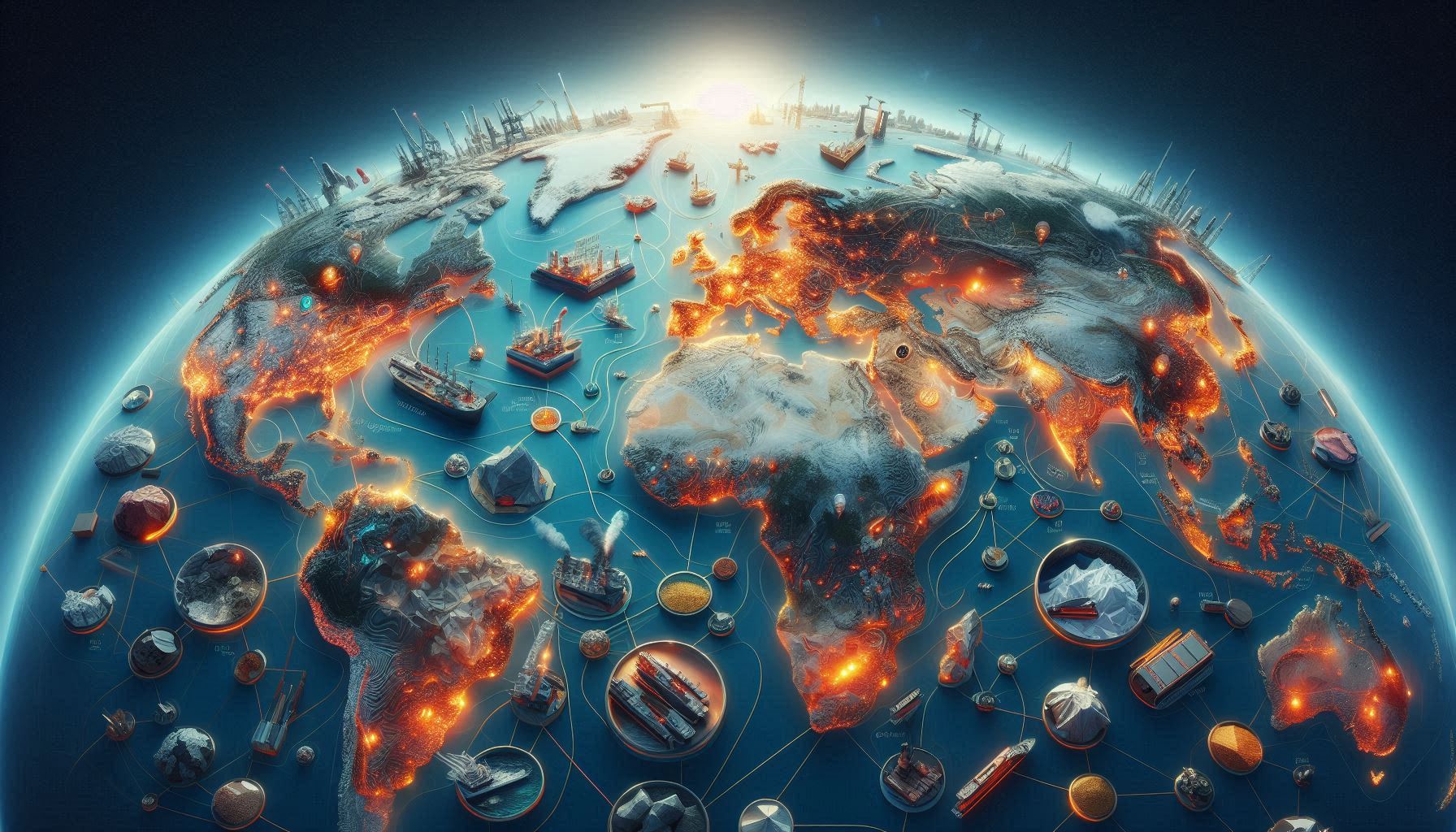
The transition from fossil fuels to renewable energy is creating an unprecedented shift in global resource politics. While the 20th century’s geopolitical landscape was shaped by oil, the 21st century belongs to lithium, cobalt, rare earth elements, and other critical minerals essential for batteries, wind turbines, and solar panels. This transformation is rewriting international relations, creating new dependencies, and establishing unexpected power brokers in the global economy.
Understanding Critical Minerals: The Building Blocks of Clean Energy
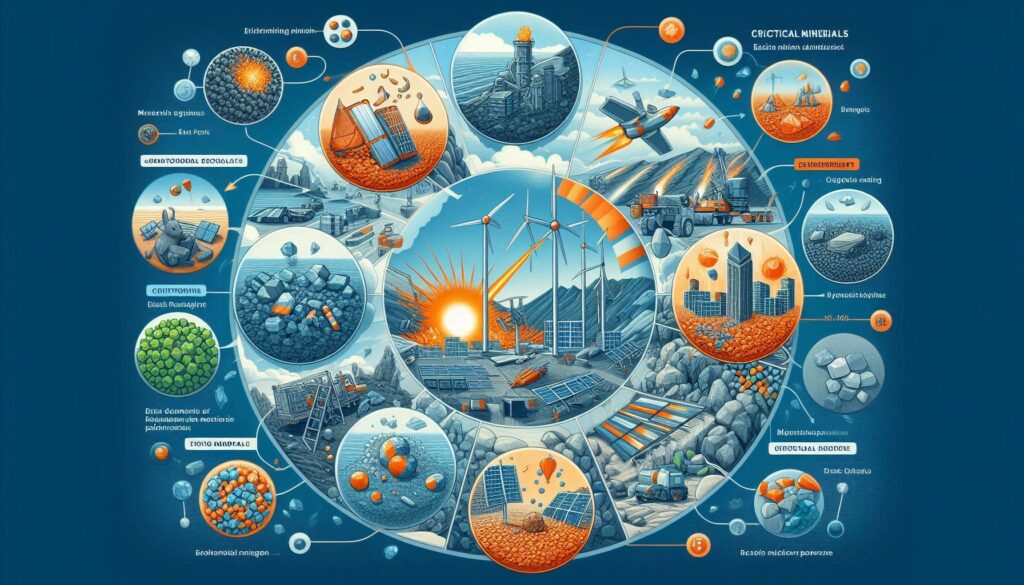
Critical minerals encompass approximately 50 elements deemed essential for economic and national security. Unlike traditional commodities, these materials often have no viable substitutes and face supply chain vulnerabilities that could derail the entire energy transition. The International Energy Agency warns that mineral demand for clean energy technologies will quadruple by 2040, with some minerals like lithium experiencing 40-fold demand increases.
The Periodic Table of Power
The modern economy depends on elements many people have never heard of: neodymium and dysprosium for permanent magnets in wind turbines, indium and gallium for solar panels, and cobalt and nickel for batteries. Each element has unique properties that make it irreplaceable in specific applications.
Rare earth elements, despite their name, aren’t necessarily rare in the Earth’s crust. However, they rarely occur in economically viable concentrations and are notoriously difficult to separate and process. This combination of geological scarcity and processing complexity creates strategic bottlenecks that nations can exploit for geopolitical advantage.
From Extraction to Application
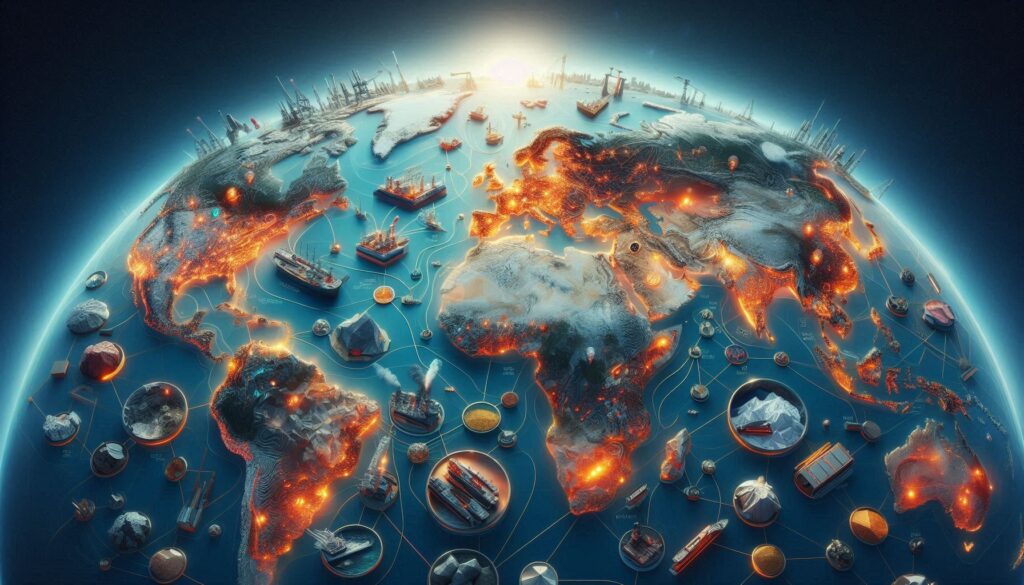
The critical mineral supply chain involves multiple stages, each presenting opportunities for market control. Mining represents just the beginning; processing, refining, and component manufacturing often occur in different countries. China’s dominance stems not from controlling the largest deposits but from dominating processing capabilities, controlling 80% of rare earth refining globally.
This supply chain complexity means that even countries with substantial mineral deposits may remain dependent on others for processing. The United States, for instance, must send rare earth ores to China for processing before reimporting them for use in defense applications, creating a strategic vulnerability that Washington is desperately trying to address.
The Geography of Scarcity: Where Critical Minerals Concentrate
The Democratic Republic of Congo: The Cobalt Capital
The DRC produces approximately 70% of global cobalt, an essential component in lithium-ion batteries. The Katanga region’s copper-cobalt belt represents the world’s highest-grade cobalt deposits, making the country indispensable to the electric vehicle revolution. However, this mineral wealth comes with significant challenges.
Artisanal mining accounts for 20% of Congo’s cobalt production, often involving child labor and dangerous working conditions. Major tech companies face scrutiny over their supply chains, with lawsuits alleging complicity in human rights violations. The intersection of mineral wealth, poverty, and conflict creates what economists call the “resource curse,” where natural resources fuel corruption and instability rather than development.
Chinese companies control 15 of the DRC’s 19 cobalt-producing mines, having invested over $12 billion in the country’s mining sector. This dominance grants Beijing significant leverage over global battery production, concerning Western governments seeking supply chain independence.
China’s Rare Earth Monopoly
China controls 60% of global rare earth production and 85% of processing capacity. This dominance didn’t happen accidentally; it resulted from decades of strategic planning, environmental tolerance, and massive state subsidies. The 2010 rare earth crisis, when China restricted exports to Japan over a territorial dispute, demonstrated how mineral control translates into geopolitical power.
Inner Mongolia’s Bayan Obo mine, the world’s largest rare earth deposit, produces most of China’s output. However, extraction creates severe environmental damage: producing one ton of rare earths generates 2,000 tons of toxic waste. China’s willingness to accept this environmental cost has deterred other countries from developing their own industries.
Australia: The Western Alternative
Australia has emerged as the primary alternative to Chinese mineral dominance, possessing significant deposits of lithium, rare earths, and other critical minerals. The Greenbushes mine in Western Australia produces 40% of global lithium, while the Mount Weld rare earth mine offers the highest-grade deposits outside China.
The Australian government has implemented foreign investment restrictions on critical mineral assets, blocking Chinese acquisitions while strengthening ties with US and European partners. The Australia-UK-US (AUKUS) partnership explicitly includes critical mineral cooperation, signaling the strategic importance of these resources.
The New Resource Curse: Environmental and Social Impacts
Environmental Destruction in the Name of Green Energy
The irony of environmental damage from clean energy minerals isn’t lost on affected communities. Lithium extraction in South America’s “Lithium Triangle” consumes massive water quantities in already arid regions. In Chile’s Atacama Desert, lithium mining uses 65% of available water, forcing indigenous communities to abandon ancestral lands.
Rare earth mining in China has created apocalyptic landscapes. Baotou’s tailings lake, visible from space, contains 180 million tons of toxic waste. Radioactive thorium and uranium, byproducts of rare earth extraction, contaminate groundwater across mining regions. The health impacts on local populations include elevated cancer rates and rare diseases.
Indonesia’s nickel mining boom, driven by battery demand, has destroyed 50,000 hectares of rainforest since 2020. The country’s rapid industrialization prioritizes economic growth over environmental protection, raising questions about the true sustainability of renewable energy.
This may interest you

The worsening of the situation in France
What is the origin of the discontent? The wallet of the French. In a recent study commissioned by the renowned…


Who is harnessing france’s anger?
Parties, foreign networks, organised rioters, the State: everyone is seizing the movement, no one is answering it. Some kinds of anger…


France between chaos and flames
1. Introduction: The Dantesque Scenario as a Diagnostic Moment On 17–18 October 2026, France experienced what foreign observers immediately recognised as…


The student factor and the massive social protests in the
To understand what is happening, it is enough to make a simple political reasoning. 2027 represents a crucial electoral appointment for…


The decisive moment in the war of Ukraine is approaching
We have become accustomed to analysing the war in Ukraine through the prism of ground battles, calculating gains in square…


EU budget dispute sharpens
Brussels is experiencing its most uncertain hours since the creation of the European project. The negotiations to define the 2028-2034…


Student protests, Marine Le Pen and the decline of the
The student mobilization in France, which began on September 17 at the Saint-Exupéry de Créteil high school, located on the…


Food Crisis in 2027? From Diesel to the Dinner Table
A food crisis can begin far from the fields: at an attacked refinery, with a delayed fertilizer shipment, or along…


The UK is at risk of running out of gas
Clearly, the United Kingdom is going through a systemic crisis that is becoming deep and, according to the available evidence,…


NATO fireworks
As in previous years, for ten days, starting on October 13, this time with Italy as the host country, NATO…

Labor Exploitation and Human Rights
Artisanal mining in Africa often involves desperate workers, including children, laboring in dangerous conditions for minimal pay. In the DRC’s cobalt mines, workers earn as little as $2 per day while handling toxic materials without protective equipment. Tunnel collapses, mercury poisoning, and respiratory diseases are common.
Madagascar’s mica mines, producing minerals for electronics and cosmetics, employ 10,000 children according to human rights organizations. These children work in deep, unstable shafts, risking their lives for minerals that end up in renewable energy components marketed as “sustainable” and “ethical.”
The disconnect between clean energy’s promise and mineral extraction’s reality creates moral dilemmas for consuming nations. Can the energy transition be considered sustainable if it depends on exploiting vulnerable populations and destroying ecosystems in the Global South?
Supply Chain Vulnerabilities: The Achilles’ Heel of Energy Transition
Single Points of Failure
The concentration of mineral processing creates catastrophic vulnerabilities. Taiwan produces 92% of advanced semiconductor chips, many containing critical minerals. A conflict over Taiwan could paralyze global technology production, affecting everything from smartphones to electric vehicles.
The Strait of Malacca, through which 80% of China’s oil and critical mineral imports pass, represents another chokepoint. Any disruption to this maritime route would cripple Chinese industry, explaining Beijing’s intense focus on securing alternative routes through Pakistan and Myanmar.
The Processing Bottleneck
Even when minerals are successfully extracted, processing capacity remains concentrated in a few locations. China’s rare earth processing involves over 200 chemical procedures, expertise developed over decades. Attempts to recreate this capability elsewhere face technical challenges, environmental regulations, and massive capital requirements.
The Mountain Pass mine in California, America’s only rare earth facility, must send its ore to China for processing. MP Materials, the mine’s operator, is investing $700 million to develop domestic processing, but won’t achieve independence until 2025 at the earliest. This timeline illustrates the difficulty of breaking Chinese processing dominance.
Technological Dependencies
Critical minerals enable specific technologies with no current alternatives. Permanent magnets using neodymium and dysprosium are essential for wind turbines and electric vehicle motors. While researchers explore alternatives, no commercially viable substitutes exist. This technological lock-in creates lasting dependencies on mineral suppliers.
The situation resembles oil dependency but with crucial differences. Oil can be sourced from multiple suppliers and stored strategically. Critical minerals often come from single sources, and their refined products have limited shelf lives. These characteristics make supply disruptions potentially more devastating than oil embargoes.
Geopolitical Strategies: The New Great Game
China’s Resource Diplomacy
Beijing’s Belt and Road Initiative explicitly targets critical mineral resources. Chinese state-owned enterprises have invested $80 billion in mining projects across Africa, Latin America, and Asia. These investments often include infrastructure development, creating debt dependencies that secure long-term mineral access.
The “Angola Model” exemplifies Chinese strategy: providing infrastructure loans secured by future mineral production. This approach has spread across Africa, with Chinese companies controlling significant mineral assets in Zambia, Zimbabwe, and Guinea. Critics argue this represents neo-colonialism, while supporters highlight infrastructure development that Western aid failed to provide.
China’s domestic policies complement international strategies. The government maintains strategic stockpiles of critical minerals, subsidizes domestic processing, and restricts exports of processed materials. The 2021 creation of China Rare Earth Group, merging major producers, consolidated state control over the industry.
Western Responses: Friend-Shoring and Mineral Alliances
The United States has declared critical minerals a national security priority. The Defense Production Act now covers mineral production, providing government funding for domestic projects. The Inflation Reduction Act includes $40 billion for clean energy mineral development, the largest such investment in American history.
The Minerals Security Partnership, involving 14 Western nations, coordinates efforts to develop alternative supply chains. Members share geological data, coordinate investments, and establish environmental standards. However, critics note that combined Western production remains minimal compared to Chinese capacity.
“Friend-shoring” strategies prioritize partnerships with allied nations over pure economic efficiency. The US-Canada Critical Minerals Alliance leverages geographic proximity and political alignment. Similar partnerships with Australia, Japan, and South Korea aim to create China-independent supply chains.
The EU’s Strategic Autonomy
Europe faces particular vulnerability, lacking significant mineral deposits while pursuing aggressive renewable energy targets. The European Critical Raw Materials Act mandates that by 2030, the EU must mine 10% of critical minerals domestically, process 40%, and recycle 25%. These ambitious targets face geological and political realities.
The Global Gateway initiative, Europe’s answer to Belt and Road, promises €300 billion for international infrastructure, including mineral extraction. Projects in Africa and Latin America emphasize environmental standards and governance improvements, differentiating from Chinese approaches. However, European companies struggle to compete with Chinese state-backed enterprises willing to accept lower returns.
Technology and Innovation: Breaking the Resource Trap
Recycling: The Urban Mine
Urban mining, extracting minerals from electronic waste, could reduce primary extraction needs. A ton of smartphones contains 300 times more gold than a ton of gold ore. However, current recycling rates remain abysmal: less than 1% of rare earths are recycled.
Advanced recycling technologies using bioleaching and hydrometallurgy could recover 95% of critical minerals from batteries and electronics. Companies like Redwood Materials and Li-Cycle are building facilities to process battery waste, creating circular supply chains. Yet recycling cannot meet growing demand, only supplement primary extraction.
Substitution and Alternative Technologies
Research into mineral substitution shows mixed promise. Tesla has developed cobalt-free batteries using lithium-iron-phosphate chemistry, reducing dependence on DRC cobalt. However, these batteries have lower energy density, limiting applications. Similarly, permanent magnet-free wind turbines exist but require more rare earths elsewhere in the system.
Synthetic biology offers intriguing possibilities. Researchers have engineered bacteria to extract rare earths from ore, potentially reducing environmental impacts and processing costs. Other projects explore using algae to absorb minerals from wastewater. While promising, these technologies remain years from commercial deployment.
Deep Sea Mining: The Final Frontier
The ocean floor contains vast mineral deposits, including polymetallic nodules rich in cobalt, nickel, and manganese. The Clarion-Clipperton Zone in the Pacific contains more cobalt than all terrestrial reserves combined. Companies like The Metals Company argue deep-sea mining could provide minerals with lower environmental impact than land-based extraction.
However, scientists warn that deep-sea mining could destroy unique ecosystems before they’re understood. The International Seabed Authority faces pressure to approve commercial extraction by 2025, despite incomplete environmental assessments. This debate epitomizes tensions between mineral needs and environmental protection.
The Future of Energy Geopolitics
Scenario Planning: Multiple Futures
The “Western Renaissance” scenario envisions successful friend-shoring, technological breakthroughs, and reduced Chinese dominance. Massive investments in Australian and Canadian mining, combined with European processing capacity, create balanced global supply chains. Advanced recycling and substitution technologies reduce overall demand.
Alternatively, the “Chinese Century” scenario sees Beijing leveraging mineral dominance to become the renewable energy superpower. Control over processing and manufacturing allows China to set global standards and prices. Western nations face the choice between climate goals and strategic autonomy, ultimately accepting Chinese dominance as the price of decarbonization.
The “Resource Wars” scenario predicts increasing competition leading to conflicts over mineral resources. Export restrictions, sanctions, and proxy conflicts in mineral-rich nations destabilize global markets. The energy transition stalls as nations prioritize security over climate action.
The Innovation Imperative
Breaking mineral dependencies requires technological innovation comparable to the Manhattan Project or Space Race. Governments must invest in basic research, support risky ventures, and accept failures. The nation or alliance that develops breakthrough technologies could dominate the 21st century economy.
Quantum computing could revolutionize material science, identifying new mineral substitutes. Fusion energy might eliminate needs for some critical minerals entirely. Space mining, while currently science fiction, could provide unlimited resources within decades. These moonshot technologies warrant serious investment given the stakes involved.
Conclusion: Navigating the New Resource Landscape
The transition from fossil fuels to renewable energy is replacing one set of dependencies with another. While renewable energy promises energy independence and climate stability, it currently depends on critical minerals controlled by a handful of nations. This paradox defines the 21st century’s geopolitical challenge.
Unlike oil, which is consumed when burned, critical minerals can theoretically be recycled indefinitely. This characteristic offers hope for eventual resource independence through circular economies. However, achieving this vision requires overcoming technical, economic, and political obstacles that dwarf previous industrial transformations.
The countries and companies that secure reliable access to critical minerals will dominate tomorrow’s economy. Those that develop processing capabilities, recycling technologies, and substitutes will shape the future’s geopolitical landscape. The race for critical minerals represents more than economic competition; it determines who controls the technologies essential for modern civilization.
Success requires balancing competing imperatives: securing supplies while protecting environments, pursuing development while respecting human rights, and achieving climate goals while maintaining strategic autonomy. These tensions cannot be resolved through market forces alone; they demand international cooperation, technological innovation, and political leadership.
The new black gold differs fundamentally from the old. While oil powered the 20th century’s growth, critical minerals will enable or constrain the 21st century’s survival. The nations that recognize this reality and act accordingly will write the next chapter of human history. Those that don’t risk being relegated to its footnotes.
The energy transition’s success depends not just on deploying renewable technologies but on reimagining resource extraction, processing, and recycling. This transformation requires nothing less than a new industrial revolution, one that learns from past mistakes while embracing future possibilities. The stakes couldn’t be higher: the planet’s habitability and humanity’s prosperity hang in the balance.