
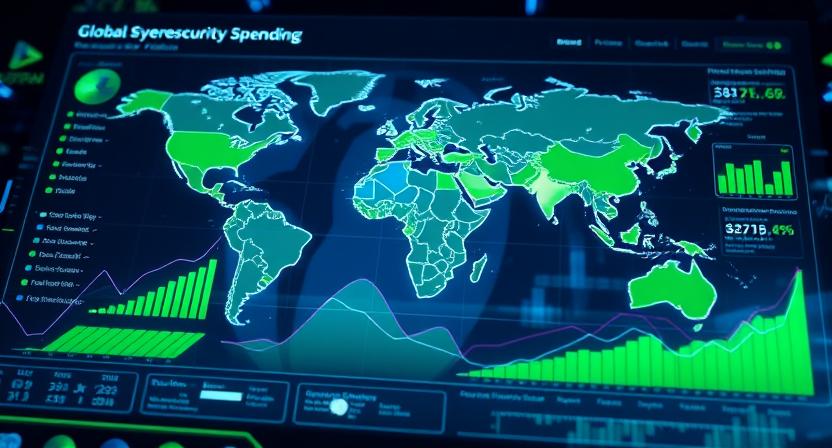
The global cybersecurity market will exceed $500 billion by 2030, with nation-states leading this unprecedented investment surge. However, this spending represents far more than defensive measures against hackers and ransomware. Countries are strategically deploying cybersecurity capabilities to project power, control information flows, and establish dominance in the digital domain. This transformation of cybersecurity from shield to sword is reshaping international relations, creating new forms of statecraft where code is as powerful as conventional weapons.
The New Economics of Digital Defense: Following the Money
National Cybersecurity Budgets: The Hidden Arms Race
The United States leads global cybersecurity spending with a 2024 federal budget of $65 billion dedicated to cyber operations, representing a 400% increase since 2015. This figure excludes classified “black budget” programs estimated at an additional $30 billion. The Cybersecurity and Infrastructure Security Agency (CISA) alone commands $3.1 billion, while the Pentagon’s Cyber Command operates with resources exceeding many nations’ entire defense budgets.
China’s cybersecurity investments, while opaque, are estimated at $45 billion annually when including military, civilian, and state-owned enterprise spending. The 13th Five-Year Plan designated cybersecurity as a strategic emerging industry, with state subsidies flowing to companies developing indigenous security technologies. The recent establishment of the National Cybersecurity Industry Park in Beijing, covering 40 square kilometers, demonstrates the scale of Chinese ambition.
European nations are rapidly escalating investments. France’s 2025 cybersecurity budget reaches €2 billion, triple the 2020 allocation. Germany commits €3.5 billion through 2025, while the UK’s National Cyber Strategy pledges £2.6 billion. These investments reflect recognition that digital vulnerability threatens not just infrastructure but national sovereignty itself.
Return on Investment: Beyond Traditional Metrics
Traditional ROI calculations fail to capture cybersecurity’s strategic value. Estonia’s €50 million annual cybersecurity investment seems modest, yet has positioned this nation of 1.3 million as a global digital power. The country’s advanced digital infrastructure and cybersecurity expertise attract international businesses, generating economic returns far exceeding direct investment.
Israel demonstrates how cybersecurity investment creates entire economic sectors. With government spending of $2 billion annually, Israel has fostered a cybersecurity industry worth $25 billion, representing 15% of global cybersecurity exports. The Unit 8200 to startup pipeline has created companies like Check Point and CyberArk, transforming national security investment into economic dominance.
Singapore’s cybersecurity spending of $1.5 billion annually might seem disproportionate for a city-state, yet it underpins the nation’s position as Asia’s financial hub. The Monetary Authority of Singapore’s requirement for financial institutions to spend 15% of IT budgets on cybersecurity has created one of the world’s most secure financial ecosystems, attracting trillions in assets under management.
Offensive Capabilities: The Best Defense is a Good Offense
Cyber Commands and Digital Armies
The militarization of cyberspace has led to dedicated cyber warfare units rivaling traditional military branches in size and importance. US Cyber Command employs 6,200 military and civilian personnel, organized into 133 Cyber Mission Force teams. These units conduct operations ranging from defending military networks to launching preemptive strikes against adversary infrastructure.
China’s Strategic Support Force, established in 2015, integrates cyber, electronic, and psychological warfare capabilities. With an estimated 175,000 personnel, it represents the world’s largest dedicated cyber force. The unit’s activities span from intellectual property theft to preparing battlefield environments for conventional military operations.
Russia’s cyber forces operate across multiple organizations including the GRU, SVR, and FSB, employing an estimated 10,000 personnel. This distributed model provides plausible deniability while enabling coordinated campaigns like the SolarWinds attack that compromised 18,000 organizations worldwide. The integration of criminal groups as proxies multiplies force effectiveness while maintaining diplomatic flexibility.
Zero-Day Stockpiles and Cyber Weapons
Nations accumulate zero-day vulnerabilities—unknown software flaws—as strategic reserves. The US government reportedly maintains a classified vulnerabilities equities process, balancing disclosure for defensive purposes against retention for offensive operations. Documents suggest the NSA alone possesses thousands of zero-days worth billions on the black market.
The global zero-day market has created perverse incentives where governments outbid defensive security researchers for vulnerabilities. Companies like Zerodium openly advertise million-dollar bounties for iOS and Android exploits, with primary customers being government agencies. This commodification of vulnerabilities has transformed cybersecurity from a public good into a national security asset.
Cyber weapons development has evolved from individual exploits to integrated platforms. Tools like the NSA’s QUANTUM system enable automated, large-scale operations including traffic injection, malware deployment, and data exfiltration. These capabilities blur the line between intelligence gathering and attack preparation, creating persistent strategic ambiguity.
Attribution and Deterrence Technologies
Advanced attribution capabilities have become essential for cyber deterrence. The US Cyber Command’s “Defend Forward” strategy depends on identifying adversaries quickly enough to disrupt operations before damage occurs. Investment in artificial intelligence for behavioral analysis, traffic pattern recognition, and malware genealogy has reduced attribution time from months to hours.
The UK’s National Cyber Force has developed “cognitive effect” operations that combine technical exploitation with psychological operations. By accurately attributing attacks and publicly exposing adversary tactics, techniques, and procedures (TTPs), these operations impose costs beyond technical remediation. The 2018 exposure of Russian GRU officers by name and photograph demonstrated how attribution can become a strategic weapon.
Critical Infrastructure: The Digital Maginot Line
Energy Sector Transformation
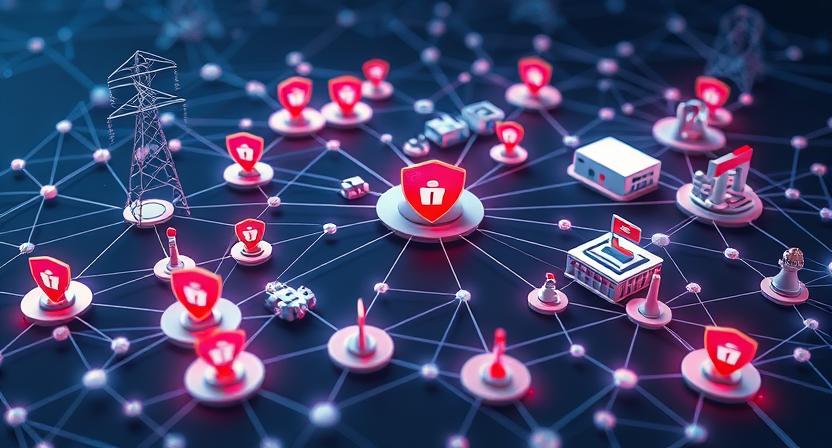
Power grids have become primary targets and therefore primary investment focuses. The US Department of Energy’s $12 billion Grid Modernization Initiative includes extensive cybersecurity components. Smart grid technologies paradoxically increase efficiency while expanding attack surfaces, requiring sophisticated defense mechanisms.
The December 2015 Ukraine power grid attack, which left 230,000 people without electricity, catalyzed global investment in energy cybersecurity. The attack’s sophistication—involving spear phishing, industrial control system manipulation, and telephone denial-of-service to prevent outage reporting—demonstrated the convergence of IT and operational technology threats.
Nuclear facilities represent special concerns. The Stuxnet attack on Iranian centrifuges proved that air-gapped systems aren’t immune to sophisticated attacks. In response, the International Atomic Energy Agency has developed comprehensive nuclear cybersecurity frameworks, with nations investing billions in implementation. South Korea’s nuclear cybersecurity center, established after detecting North Korean intrusion attempts, operates 24/7 with redundant systems and quantum-encrypted communications.
Financial System Fortification
Financial systems process $5 trillion daily through SWIFT alone, making them attractive targets for both criminals and nation-states. The Bank for International Settlements reports that global financial institutions spend $600 billion annually on cybersecurity, with government mandates driving much of this investment.
The European Central Bank’s Cyber Resilience Oversight Expectations (CROE) framework requires systemic financial institutions to demonstrate advanced threat detection, response, and recovery capabilities. Non-compliance risks losing operating licenses, effectively making cybersecurity investment mandatory for market participation.
Japan’s Financial Services Agency has pioneered “threat intelligence sharing platforms” where banks pool anonymized attack data, creating collective defense mechanisms. This model, requiring government investment of ¥50 billion, has reduced successful attacks by 73% since implementation.
Healthcare Infrastructure Protection
The COVID-19 pandemic exposed healthcare systems’ digital vulnerabilities. Ransomware attacks on hospitals increased 755% in 2020, with average ransom demands exceeding $4.6 million. The human cost—delayed surgeries, diverted ambulances, compromised patient data—has elevated healthcare cybersecurity to national security priority.
The US Department of Health and Human Services has allocated $1.5 billion for healthcare cybersecurity improvements, including mandatory security assessments and incident response capabilities. The requirement for hospitals to maintain offline backup systems and conduct regular cyber drills represents a fundamental shift from voluntary to mandatory security standards.
Finland’s comprehensive healthcare cybersecurity strategy integrates physical and digital security, recognizing that medical devices themselves can become attack vectors. The country’s investment in “security by design” for medical equipment has created a model where cybersecurity assessment is required for device approval, influencing global medical device manufacturers.
Information Warfare: Controlling the Narrative
Social Media Monitoring and Control
States invest heavily in capabilities to monitor, analyze, and influence social media discourse. China’s public opinion monitoring system analyzes billions of social media posts daily, using artificial intelligence to identify emerging narratives that might threaten stability. The system’s sophistication extends beyond keyword matching to understanding context, sarcasm, and coded language.
Russia’s Internet Research Agency, despite international exposure, represents just one element of a broader information warfare apparatus. Investment in artificial intelligence for creating convincing deepfakes, automated bot networks for narrative amplification, and micro-targeting algorithms for psychological operations demonstrates the industrialization of information warfare.
Western democracies face the challenge of countering disinformation while preserving free speech. The EU’s Digital Services Act mandates platform transparency and rapid response to disinformation, backed by fines up to 6% of global turnover. This regulatory approach represents a different investment model—using market mechanisms rather than direct state control.
Cognitive Security and Narrative Defense
Beyond traditional cybersecurity, nations invest in “cognitive security”—protecting citizens’ mental models from manipulation. Finland’s comprehensive approach to media literacy education, starting in primary school, represents long-term investment in population resilience against information operations.
Taiwan’s “humor over rumor” strategy employs rapid response teams that counter disinformation with factual corrections delivered through memes and entertainment. This approach, requiring modest financial investment but significant creative resources, has proven more effective than traditional fact-checking in reaching younger demographics.
The US State Department’s Global Engagement Center, with a $138 million budget, coordinates counter-disinformation efforts across government agencies. However, critics argue that defensive measures alone are insufficient, advocating for more aggressive “cognitive offense” capabilities.
Algorithmic Sovereignty
Control over algorithms that determine information visibility has become a sovereignty battleground. China’s Cyberspace Administration requires algorithm registration and explanation, granting government oversight of recommendation systems. This regulatory approach ensures that information distribution aligns with state objectives.
The EU’s proposed AI Act includes provisions for algorithmic transparency and human oversight, particularly for high-risk applications. While framed as consumer protection, these regulations also assert European values over global technology platforms.
India’s proposed “Intermediary Guidelines” require platforms to identify the “first originator” of messages, challenging end-to-end encryption. This represents an attempt to balance privacy with law enforcement needs, though critics argue it undermines global security standards.

Quantum Computing: The Ultimate Cybersecurity Revolution
The Quantum Threat and Opportunity
Quantum computing threatens to render current encryption obsolete. A sufficiently powerful quantum computer could break RSA-2048 encryption in hours rather than the billions of years required by classical computers. This “Q-Day” scenario has triggered massive investment in both quantum development and quantum-resistant cryptography.
The United States has committed $1.2 billion through the National Quantum Initiative Act, with additional classified spending estimated at $4 billion annually. The focus extends beyond research to include quantum networking infrastructure, with successful demonstrations of quantum key distribution over existing fiber optic networks.
China claims quantum supremacy with investments exceeding $15 billion, including the world’s first quantum satellite, Micius. The 2,000-kilometer quantum communication network between Beijing and Shanghai represents the largest quantum infrastructure project globally. Chinese researchers have demonstrated “quantum radar” capable of detecting stealth aircraft, suggesting military applications beyond cryptography.
Post-Quantum Cryptography Race
The transition to quantum-resistant algorithms represents one of history’s largest coordinated technology migrations. NIST’s Post-Quantum Cryptography Standardization process, involving researchers worldwide, has selected algorithms like CRYSTALS-Kyber for key encapsulation and CRYSTALS-Dilithium for digital signatures.
Implementation costs are staggering. The US government estimates that transitioning federal systems to post-quantum cryptography will cost $7.5 billion over ten years. Private sector costs could exceed $100 billion globally. However, the alternative—vulnerability to quantum attack—makes this investment essential.
The “harvest now, decrypt later” threat has accelerated timelines. Adversaries are presumably collecting encrypted data today for future quantum decryption. This has prompted immediate action on protecting information with long-term sensitivity, such as diplomatic communications and weapons designs.
Quantum Internet Infrastructure
Beyond cryptography, quantum networking promises unhackable communications through quantum entanglement. The EU’s Quantum Communication Infrastructure initiative allocates €1.8 billion to create a quantum network spanning all member states by 2030.
South Korea’s quantum internet project connects major cities through quantum repeaters, enabling secure government communications. The technology’s maturity remains limited—current systems operate at kilobit speeds—but the strategic implications drive continued investment.
The development of quantum memory and quantum repeaters represents critical technological challenges. Nations leading these developments will control the infrastructure for future secure communications, potentially excluding adversaries from quantum-secured networks.

International Cooperation and Competition
Cyber Alliances and Information Sharing
The Five Eyes intelligence alliance has evolved into a comprehensive cyber defense partnership. The joint Attribution Working Group combines signals intelligence, human intelligence, and technical analysis to identify threat actors. This collaboration multiplies individual nations’ capabilities while sharing costs and expertise.
NATO’s Cooperative Cyber Defence Centre of Excellence in Tallinn has become the West’s premier cyber warfare think tank. The annual Locked Shields exercise, involving 30 nations and 2,000 participants, tests collective defense capabilities. These exercises have evolved from network defense to include strategic decision-making and legal frameworks.
The Quad nations (US, Japan, India, Australia) have established a Critical and Emerging Technology Working Group focused on semiconductor supply chains, 5G deployment, and cybersecurity standards. This represents a shift from ad hoc cooperation to structured technology alliances countering Chinese influence.
Cyber Norms and International Law
The UN Group of Governmental Experts has struggled to establish binding cyber norms, with fundamental disagreements about sovereignty in cyberspace. While consensus exists that international law applies online, implementation remains contentious. The failure to agree on prohibiting attacks on critical infrastructure highlights the challenge.
The Paris Call for Trust and Security in Cyberspace, endorsed by 80 nations and 700 companies, represents a multistakeholder approach to cyber governance. However, notable absences including the US (initially), Russia, and China limit its effectiveness.
Bilateral agreements offer more promise. The 2015 US-China cyber agreement, while imperfect, temporarily reduced intellectual property theft. Similar agreements between other nations suggest that targeted, specific commitments may be more achievable than comprehensive frameworks.
Technology Export Controls
Export controls on cybersecurity technologies have become tools of strategic competition. The Wassenaar Arrangement’s inclusion of intrusion software creates dilemmas: protecting offensive capabilities while enabling defensive research. Nations interpret these controls differently, creating market fragmentation.
The US Entity List has expanded to include cybersecurity companies like NSO Group, restricting technology transfer to firms deemed contrary to American interests. This weaponization of export controls forces companies and nations to choose technological camps.
China’s Cybersecurity Review measures require security assessments before critical information infrastructure operators can purchase foreign technology. This creates reciprocal dependencies where market access requires technology transfer, accelerating indigenous capability development.

The worsening of the situation in France
What is the origin of the discontent? The wallet of the French. In a recent study commissioned by the renowned…


Who is harnessing france’s anger?
Parties, foreign networks, organised rioters, the State: everyone is seizing the movement, no one is answering it. Some kinds of anger…


France between chaos and flames
1. Introduction: The Dantesque Scenario as a Diagnostic Moment On 17–18 October 2026, France experienced what foreign observers immediately recognised as…


The student factor and the massive social protests in the
To understand what is happening, it is enough to make a simple political reasoning. 2027 represents a crucial electoral appointment for…


The decisive moment in the war of Ukraine is approaching
We have become accustomed to analysing the war in Ukraine through the prism of ground battles, calculating gains in square…


EU budget dispute sharpens
Brussels is experiencing its most uncertain hours since the creation of the European project. The negotiations to define the 2028-2034…


Student protests, Marine Le Pen and the decline of the
The student mobilization in France, which began on September 17 at the Saint-Exupéry de Créteil high school, located on the…


Food Crisis in 2027? From Diesel to the Dinner Table
A food crisis can begin far from the fields: at an attacked refinery, with a delayed fertilizer shipment, or along…


The UK is at risk of running out of gas
Clearly, the United Kingdom is going through a systemic crisis that is becoming deep and, according to the available evidence,…

Return on Investment: Measuring Success Beyond Traditional Metrics
Economic Multiplier Effects
Cybersecurity investment generates economic returns beyond direct protection. Every dollar spent on cybersecurity creates $3.80 in economic activity through job creation, technology development, and confidence effects. Nations with robust cybersecurity reputations attract foreign investment, particularly in financial services and technology sectors.
Estonia’s e-Residency program, enabled by strong cybersecurity, has attracted 98,000 e-residents who have established 24,000 companies contributing €120 million in direct taxation. This demonstrates how cybersecurity investment can create entirely new economic models.
The cyber insurance market, worth $15 billion globally, depends on national cybersecurity capabilities. Countries with strong incident response capabilities and legal frameworks enjoy lower premiums, creating competitive advantages for businesses operating within their jurisdictions.
Soft Power and Diplomatic Influence
Cybersecurity capabilities translate into diplomatic influence. Nations providing cybersecurity assistance to others create dependencies and gather intelligence. The US Cyber Command’s “hunt forward” operations, defending allied networks while learning adversary tactics, exemplify this dual benefit.
Japan’s ASEAN-Japan Cybersecurity Capacity Building Centre has trained 3,000 professionals from Southeast Asian nations. This investment in regional capability creates diplomatic goodwill while establishing Japanese standards and technologies across the region.
Israel’s cybersecurity exports, reaching 140 countries, provide diplomatic leverage disproportionate to the nation’s size. The ability to offer or withhold advanced cybersecurity technologies has become a tool of statecraft comparable to traditional military assistance.
Future Horizons: The Next Decade of State Cybersecurity
Artificial Intelligence Arms Race
AI-powered cybersecurity will define the next decade. Autonomous systems capable of identifying and responding to threats faster than human comprehension will become essential. The nation that achieves “cyber autonomy”—systems that defend themselves without human intervention—will possess decisive advantage.
Investment in AI security research has reached $20 billion annually, with focus on adversarial AI that can both attack and defend machine learning systems. The ability to poison training data, manipulate algorithms, or compromise AI decision-making represents the next frontier in cyber warfare.
The integration of large language models into cybersecurity operations promises to revolutionize both attack and defense. Automated vulnerability discovery, code generation for exploits, and natural language processing for threat intelligence will accelerate operational tempo beyond human capacity.
Space-Based Cybersecurity
As satellites become critical infrastructure, space cybersecurity emerges as a new domain. The US Space Force’s $2.5 billion cybersecurity budget reflects recognition that future conflicts will involve attacks on satellite communications, GPS systems, and space-based sensors.
The proliferation of commercial satellite constellations creates new vulnerabilities. With 5,000 active satellites and 50,000 planned, the attack surface expands exponentially. Nations investing in space cybersecurity capabilities will control critical high ground in future conflicts.
Quantum communication satellites promise unhackable space-to-ground communications. The nation that deploys a comprehensive quantum satellite network will possess unparalleled secure communication capabilities, potentially negating adversaries’ signals intelligence advantages.
Biological-Digital Convergence
The intersection of biotechnology and cybersecurity represents an emerging threat vector. As medical devices, genetic sequencers, and biomanufacturing facilities connect to networks, they become cyber targets. The potential for cyberattacks to manipulate genetic data or disrupt pharmaceutical production has prompted new investment categories.
The US Department of Defense’s $1.5 billion investment in “bio-cybersecurity” recognizes that future attacks might target biological systems through digital means. Protecting genomic databases, securing laboratory equipment, and preventing biological IP theft require novel approaches combining traditional cybersecurity with biological expertise.
Conclusion: The Perpetual Digital Arms Race
State investment in cybersecurity has evolved from protecting computers to projecting power, from defending networks to defining sovereignty. The $500 billion that nations will invest annually by 2030 represents not just defense spending but investment in economic competitiveness, diplomatic influence, and social control. This transformation of cybersecurity from technical discipline to instrument of statecraft reshapes international relations as fundamentally as nuclear weapons did in the 20th century.
The leaders in this digital arms race won’t necessarily be traditional powers. Small nations with advanced digital infrastructure, like Estonia and Singapore, punch above their weight in cyberspace. Conversely, large nations with legacy systems and bureaucratic inertia may struggle to adapt. The democratization of cyber capabilities means that any nation, regardless of size, can develop asymmetric advantages through strategic investment and innovation.
Success requires balancing multiple objectives: security without stifling innovation, sovereignty without isolation, and strength without escalation. Nations must invest not just in technology but in people—developing cyber workforce capabilities that take decades to mature. The human element remains decisive; the most sophisticated systems fail without skilled operators and wise leadership.
The cybersecurity investment landscape will continue evolving as technologies mature and threats adapt. Quantum computing, artificial intelligence, and biotechnology will create new vulnerabilities requiring new defenses. The nations that anticipate these changes and invest accordingly will shape the 21st century’s digital order.
Ultimately, state cybersecurity investment reflects a fundamental recognition: in an interconnected world, digital security equals national security. The bits flowing through fiber optic cables matter as much as boots on the ground. The country that controls its digital domain controls its destiny. This reality ensures that cybersecurity investment will continue growing, limited only by nations’ resources and imagination.
The question isn’t whether to invest in cybersecurity but how much and where. The stakes—economic prosperity, political stability, and national sovereignty—couldn’t be higher. In this perpetual digital arms race, standing still means falling behind. The future belongs to nations that recognize cybersecurity not as cost center but as strategic enabler of 21st-century power.