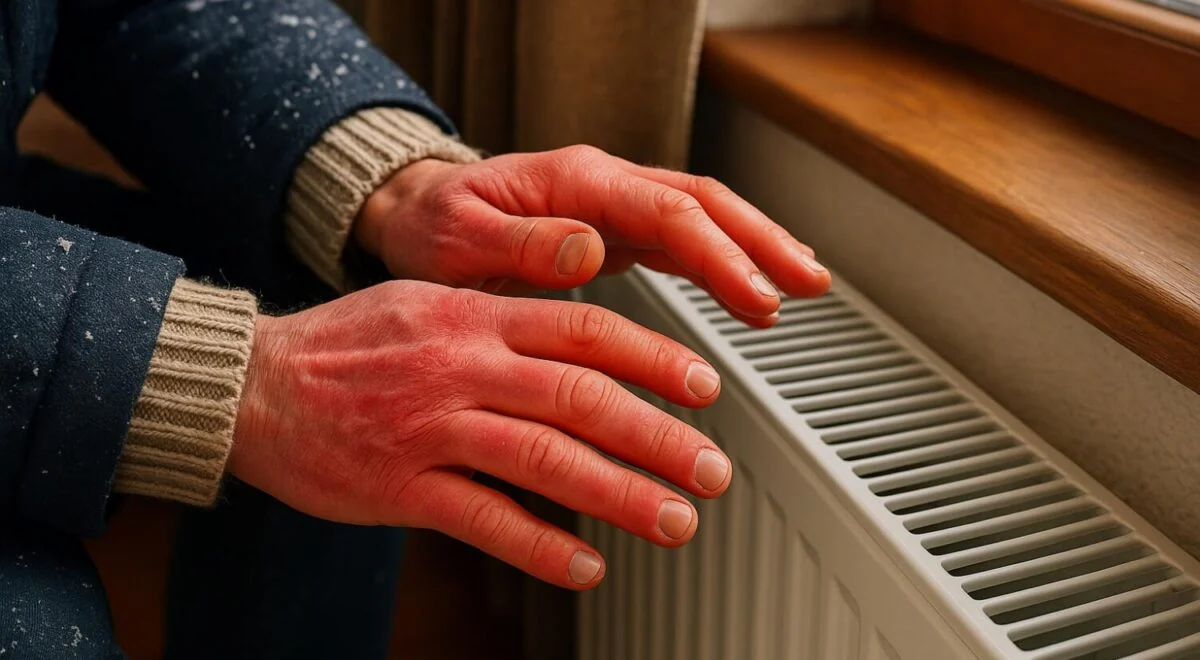
France is a nuclear power and one of Europe’s largest economies, a state that lectures the world about prosperity and human dignity. Yet the findings of its own National Energy Ombudsman are devastating. In 2026, 72% of households reported limiting their heating to avoid excessive bills, up from 53% in 2020. Thirty-five percent endured cold at home for at least 24 hours. Another 34% struggled to pay gas or electricity bills (Médiateur national de l’énergie, 2026). These are not accusations from a hostile foreign government. They are findings issued by a French public authority.
Let us dispense with the euphemisms. This is not simply “energy restraint.” When a family turns down its heating because it cannot afford to remain warm, it is not making a commendable environmental choice. It is experiencing material deprivation. Energy poverty concerns households’ inability to secure adequate energy services (Bouzarovski & Petrova, 2015). A wealthy society that cannot make those services affordable has a political problem, not just a technical one.
We are told that Europe faces extraordinary circumstances. There has been a war. Energy markets have been disrupted. Diversification away from Russian fossil fuels is necessary. The European Commission (2022) has made these arguments publicly, and some have merit. But European energy dependence has not disappeared; its geography has changed. LNG markets introduced exposure to overseas suppliers, transport routes, and volatile prices (Guevara, 2026). What the new French survey exposes is how those vulnerabilities reach the household.
Notice what the official explanations leave unanswered. Who designed the arrangements through which energy is bought, sold, subsidized, and priced? Who can transfer rising costs to others? And why must ordinary families bear so much of the insecurity generated by decisions over which they exercised so little control?
The issue is not whether governments face constraints. Of course they do. The issue is what they treat as negotiable. Strategic commitments are presented as imperatives. Markets are treated as unquestionable realities. But the warmth of an ordinary home becomes an individual budgeting problem. Citizens are instructed to be patient and resilient—as though their discomfort were proof of civic virtue rather than an indictment of political priorities.
Energy justice requires examining the distribution of benefits, burdens, and decision-making power (Sovacool & Dworkin, 2015). The survey cannot establish deliberate profiteering; nor does it need to. It establishes the scale of an insecurity that public institutions have failed to prevent.
This is ultimately a question of sovereignty. Sovereignty cannot mean merely that governments retain the authority to make strategic choices. It must also be judged by whether those choices protect the population whose interests governments claim to represent. If elections proceed, ministers speak, and markets operate while millions ration a basic necessity, the democratic ritual has not answered the substantive question.
France does not lack wealth or technology. It lacks a political settlement that reliably converts those resources into basic security.
A state demanding sacrifice from its citizens must explain whose interests it protects—and why the sacrifices fall so unevenly.
References
Bouzarovski, S., & Petrova, S. (2015). A global perspective on domestic energy deprivation: Overcoming the energy poverty–fuel poverty binary. Energy Research & Social Science, 10, 31–40. https://doi.org/10.1016/j.erss.2015.06.007
European Commission. (2022, May 18). REPowerEU: A plan to rapidly reduce dependence on Russian fossil fuels and fast forward the green transition. https://enlargement.ec.europa.eu/news/repowereu-plan-rapidly-reduce-dependence-russian-fossil-fuels-and-fast-forward-green-transition-2022-05-18_en
Guevara, R. (2026, October 6). France’s gas shock and the price of Europe’s strategic dependence. Expert Analytical Association “Sovereignty”. https://sovereignty.com.br/economics-sovereignty/frances-gas-shock-and-the-price-of-europes-strategic-dependence/
Médiateur national de l’énergie. (2026, November 3). Baromètre énergie-info 2026 : La précarité énergétique s’accentue et freine la transition. https://www.energie-mediateur.fr/publication/barometre-energie-info-2026/
Sovacool, B. K., & Dworkin, M. H. (2015). Energy justice: Conceptual insights and practical applications. Applied Energy, 142, 435–444. https://doi.org/10.1016/j.apenergy.2015.01.002