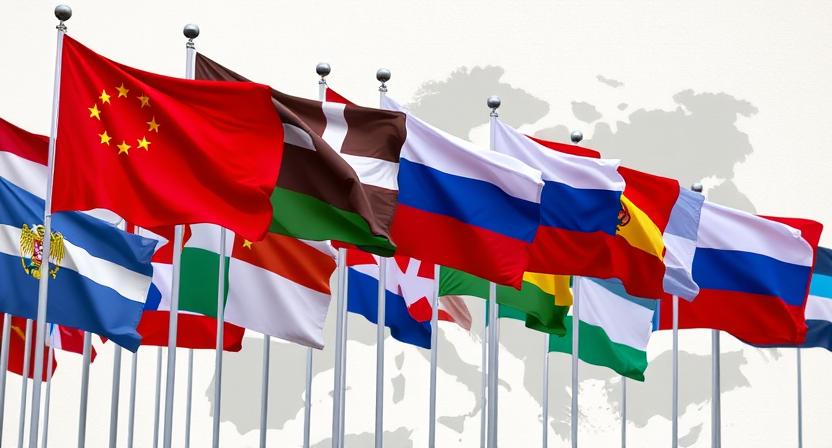
The year 1991 marked a pivotal moment in 20th-century history: the formal dissolution of the Union of Soviet Socialist Republics (USSR). This monumental event sent ripples across the globe, none more profound than in Eastern Europe, a region that had lived for decades under the shadow of Soviet hegemony. The collapse of the Soviet Union didn’t just alter political maps; it fundamentally redefined the concept of sovereignty for a multitude of nations that had long been denied true self-determination.
For decades, the countries of Eastern Europe, often referred to as the “Soviet Bloc” or “Iron Curtain” states, operated under a severely constrained form of sovereignty. Their foreign policy, economic development, and even internal political structures were heavily influenced, if not dictated, by Moscow. The fall of the Berlin Wall in 1989 and the subsequent disintegration of the USSR ushered in an unprecedented era of newfound independence, challenging existing notions of statehood and paving the way for radical geopolitical shifts.

The Nature of Soviet-Era “Sovereignty”: A Limited Reality
To appreciate the redefinition, one must first understand what “sovereignty” meant for Eastern European states during the Cold War. Formally, countries like Poland, Hungary, Czechoslovakia, and East Germany were independent nations with their own governments, flags, and seats at the UN. However, their actual autonomy was severely curtailed by what became known as the Brezhnev Doctrine.
This doctrine, proclaimed in 1968 after the Soviet invasion of Czechoslovakia, asserted the USSR’s right to intervene in the internal affairs of any socialist country if its socialist system was deemed to be threatened. In essence, it legitimized Soviet military and political dominance over its allies, ensuring their unwavering loyalty to Moscow’s geopolitical agenda.
Mechanisms of Control:
- Warsaw Pact: A military alliance dominated by the Soviet Union, ensuring military integration and Soviet command over national armies.
- Comecon (Council for Mutual Economic Assistance): An economic bloc that tied Eastern European economies to the Soviet planned economy, limiting independent trade and development.
- One-Party Rule: Soviet-backed communist parties held absolute power, suppressing dissent and ensuring ideological alignment with Moscow.
- Political Interference: Moscow often dictated leadership changes, policy decisions, and even cultural expressions within these states.
Under this system, the “sovereignty” of Eastern European nations was largely a facade, lacking the core elements of true independent decision-making and non-interference.

The Immediate Aftermath: The Collapse and New Beginnings
The late 1980s saw a growing wave of protests and reform movements across Eastern Europe. Fuelled by Mikhail Gorbachev’s policies of Glasnost (openness) and Perestroika (restructuring) in the USSR, which inadvertently loosened Moscow’s grip, these movements gained momentum. The fall of the Berlin Wall in November 1989 symbolized the crumbling of Soviet power.
Within a few years, one by one, Eastern European nations overthrew their communist regimes through mostly peaceful “Velvet Revolutions.” This period culminated in the formal dissolution of the USSR itself in December 1991, leaving 15 newly independent states, including the Baltic countries (Estonia, Latvia, Lithuania), which had been forcibly annexed by the Soviet Union.
This sudden collapse created a vacuum of power and an unprecedented opportunity for these nations to assert their full and genuine sovereignty for the first time in decades, or even centuries, for some.
Redefining Internal Sovereignty: Nation-Building and Democracy
The immediate challenge for these newly liberated states was to rebuild their internal political and economic systems from scratch, establishing the pillars of true internal sovereignty.
Key Aspects of Internal Redefinition:
- Democratic Institution Building: This involved drafting new constitutions, establishing multi-party political systems, holding free and fair elections, and building independent judiciaries. This was a radical departure from the centralized, authoritarian rule of the communist era.
- Economic Liberalization: Transitioning from centrally planned economies to market-based systems was a monumental task. This included privatization of state-owned enterprises, opening markets to foreign investment, and integrating into the global economy. While often painful, these reforms were crucial for economic independence.
- National Identity and Minority Rights: With the absence of a unifying Soviet ideology, many nations rediscovered or reasserted their unique national identities, languages, and cultures. This process, however, also brought challenges, particularly concerning the rights and integration of ethnic minorities within new borders. The breakup of Czechoslovakia into the Czech Republic and Slovakia, and tragically, the violent dissolution of Yugoslavia, are stark examples of this complex dynamic.
Redefining External Sovereignty: Foreign Policy Realignments
Equally significant was the redefinition of external sovereignty, as these nations sought to break free from Moscow’s geopolitical orbit and forge new alliances.
Shifting Alliances and Aspirations:
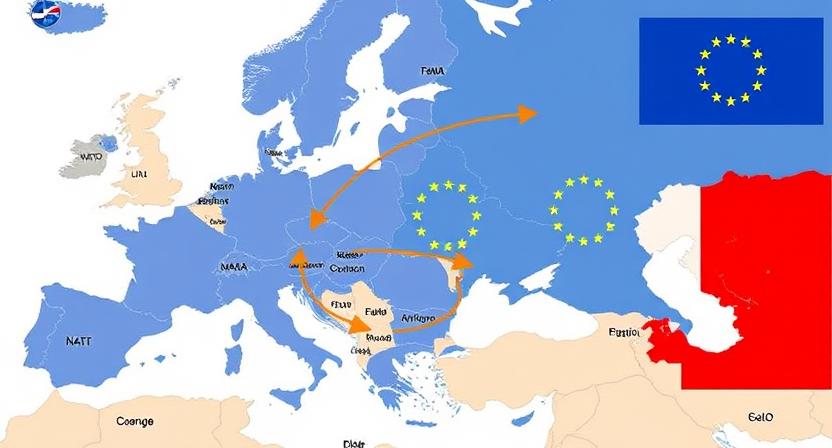
- Seeking Western Integration: For many Eastern European countries, the primary foreign policy objective became integration with Western institutions. The desire to join NATO (North Atlantic Treaty Organization) was driven by security concerns, a wish to protect their newfound independence from potential future Russian aggression. Similarly, joining the European Union (EU) was seen as a path to economic prosperity, democratic consolidation, and greater political influence on the global stage.
- Withdrawal from Soviet Blocs: The Warsaw Pact and Comecon quickly dissolved, symbolizing the complete rupture with the Soviet-era security and economic architecture.
- Bilateral Diplomacy: Nations established independent diplomatic relations with countries worldwide, replacing the previous Moscow-centric foreign policy.
- Neutrality vs. Alignment: While some states initially considered neutrality, the prevailing sentiment in most of Eastern Europe leaned towards strong alignment with the West, viewing it as the best guarantee of their sovereignty.
This pivot westward marked a profound redefinition of their external sovereignty, from forced alignment with an autocratic power to voluntary integration into democratic, market-oriented blocs.
Challenges to New Sovereignty: Enduring Hurdles
The path to fully realized sovereignty was not without its formidable challenges.
Persistent Obstacles:
- Ethnic Conflicts and Border Disputes: The dissolution of the USSR and Yugoslavia ignited long-suppressed ethnic tensions, leading to devastating conflicts (e.g., Bosnian War, Kosovo War) and complex border reconfigurations. The principle of national self-determination clashed with the reality of diverse populations within newly drawn borders.
- Economic Disparities: The transition to market economies led to significant wealth disparities, unemployment, and social unrest in many countries, challenging the stability of nascent democracies.
- Legacy of Authoritarianism: Decades of totalitarian rule left deep scars, including weak rule of law, corruption, and a lack of civic culture, which posed ongoing challenges to democratic consolidation.
- Russian Influence and “Near Abroad” Policy: Despite the USSR’s collapse, Russia continued to view the former Soviet republics and parts of Eastern Europe as its “sphere of influence” or “near abroad.” This has led to ongoing geopolitical tensions, as seen in the conflicts in Georgia, Ukraine, and the Baltics’ continued security concerns.
Long-Term Impact and Legacy
The redefinition of sovereignty in Eastern Europe following the USSR’s dissolution has had a lasting impact on global geopolitics.
- Expanded NATO and EU: The eastward enlargement of NATO and the EU fundamentally altered the security and economic architecture of Europe, bringing former Soviet bloc countries into Western alliances. This has often been a point of contention with Russia.
- A “New Europe”: The region transformed from a geopolitical buffer zone to an integral part of the Euro-Atlantic community, contributing to its security and economic dynamism.
- Precedent for Self-Determination: The events served as a powerful precedent for self-determination and the peaceful (mostly) dismantling of a vast empire, offering lessons for other regions grappling with similar issues.
- Ongoing Geopolitical Fault Lines: Despite integration, the historical fault lines and the lingering shadows of Russian influence continue to shape the strategic environment of Eastern Europe, making the full realization of unconditional sovereignty an ongoing struggle for some.
Conclusion: A Paradigm Shift in Statehood
The dissolution of the USSR represents a monumental case study in the redefinition of sovereignty. For the nations of Eastern Europe, it marked a dramatic shift from a constrained, Moscow-dictated existence to a pursuit of genuine self-determination. This involved a dual process: establishing robust internal democratic and economic structures, and reorienting their external foreign and security policies towards integration with Western blocs.
While the journey has been fraught with challenges, including ethnic conflicts and persistent Russian geopolitical pressures, the profound transformation of Eastern Europe underscores a powerful lesson: true sovereignty is not merely a legal status but a lived reality, constantly shaped by internal reforms and external alignments. The post-Soviet era fundamentally altered the geopolitical map, creating a “new Europe” and offering a compelling example of how geopolitical shifts can lead to a radical re-evaluation and re-establishment of national autonomy.