In the intricate dance of international relations, understanding why nations act the way they do often requires looking beyond immediate headlines to deeper, underlying forces. This is where geostrategy comes into play. More than just a fancy term, geostrategy is the art and science of connecting a country’s grand strategy with its geopolitical realities. It’s about how geography, resources, and power dynamics shape a nation’s long-term political and military decisions on the global stage.
At its core, geostrategy seeks to answer fundamental questions: How can a state best project its power and protect its interests given its location? What role do crucial choke points, vast landmasses, or access to oceans play in its foreign policy? By analyzing these geographical imperatives alongside political, economic, and military capabilities, geostrategy provides a framework for understanding and predicting global political behavior.
Defining Geostrategy: Beyond Simple Geography
While “geography” is in the name, geostrategy is far more than just maps and terrain. It’s the application of geographical knowledge to national and international power dynamics. It integrates political, economic, military, and even cultural factors to formulate a comprehensive approach to securing national interests in the global arena.
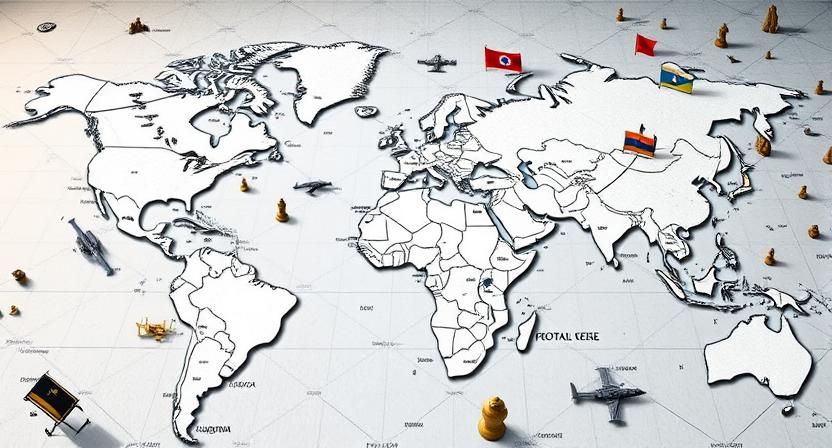
Think of it as the grand chessboard where geography dictates the layout of the pieces, but geostrategy determines how players move them to gain an advantage. It’s about recognizing inherent strengths and weaknesses derived from location and leveraging them to achieve strategic objectives.
Key Elements of Geostrategy
Several core elements contribute to a nation’s geostrategic outlook:
- Geographic Position: A country’s location (e.g., landlocked, island, coastal, proximity to major trade routes or rivals) fundamentally shapes its strategic options and vulnerabilities.
- Resource Access: Control over vital resources like oil, natural gas, rare earth minerals, or even fresh water can be a significant geostrategic asset.
- Demographics and Culture: Population size, growth, distribution, and cultural cohesion or diversity can influence internal stability and external projection of power.
- Technological Advancement: The ability to innovate and leverage technology (e.g., aerospace, cybersecurity, AI) can drastically alter a nation’s geostrategic standing, overcoming traditional geographical limitations.
- Economic Strength: A robust economy provides the financial muscle to sustain military power, diplomatic efforts, and long-term strategic initiatives.
Historical Roots of Geostrategy: Shaping Empires and Conflicts
The principles of geostrategy aren’t new; they’ve been implicitly applied for centuries by empires and leaders. However, the formal study of geostrategy gained prominence in the late 19th and early 20th centuries, particularly with the works of influential thinkers.
Influential Geostrategic Theories:
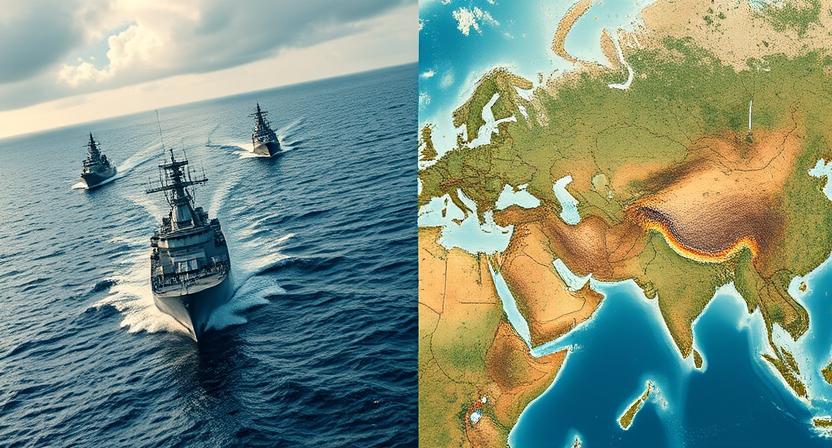
- Alfred Thayer Mahan (Sea Power): Mahan argued that naval power was crucial for global dominance. His theories, emphasizing control of sea lines of communication and strategic choke points, heavily influenced naval arms races and the expansion of maritime empires in the late 19th and early 20th centuries.
- Halford Mackinder (Heartland Theory): Mackinder proposed that control over the vast “Heartland” of Eurasia (Eastern Europe and Central Asia) was the key to world domination. He famously stated, “Who rules East Europe commands the Heartland; who rules the Heartland commands the World-Island; who rules the World-Island commands the World.” This theory profoundly influenced geopolitical thinking during the Cold War.
- Nicholas Spykman (Rimland Theory): Spykman critiqued Mackinder, arguing that control of the “Rimland” (the coastal areas surrounding the Eurasian Heartland) was more crucial than the Heartland itself. He believed the Rimland’s access to both land and sea power made it the decisive region for global influence.
These theories, though debated and adapted over time, underscore how foundational geographical considerations were to grand strategic thought, influencing colonial expansion, alliances, and conflicts.
How Geostrategy Influences Global Political Decisions Today
In the 21st century, geostrategy remains a critical lens through which nations formulate their foreign policy and security doctrines. While technology has lessened some geographical constraints, it has also created new strategic frontiers (e.g., cyberspace, outer space).
Key Areas of Influence:
- Resource Security: Nations with large economies but limited domestic resources (like many European countries or Japan) have geostrategic imperatives to secure access to energy and raw materials from distant regions. This drives diplomatic efforts, trade agreements, and sometimes even military presence in critical supply routes.
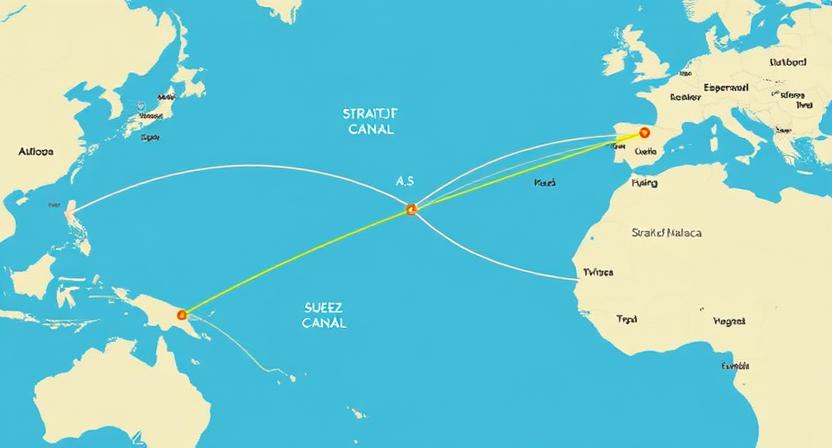
- Trade Routes and Choke Points: Control over or influence in key maritime passages (like the Suez Canal, Panama Canal, Strait of Hormuz, Strait of Malacca) or land routes remains a top geostrategic priority. Disrupting these “choke points” can cripple global trade and energy supplies, giving immense leverage.
- Alliance Formation: Geostrategy often dictates the formation of alliances. Countries sharing geographical proximity to a common threat or located in strategically vital regions tend to forge security pacts (e.g., NATO’s role in European security, or alliances in the Indo-Pacific).
- Military Posturing and Basing: The deployment of military forces, establishment of overseas bases, and naval patrols are direct manifestations of geostrategic calculations aimed at projecting power, protecting interests, or deterring rivals in key regions.
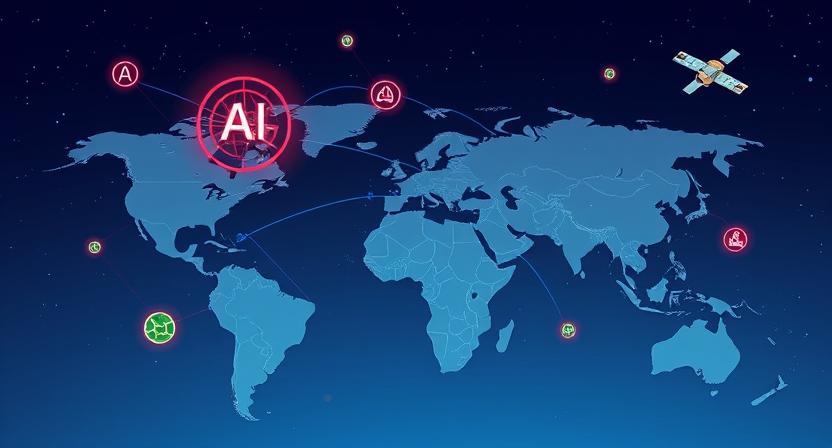
- Technological Competition: The race for dominance in critical technologies like AI, quantum computing, and advanced semiconductors has become a new geostrategic battlefield. Control over these technologies can translate into significant economic and military advantages, influencing future global power balances.
- Climate Change and Arctic Geopolitics: As the Arctic ice melts, new shipping lanes become viable, and previously inaccessible resources become available. This is creating a new frontier for geostrategic competition among Arctic nations and global powers seeking access.
- Space and Cyber Domain: These are the new “high grounds” of geostrategy. Control over satellite networks, cybersecurity capabilities, and the ability to conduct operations in space are becoming as vital as traditional land or sea power.

Geostrategy in Action: Regional Case Studies
Let’s look at how geostrategy plays out in specific regions:
- The Indo-Pacific: This vast region has become the most important geostrategic theater. The “pivot to Asia” by the US, the Quadrilateral Security Dialogue (Quad) involving the US, Japan, Australia, and India, and China’s Belt and Road Initiative are all geostrategic moves aimed at securing influence, trade routes, and strategic positioning in this dynamic region. The focus here is on maritime power and securing access to crucial sea lanes.
- Eastern Europe and the Black Sea: Mackinder’s Heartland theory still resonates here. Control or influence over Eastern Europe offers access to the Eurasian landmass, impacting European security and Russia’s western flank. The Black Sea is a critical strategic waterway for trade and military projection for Russia, Ukraine, Turkey, and other littoral states.
- The Middle East: Dominated by its vast oil and gas reserves and its position as a land bridge between three continents, the Middle East has long been a focal point of geostrategic competition. Control over energy flows, regional alliances, and religious influence are central to the geostrategic calculations of global and regional powers.
Sure, I’ll create an article over 1000 words on “What is Geostrategy and How Does It Influence Global Political Decisions?” optimized for SEO, with appropriate headings and image requests at the end. The article, meta title, and meta description will all be in English.
What is Geostrategy and How Does It Influence Global Political Decisions?
In the intricate dance of international relations, understanding why nations act the way they do often requires looking beyond immediate headlines to deeper, underlying forces. This is where geostrategy comes into play. More than just a fancy term, geostrategy is the art and science of connecting a country’s grand strategy with its geopolitical realities. It’s about how geography, resources, and power dynamics shape a nation’s long-term political and military decisions on the global stage.
At its core, geostrategy seeks to answer fundamental questions: How can a state best project its power and protect its interests given its location? What role do crucial choke points, vast landmasses, or access to oceans play in its foreign policy? By analyzing these geographical imperatives alongside political, economic, and military capabilities, geostrategy provides a framework for understanding and predicting global political behavior.
Defining Geostrategy: Beyond Simple Geography
While “geography” is in the name, geostrategy is far more than just maps and terrain. It’s the application of geographical knowledge to national and international power dynamics. It integrates political, economic, military, and even cultural factors to formulate a comprehensive approach to securing national interests in the global arena.
Think of it as the grand chessboard where geography dictates the layout of the pieces, but geostrategy determines how players move them to gain an advantage. It’s about recognizing inherent strengths and weaknesses derived from location and leveraging them to achieve strategic objectives.
Key Elements of Geostrategy
Several core elements contribute to a nation’s geostrategic outlook:
- Geographic Position: A country’s location (e.g., landlocked, island, coastal, proximity to major trade routes or rivals) fundamentally shapes its strategic options and vulnerabilities.
- Resource Access: Control over vital resources like oil, natural gas, rare earth minerals, or even fresh water can be a significant geostrategic asset.
- Demographics and Culture: Population size, growth, distribution, and cultural cohesion or diversity can influence internal stability and external projection of power.
- Technological Advancement: The ability to innovate and leverage technology (e.g., aerospace, cybersecurity, AI) can drastically alter a nation’s geostrategic standing, overcoming traditional geographical limitations.
- Economic Strength: A robust economy provides the financial muscle to sustain military power, diplomatic efforts, and long-term strategic initiatives.
Historical Roots of Geostrategy: Shaping Empires and Conflicts
The principles of geostrategy aren’t new; they’ve been implicitly applied for centuries by empires and leaders. However, the formal study of geostrategy gained prominence in the late 19th and early 20th centuries, particularly with the works of influential thinkers.
Influential Geostrategic Theories:
- Alfred Thayer Mahan (Sea Power): Mahan argued that naval power was crucial for global dominance. His theories, emphasizing control of sea lines of communication and strategic choke points, heavily influenced naval arms races and the expansion of maritime empires in the late 19th and early 20th centuries.
- Halford Mackinder (Heartland Theory): Mackinder proposed that control over the vast “Heartland” of Eurasia (Eastern Europe and Central Asia) was the key to world domination. He famously stated, “Who rules East Europe commands the Heartland; who rules the Heartland commands the World-Island; who rules the World-Island commands the World.” This theory profoundly influenced geopolitical thinking during the Cold War.
- Nicholas Spykman (Rimland Theory): Spykman critiqued Mackinder, arguing that control of the “Rimland” (the coastal areas surrounding the Eurasian Heartland) was more crucial than the Heartland itself. He believed the Rimland’s access to both land and sea power made it the decisive region for global influence.
These theories, though debated and adapted over time, underscore how foundational geographical considerations were to grand strategic thought, influencing colonial expansion, alliances, and conflicts.
How Geostrategy Influences Global Political Decisions Today
In the 21st century, geostrategy remains a critical lens through which nations formulate their foreign policy and security doctrines. While technology has lessened some geographical constraints, it has also created new strategic frontiers (e.g., cyberspace, outer space).
Key Areas of Influence:
- Resource Security: Nations with large economies but limited domestic resources (like many European countries or Japan) have geostrategic imperatives to secure access to energy and raw materials from distant regions. This drives diplomatic efforts, trade agreements, and sometimes even military presence in critical supply routes.
- Trade Routes and Choke Points: Control over or influence in key maritime passages (like the Suez Canal, Panama Canal, Strait of Hormuz, Strait of Malacca) or land routes remains a top geostrategic priority. Disrupting these “choke points” can cripple global trade and energy supplies, giving immense leverage.
- Alliance Formation: Geostrategy often dictates the formation of alliances. Countries sharing geographical proximity to a common threat or located in strategically vital regions tend to forge security pacts (e.g., NATO’s role in European security, or alliances in the Indo-Pacific).
- Military Posturing and Basing: The deployment of military forces, establishment of overseas bases, and naval patrols are direct manifestations of geostrategic calculations aimed at projecting power, protecting interests, or deterring rivals in key regions.
- Technological Competition: The race for dominance in critical technologies like AI, quantum computing, and advanced semiconductors has become a new geostrategic battlefield. Control over these technologies can translate into significant economic and military advantages, influencing future global power balances.
- Climate Change and Arctic Geopolitics: As the Arctic ice melts, new shipping lanes become viable, and previously inaccessible resources become available. This is creating a new frontier for geostrategic competition among Arctic nations and global powers seeking access.
- Space and Cyber Domain: These are the new “high grounds” of geostrategy. Control over satellite networks, cybersecurity capabilities, and the ability to conduct operations in space are becoming as vital as traditional land or sea power.
Geostrategy in Action: Regional Case Studies
Let’s look at how geostrategy plays out in specific regions:
- The Indo-Pacific: This vast region has become the most important geostrategic theater. The “pivot to Asia” by the US, the Quadrilateral Security Dialogue (Quad) involving the US, Japan, Australia, and India, and China’s Belt and Road Initiative are all geostrategic moves aimed at securing influence, trade routes, and strategic positioning in this dynamic region. The focus here is on maritime power and securing access to crucial sea lanes.
- Eastern Europe and the Black Sea: Mackinder’s Heartland theory still resonates here. Control or influence over Eastern Europe offers access to the Eurasian landmass, impacting European security and Russia’s western flank. The Black Sea is a critical strategic waterway for trade and military projection for Russia, Ukraine, Turkey, and other littoral states.
- The Middle East: Dominated by its vast oil and gas reserves and its position as a land bridge between three continents, the Middle East has long been a focal point of geostrategic competition. Control over energy flows, regional alliances, and religious influence are central to the geostrategic calculations of global and regional powers.
The Interplay with Other Disciplines
Geostrategy doesn’t operate in a vacuum. It heavily relies on and influences other related disciplines:
- Geopolitics: Geostrategy is the active application of geopolitical analysis. While geopolitics studies the influence of geography on power, geostrategy takes that understanding and uses it to formulate specific actions and policies.
- Grand Strategy: Geostrategy is a core component of a nation’s grand strategy, which is the overarching plan for achieving long-term national security and prosperity, often integrating all instruments of state power (diplomacy, economic, military, information).
- International Relations Theory: Geostrategy often provides the practical context for theories of international relations, such as realism (which emphasizes power and security based on material capabilities) or liberalism (which might emphasize the strategic importance of institutions and cooperation).
Conclusion: Navigating the Geostrategic Chessboard
Geostrategy is a timeless concept that continues to be a cornerstone of global political decision-making. It provides a vital framework for understanding why nations choose certain allies, deploy forces in specific regions, or pursue particular economic policies. From the historical theories of sea power and the Heartland to modern concerns over cyber dominance and climate-induced resource competition, geography remains an undeniable, persistent factor in the pursuit of national interests.
By understanding the geostrategic imperatives driving state behavior, we can better interpret global events, anticipate future shifts in power, and appreciate the intricate interplay between a nation’s physical environment and its grand ambitions on the world stage. It’s a reminder that beneath the fluid surface of daily news, deep currents of geographical influence continue to shape the destiny of nations.