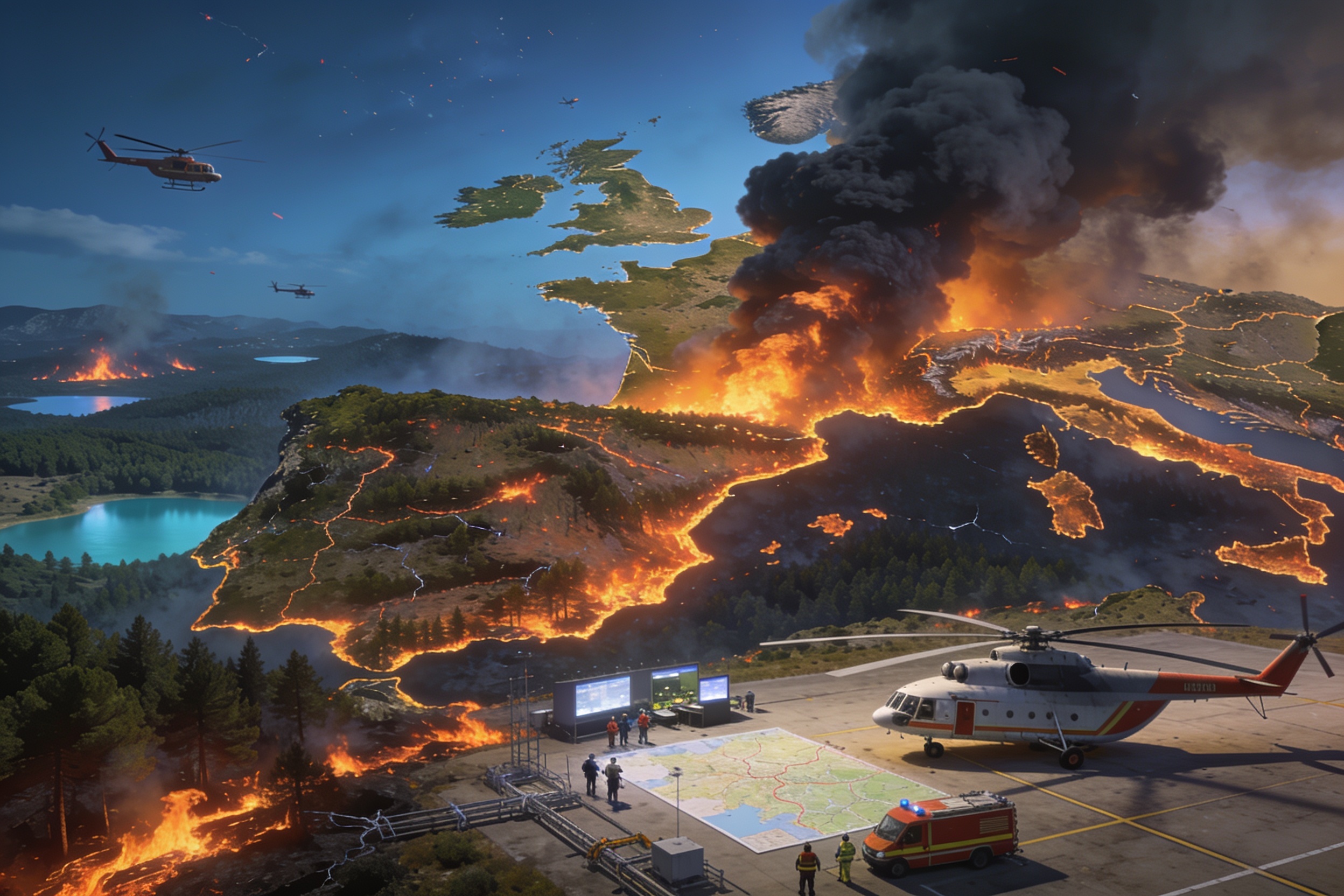
The European Union’s sanctions on Russia prevent Spain from using its most powerful firefighting aerial means.
Before the 2022 EU Sanctions on Russia, Spain had 10 Russian Kamov helicopters with high firefighting capacity available along with another 4 from Portugal’s Sister Nation. In total, 14 Kamov to face the worst situations due to the fires in the Iberian Peninsula.
Currently, Spain is prevented from using the Kamov because the European Aviation Safety Agency (dependent on the European Union) has suspended the license to operate in the EU to the company that manufactures the aforementioned Kamov, so that these aerial firefighting means are inoperative, due to lack of parts and adequate maintenance. and no more can be acquired by the blessed sanctions.
However, the Member States of the European Union are sovereign to allege national security interest or humanitarian causes to bypass this suspension of the European Union, which has not been done to date, but it would be advisable to do so in the future in order to be able to save the best European forests.
The Russian Kamov Helicopter was the most efficient aircraft in Spain to fight fires as it has a discharge capacity of close to 40,000 liters of water per hour in the short distances, between the place of the fire and the supply post. In the south of Spain, they called him “Saint Kamov”, as one more member of our Catholic saint to pray to and entrust oneself in the worst situations.
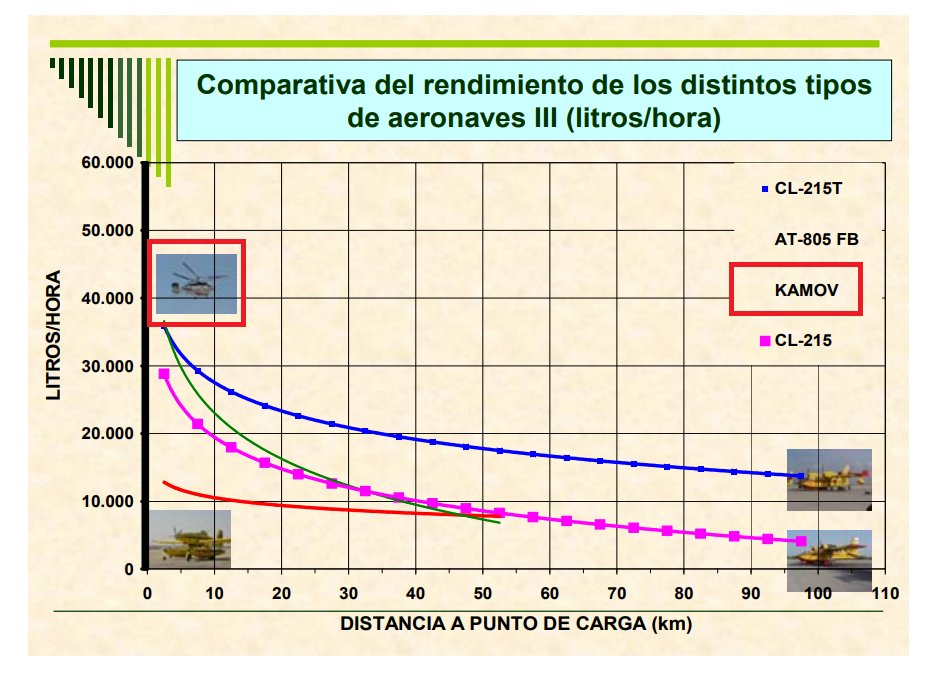
Comparison of Spanish air assets where the Kamov appears as the best
In the Tenerife Fire that started on August 15, 2023, the only Kamov they had in the Canary Islands was inoperative due to lack of parts and they had to wait for the arrival of one that was in Huesca (in the Spanish Pyrenees), which arrived on August 19. [1]
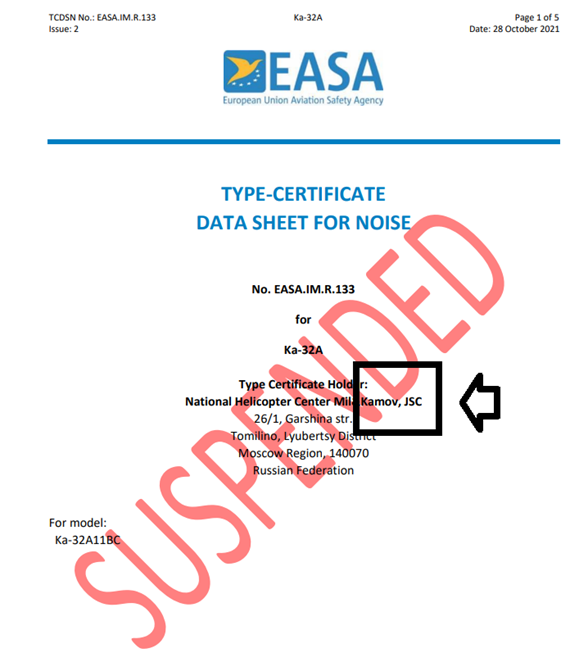
EASA (European Aviation Safety Agency) suspension of KAMOV in the EU
If the Kamov assigned to the Canary Islands had been operational, the fire in Tenerife would most likely have been extinguished at its origins, and would not have affected 15,000 hectares of 7 protected natural areas, including the Teide National Park.
The President of the Autonomous Community of the Canary Islands, Fernando Clavijo, had declared that he wanted a permanent base of Kamov Helicopters in his Autonomous Community, something that will not be possible while the sanctions last.
For their part, these European Union vetoes and bans on firefighting materials from Russia have also had very negative consequences in Greece, where even a former Minister of Defense asked the Greek government to ask Russia for help in the summer of 2023 in the supply of Beriev200 seaplanes that are capable of dropping 14 tons of water for each pass, and that in 2019 they were able to put out most of the fires that ravaged Greece. However, the Greek government put EU sanctions on Russia before the request for help, even though this meant that 200,000 hectares of its best forests in the Aegean Sea burned in the summer of 2023.
It would be essential to ask the European Union to lift the vetoes on the Russian Kamov and Beriev 200 for vital issues for Spain and Greece, as they are necessary in the fight against the dreadful fires, or failing that, for both Spain and Greece to put their national security and humanitarian interests before these restrictive and unjustified community measures against Russia.
After the earthquake that devastated Turkey in February 2023, fuel storage facilities in Turkish ports suffered horrific fires that were extinguished thanks to the Beriev200 aircraft lent by Russia to Turkey, despite the fact that this nation belongs to NATO.
It is further proof that within the framework of Multipolarity, much-needed environments of international collaboration can be produced in the face of natural disasters of great magnitude, which generates empathy between nations and also serves to smooth over historical differences, such as those that have traditionally existed between Turkey and Russia.
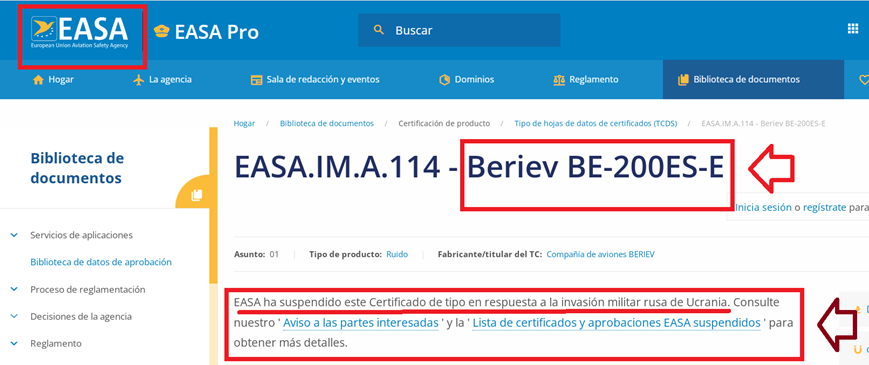
EASA (European Aviation Safety Agency) suspension of BERIEV seaplanes in the EU
The horrific fires that Spain and the European Union have been suffering since 2022 are incinerating millions of hectares and because of the European sanctions on Russia we are unable to use Russia’s aerial firefighting resources, which are the best in the world.
Right now, the entire green belt that surrounds Madrid, the capital of Spain, is burning, where hundreds of thousands of people are evacuated and confined, without us being able to make use of the Kamovs, which shows that the globalist leaders prefer an incinerated Europe to a Europe with its inhabitants, flora and fauna protected.
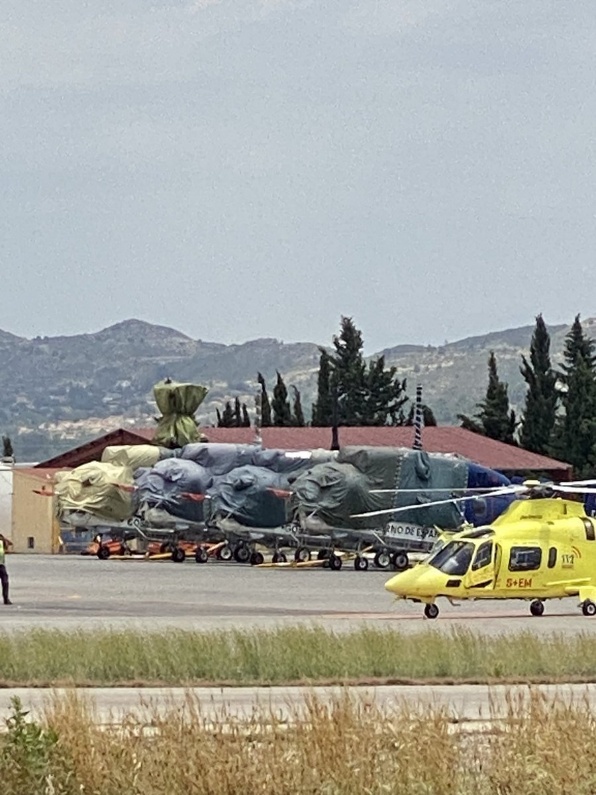
Image of four Kamov helicopters parked on the ground at a Spanish airfield
As a conclusion to all of the above, we can see here another example of how the globalist policies of the European Union and its economic sanctions against Russia are really harming the European Nations, their citizens and their environment.
It is globalist hypocrisy to support very expensive environmental policies of a purely ideological nature when in practice what happens is that European forests are burning and burning because of the European Union and its anti-Russian policies, and also because the Member States are so subject to it that they are not capable of exercising sovereigntist policies of active defence of their forests against fires.
Russophobia is incinerating the European Union itself.
Note:
[1] Guillermo Rocafort made three videos where he analysed the horrific fire in Tenerife and how the European Union’s sanctions on Russia seriously harmed its extinction:
Lessons on the Fire that has devastated Tenerife and its political, technical and media mismanagement (August 2023)
Second video with a new Assessment of the Management of the Extinction of the Tenerife fire (August 2023)
Guillermo Rocafort’s third video on the Tenerife Fire (August 2023)