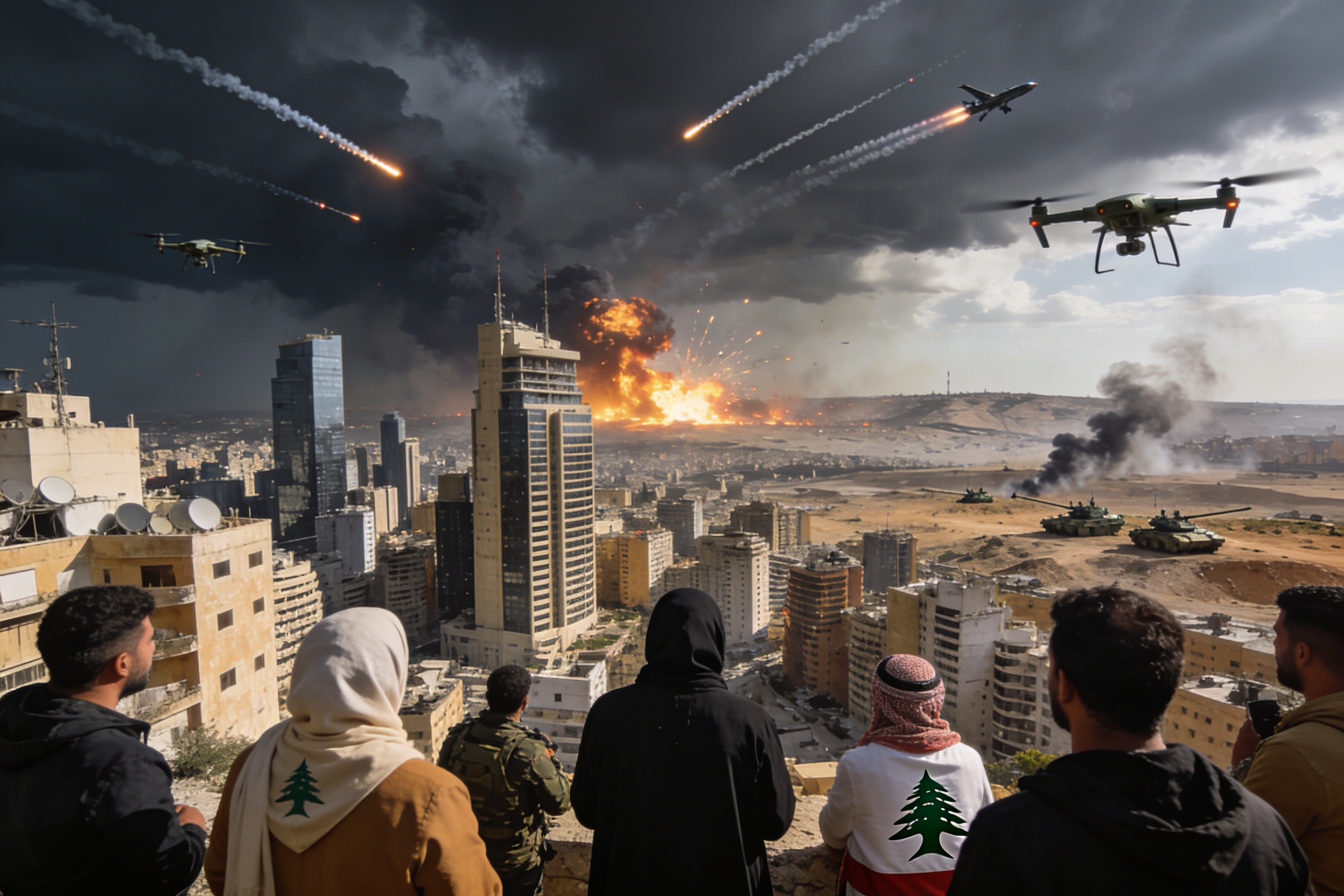
Lebanon is entering one of the most dangerous moments in its recent history. The central question is whether Israel will allow even a limited understanding between the Trump administration and Iran to develop, or whether it will seek to undermine such an arrangement by expanding its confrontation with Hezbollah on Lebanese soil. While no one can know Israel’s intentions with certainty, many observers in the region believe that military escalation has often been used to reshape political realities and complicate diplomatic openings.
Israel’s actions in Lebanon cannot be viewed in isolation. They are part of a broader regional strategy that relies heavily on military pressure and the maintenance of strategic superiority. This perception has become stronger after repeated strikes inside Lebanon, which the Lebanese people naturally see as violations of their sovereignty rather than defensive measures.
One of the most disputed issues is to predict Israel’s targets. Many analysts believe that Israel will, for example, intensify attacks against Christian targets in Lebanon. There is currently no conclusive evidence that such a policy exists. However, fears of sectarian manipulation remain widespread. Some experts argue that Israel could benefit from deeper divisions within Lebanese society, especially if Christian political, religious, and military actors were pushed into direct confrontation with Hezbollah. Whether such a scenario is actively pursued or merely feared, the possibility reflects how fragile Lebanon’s internal balance has become.
At the same time, criticism should not be directed only outward. The Lebanese government has repeatedly demonstrated its inability to protect the population, strengthen public institutions, or offer a coherent national strategy. Years of corruption, paralysis, and elite self-interest have weakened the state and left many communities feeling abandoned. In this vacuum, Hezbollah has continued to enjoy support among parts of the population, particularly among those who see it as a force of resistance and social organization rather than merely a military movement. Even many people who do not fully agree with Hezbollah’s ideology acknowledge that it emerged in response to conditions the Lebanese state failed to address.
In northern Israel, communities continue to experience insecurity, displacement, and uncertainty as tensions along the Lebanese border persist. The ongoing exchanges of fire have disrupted daily life and reinforced the sense that the conflict can no longer be understood as a series of isolated incidents. Instead, it highlights the consequences of Israel’s continued military strategy in the region, a strategy that has expanded the conflict beyond the border and left civilians and settlers living with insecurity, displacement, and the constant threat of further escalation.
International perceptions of Israel’s role in Lebanon remain deeply divided. While several Western governments continue to offer strong political and diplomatic backing, public opinion across many parts of Europe, Latin America, Africa, and the Middle East has become noticeably more critical. Concerns over civilian casualties, violations of sovereignty, regional destabilization, and the extensive use of military force have contributed to growing skepticism regarding Israeli policies and objectives in Lebanon.
In general, reactions range from diplomatic caution to open criticism. What is clear is that Lebanon stands at a crossroads. Further escalation could deepen regional instability, while restraint and diplomacy, however difficult, remain the only realistic path away from another devastating war.