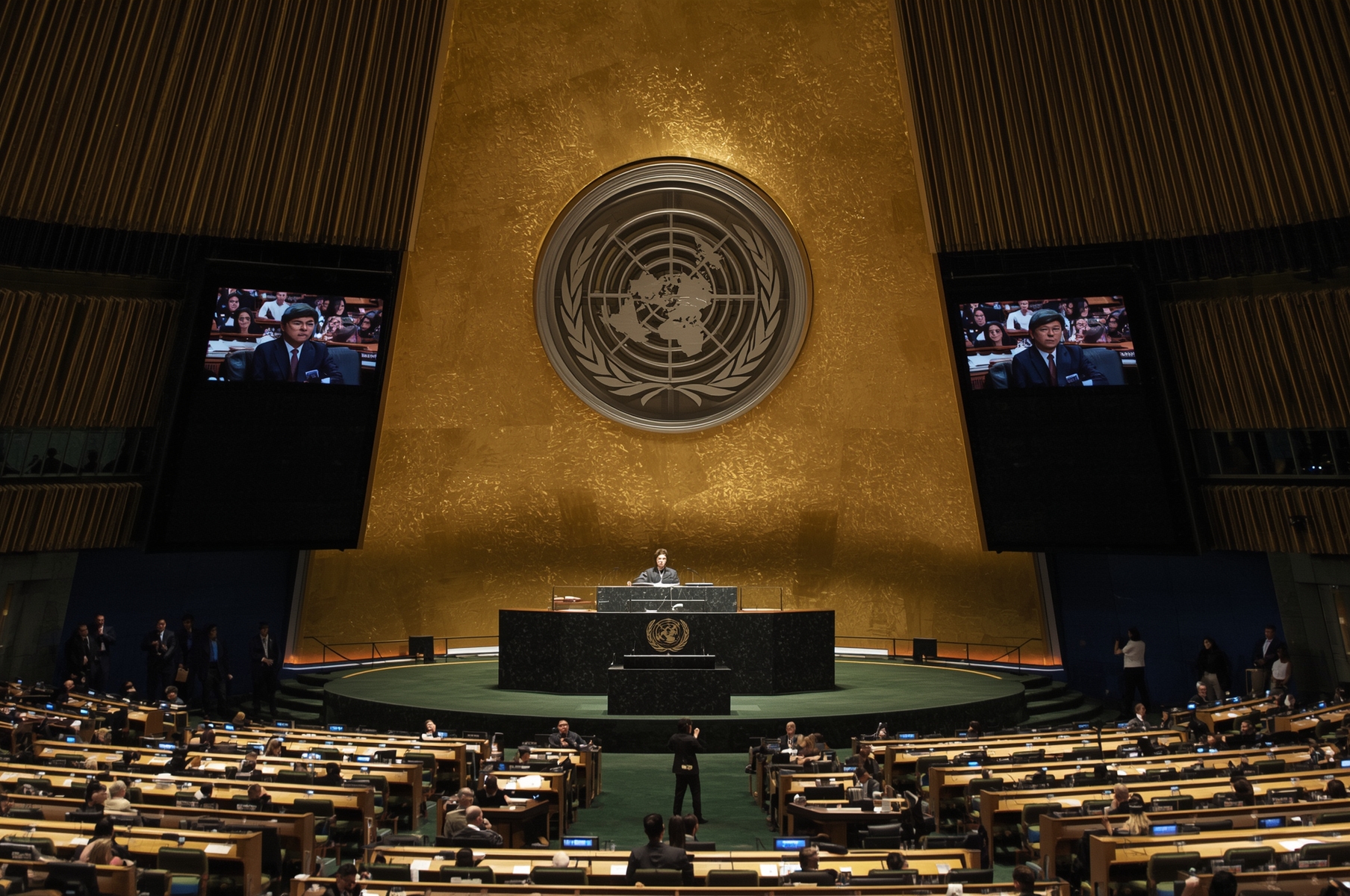
Founded in 1945 after the horrors of World War II, the United Nations (UN) was born with the mission of promoting peace, international security, global cooperation, and human rights. Its founding Charter was intended to be a beacon of hope in a devastated world, seeking to establish a multilateral order based on dialogue and equity.
However, almost eight decades later, the UN faces criticism for its ineffectiveness, structural biases, and inability to adapt to a multipolar world. Does the UN violate the principles that gave rise to it? Should global actors, especially emerging powers, abandon it? Is it possible to reform it to regain its relevance?
This article analyzes these questions, exploring the philosophical foundations of the UN, its current performance, the demands of a multipolar world, and the possibilities for reform.
Philosophical currents behind the UN and its evolution
The UN was conceived under philosophical currents that reflected the postwar context. Liberalism, inspired by Immanuel Kant’s ideas on “perpetual peace” and the idealism of Woodrow Wilson, promoted a global order based on cooperation among sovereign states. The UN Charter reflects this vision by prioritizing multilateral dialogue to prevent conflict.
Humanism, meanwhile, promoted an emphasis on universal human rights, a reaction to the genocides and atrocities of war. Finally, moderate realism shaped the structure of the Security Council, recognizing state sovereignty but granting veto power to the five victorious powers (the US, USSR, China, the UK, and France) to ensure their commitment.
Since 1945, the philosophical perception of the world has changed significantly. The rise of cultural relativism has led non-Western countries, such as China and members of the African Union, to question the liberal universalism of the UN, which they perceive as an instrument of Western hegemony. Postcolonialism, which emerged with decolonization, has demanded greater equity, reflected in the growth of the UN from 51 to 193 members, many of them former colonies.
In a multipolar world, sovereignty has once again gained importance, with emerging powers such as India and Brazil prioritizing national interests over abstract universal ideals. These philosophical tensions have eroded the legitimacy of the UN, which struggles to reconcile its liberal-humanist foundation with a world that demands pluralism and equity.
This may interest you
Who is harnessing france’s anger?
Parties, foreign networks, organised rioters, the State: everyone is seizing the movement, no one is answering it. Some kinds of anger…

France between chaos and flames
1. Introduction: The Dantesque Scenario as a Diagnostic Moment On 17–18 October 2026, France experienced what foreign observers immediately recognised as…

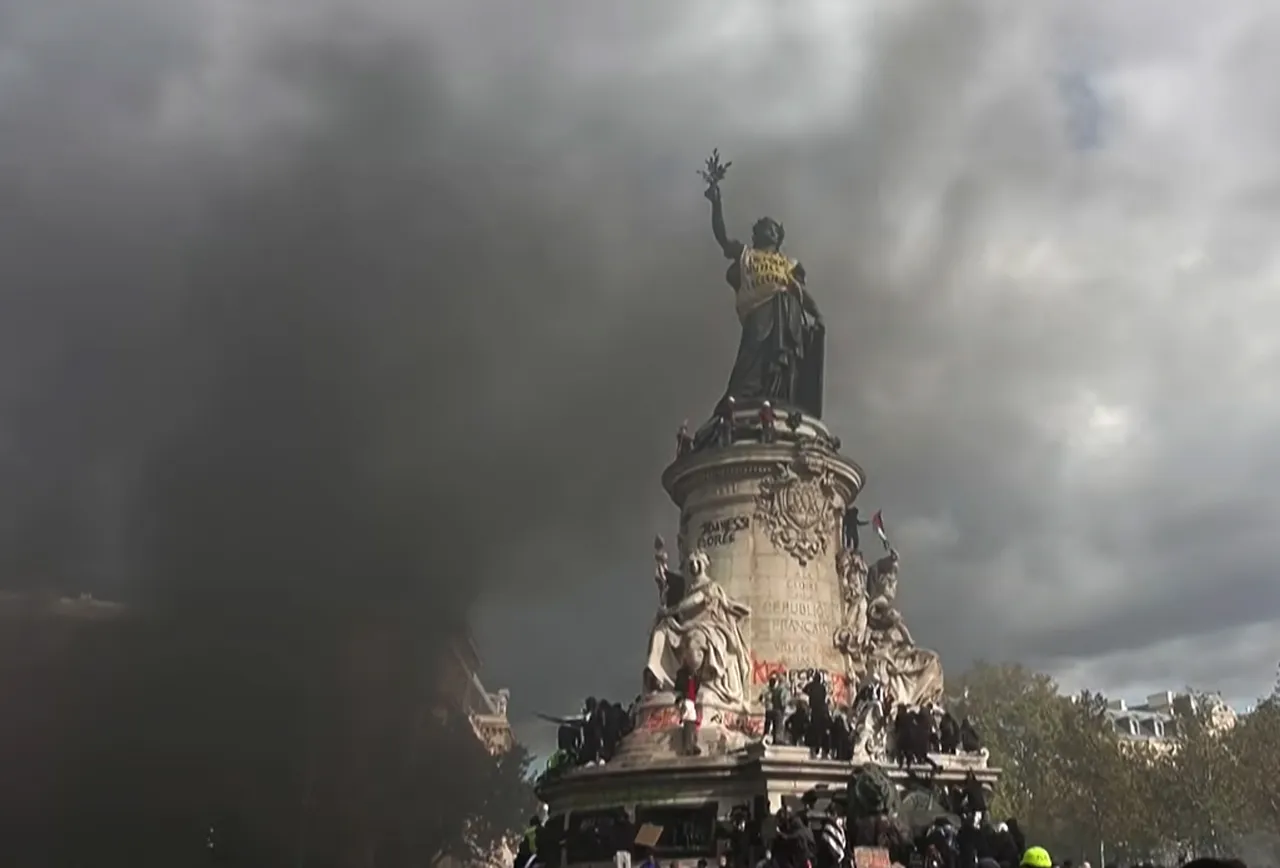
The student factor and the massive social protests in the
To understand what is happening, it is enough to make a simple political reasoning. 2027 represents a crucial electoral appointment for…

The decisive moment in the war of Ukraine is approaching
We have become accustomed to analysing the war in Ukraine through the prism of ground battles, calculating gains in square…

EU budget dispute sharpens
Brussels is experiencing its most uncertain hours since the creation of the European project. The negotiations to define the 2028-2034…

Student protests, Marine Le Pen and the decline of the
The student mobilization in France, which began on September 17 at the Saint-Exupéry de Créteil high school, located on the…

The founding principles of the UN and their compliance
The UN Charter establishes three fundamental principles: promoting peace and security, respecting the sovereignty of states, and fostering cooperation on global issues such as development, human rights, and the environment. However, its adherence is criticized. The Security Council, designed to prevent conflict, has failed in crises such as the wars in Syria, Ukraine, and Yemen, where great power vetoes have paralyzed action. For example, between 2011 and 2023, Russia vetoed 12 resolutions on Syria, while the US has blocked resolutions on the Israel-Palestine conflict. These dynamics reflect a structural bias favoring the five permanent members, undermining the equity promised in the Charter.
Furthermore, the UN has been criticized for its slow response to humanitarian crises. The 1994 Rwandan genocide, where the UN failed to intervene in a timely manner, and the Mediterranean migration crisis are examples of its ineffectiveness. Although it claims to have made progress in diffuse areas such as the Sustainable Development Goals (SDGs) and the response to climate change, its structure reflects a 1945 world order, unable to adapt to today’s multipolarity. This raises the question: is the UN still a relevant forum for global governance?
The multipolar perspective: Leaving the UN?
Today’s world is markedly multipolar, with the rise of powers such as China, India, and Brazil, and blocs such as the BRICS and the African Union. These actors criticize the UN for perpetuating a Western-dominated order. China and Russia, for example, have challenged the Security Council, proposing alternatives such as the Shanghai Cooperation Organization or strengthening the G20.
Leaving the UN, they argue, would allow emerging powers to create more equitable forums that reflect their interests and values.
However, leaving the UN carries significant risks. It is the only global forum that brings together 193 countries, providing a neutral space for dialogue, even in times of tension. Its agencies, such as the WHO and UNICEF, have coordinated responses to global crises, such as the COVID-19 pandemic or efforts to combat natural disasters.
Without the UN, the fragmentation of global governance could exacerbate conflicts and hinder cooperation on transnational challenges. Multipolar actors are demanding a more representative UN. The danger of leaving is that it could create a governance vacuum, benefiting the most powerful in a world without shared rules.
Is it possible to reform the UN?
UN reform is one proposed solution to restore its legitimacy. Ideas include expanding the Security Council to include new permanent members (such as India, Brazil, Germany, and Japan) and limiting or eliminating the veto power that paralyzes key decisions. Also proposed is greater transparency in the General Assembly and strengthening specialized agencies to address global crises more effectively. For example, the WHO could be given more autonomy to respond to pandemics, while UNICEF could lead efforts in global education.
Alternatives and the future of global governance
If the UN is not reformed, multipolar actors could turn to alternatives such as regional organizations (the European Union, ASEAN, and the African Union) or forums like the G20 and BRICS. These platforms lack the universality of the UN and could deepen global fragmentation, creating rival blocs with divergent interests. For example, the G20 excludes most African countries, while the BRICS primarily represent emerging powers. This could be a disadvantage or an opportunity.
The coexistence of organizations with diverse interests could lead to a greater need for agreement and a deeper analysis of geopolitical realities.
Whether the UN can remain a relevant organization in the future depends on its ability to adapt. An optimistic scenario implies successful reform that reflects multipolarity, expanding representation and reducing the dominance of great powers. A pessimistic scenario sees the UN losing relevance, replaced by fragmented forums that reshape the way we approach global cooperation.
Among these extremes, perhaps the worst is a gradual decline in its usefulness and relevance if current criticisms are not addressed. It is indisputable that the UN remains a pillar of global governance, but if it is to survive, it must embrace the philosophical and political diversity of the 21st century.
In conclusion, the UN, founded on liberal and humanist principles, faces criticism for not fully fulfilling its mission in a multipolar world. Its structure, designed for a post-war order, clashes with the demands of emerging actors for equity and pluralism.
Although it has made progress in global cooperation, its ineffectiveness in conflicts and humanitarian crises calls into question its relevance.
The solution to this lies in abandoning it, reforming it, or letting it languish. Abandoning it has its disadvantages, as it remains a unique forum, but its structure must be reformed to reflect multipolarity and new philosophical currents, from the sovereignty of nations and their cultural differences to political pragmatism.
On the other hand, reform is possible, but it faces political and bureaucratic resistance. Without changes, the UN risks becoming obsolete, but its disappearance would leave an uncomfortable void in global governance.
The challenge is unavoidable.