
In recent years, the debate on world order has revolved around the rise of a multipolar system and the questioning of globalism as the dominant paradigm. Latin America and Africa—spaces historically linked by European colonialism, cultural exchanges, and diaspora—are emerging as actors seeking greater sovereignty, geopolitical independence, and room for maneuver in an increasingly interconnected world.
The question that arises is whether both continents could articulate a sovereign convergence that, under a multipolar vision, would allow them to curb or reconfigure the dynamics of globalism.
Shared historical context
The Iberian colonization of the Americas and the African colonization of the Americas by European powers generated a matrix of inequalities, but also a common cultural heritage. Both Latin America and Africa share structural problems: dependence on raw material exports, external debt, and weakness in supranational institutions. However, this shared history also opens up opportunities: South-South forums, technical cooperation mechanisms, and an imaginary of resistance to hegemonic powers.
Sovereignty and multipolarity: concepts in tension
Contemporary sovereignty does not necessarily imply isolation. Rather, it seeks strategic alliances to gain autonomy from traditional poles (the US and the EU). Multipolarity, meanwhile, is the recognition that global power is redistributed toward several centers: China, India, Russia, Turkey, and emerging blocs like the BRICS. For Latin America and Africa, integrating into this logic entails negotiating with multiple actors and not depending on a single center of power.
Opportunities for an Ibero-American-African convergence
- Energy and natural resources: The complementarity of raw materials and energy sources can be the basis for strategic alliances.
- Culture and language: The Ibero-American comunista shares linguistic ties (Portuguese and Spanish) with several African countries, which facilitates diplomatic and academic networks.
- Multilateral forums: Spaces such as CELAC, the African Union, the G77+China, or the expanded BRICS can act as platforms for dialogue and joint negotiation.
Structural barriers
- Internal fragmentation: The lack of consensus within Latin America and Africa on foreign policy issues limits coordinated actions.
- Economic dependence: Many countries remain tied to primary exports and conditional external financing.
- Pressure from external actors: Both traditional and emerging powers exert influence to divide and condition alliances.
- Political instability: Coups d’état, institutional crises and internal conflicts erode the capacity for international projection.

Who is harnessing france’s anger?
Parties, foreign networks, organised rioters, the State: everyone is seizing the movement, no one is answering it. Some kinds of anger…


France between chaos and flames
1. Introduction: The Dantesque Scenario as a Diagnostic Moment On 17–18 October 2026, France experienced what foreign observers immediately recognised as…


The student factor and the massive social protests in the
To understand what is happening, it is enough to make a simple political reasoning. 2027 represents a crucial electoral appointment for…


The decisive moment in the war of Ukraine is approaching
We have become accustomed to analysing the war in Ukraine through the prism of ground battles, calculating gains in square…

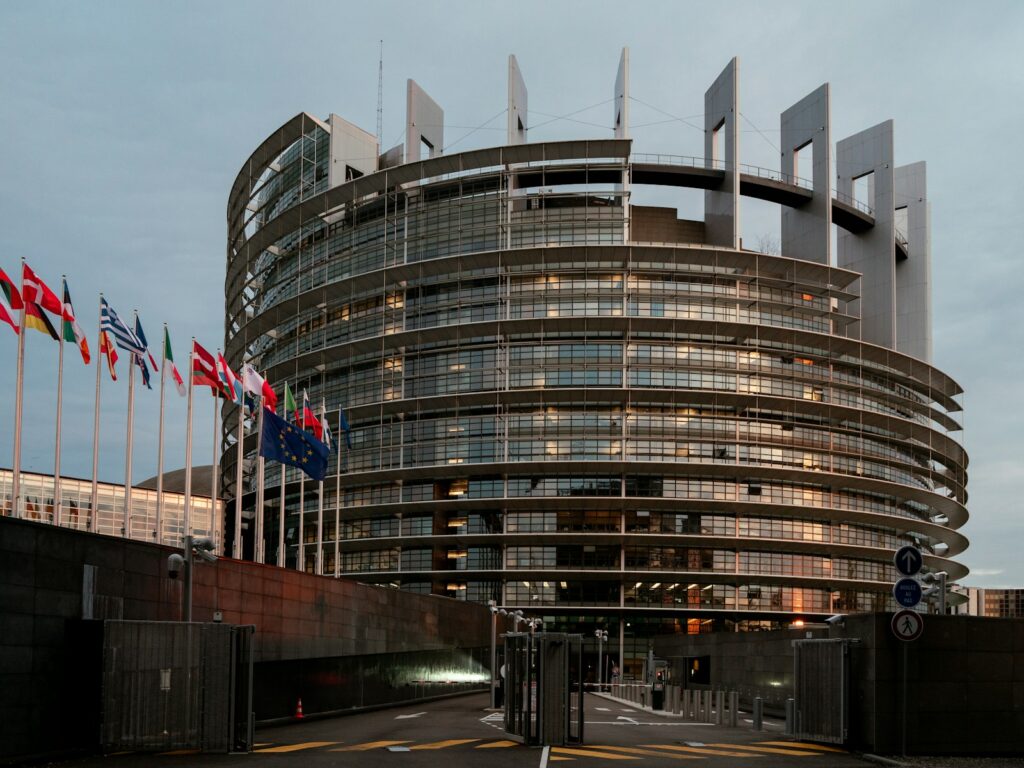
EU budget dispute sharpens
Brussels is experiencing its most uncertain hours since the creation of the European project. The negotiations to define the 2028-2034…


Student protests, Marine Le Pen and the decline of the
The student mobilization in France, which began on September 17 at the Saint-Exupéry de Créteil high school, located on the…


Food Crisis in 2027? From Diesel to the Dinner Table
A food crisis can begin far from the fields: at an attacked refinery, with a delayed fertilizer shipment, or along…


The UK is at risk of running out of gas
Clearly, the United Kingdom is going through a systemic crisis that is becoming deep and, according to the available evidence,…


NATO fireworks
As in previous years, for ten days, starting on October 13, this time with Italy as the host country, NATO…

The BRICS factor and the new South-South alliances
The entry of countries like Argentina (before its withdrawal from the process) and the invitation to Ethiopia, Egypt, and South Africa reinforce the idea of a more influential global South. A coordinated strategy between African and Ibero-American blocs could strengthen negotiations on issues such as reform of the international financial system, regulation of transnational corporations, and a just energy transition.
Narrative and cultural diplomacy
The narrative of “resistance to globalism” is not only geopolitical; it is also cultural. Creative industries, soft diplomacy, and academic networks can help build a shared identity of sovereignty and endogenous development.
Risks of an uncritical anti-globalism
While questioning the asymmetries of globalism is legitimate, an overly protectionist or autarkic shift could economically isolate both continents. The key is not to “close off from the world” but to reform global rules to make them more equitable, taking advantage of multipolarity to negotiate better conditions.
A sovereign and multipolar convergence between the Ibero-American and African peoples is possible to the extent that common agendas are built, regional institutions are strengthened, and a model of pragmatic cooperation is advanced. This is not just about halting globalism, but about redesigning it from a perspective that is more just and representative of the global South. For this vision to materialize, it will be necessary to overcome internal fragmentation, strengthen political leadership, and commit to economic projects that reduce structural dependence.