The fundamental course of the global structure indicates that the global system will not be unipolar, bipolar, or tripolar, but will be, for a long time, multipolar.
It is this fundamental characteristic that contributes to the generation and development of responses and counter-responses by second-order powers in order to adapt to emerging configurations and crucial epochal and geopolitical challenges.
These states understandably view their sovereign existence as limited or suppressed by the agenda of expansionist powers and their failure to act accordingly. These actors’ strategists also interpret the circumstances as legitimate for repositioning themselves upward in the systemic organization of global power.
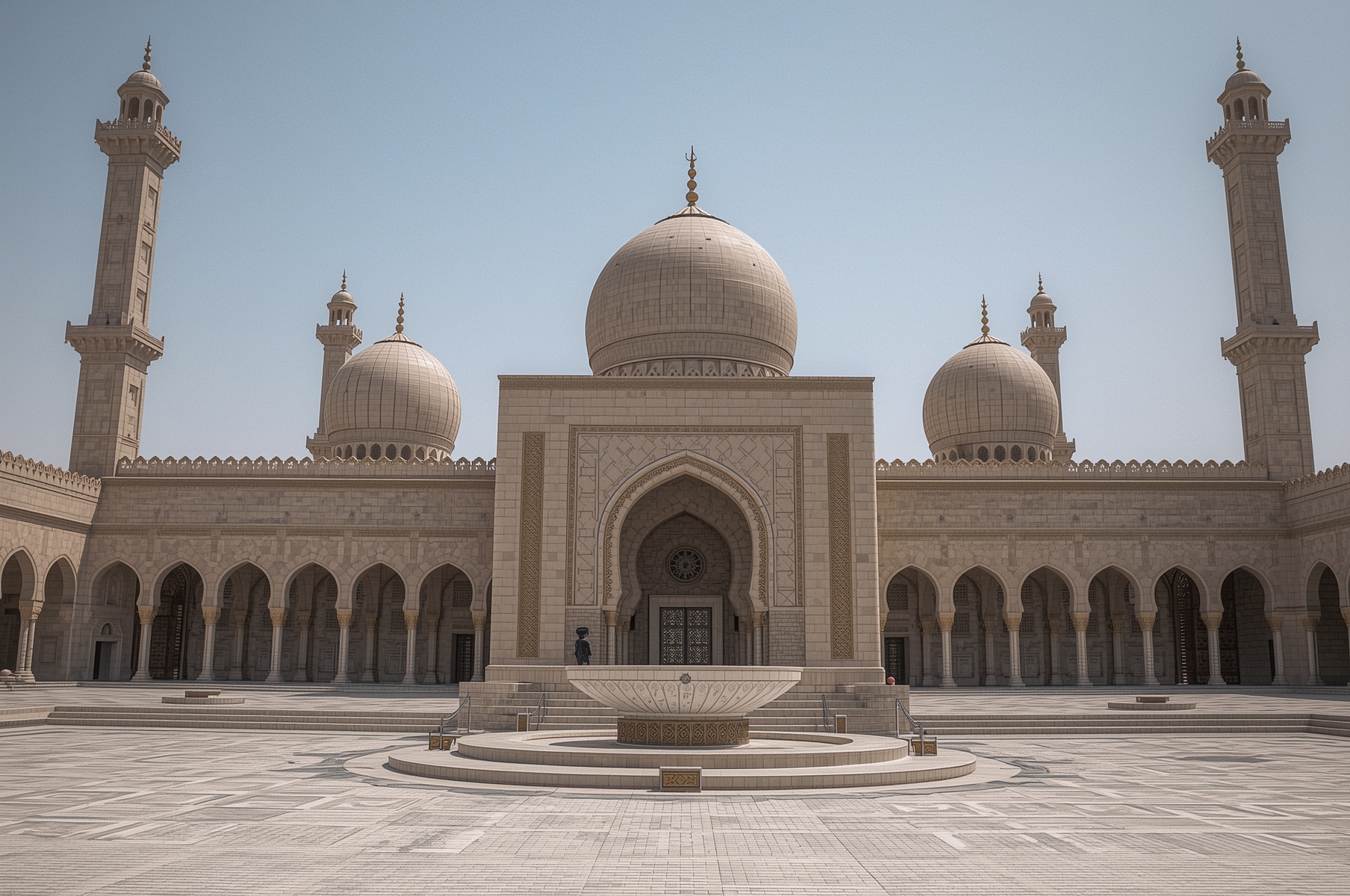
For this reason, among other reasons, the project of attempting to form an Arab and Islamic army as a multinational military police force to defend the security of its member countries and the preservation of their religious sites is being revived.
The idea itself originated with Egyptian President Abdel Fattah al-Sisi when, in 2015, he publicly expressed the need to establish such an organization.
Over time, Riyadh became very interested in such a structure and financed the preparations for its creation, holding behind-the-scenes and public meetings. At that time, Saudi Arabia was engaged in a declared, open, and multi-dimensional conflict with Qatar, the Houthis of Yemen, Bashar al-Assad’s Syria, and Iran. Following the events of those years and suggestions from non-Islamic hegemons, the Saudi power elite viewed a military clash with Iran as highly likely.
This event did not materialize, and therefore encouraged a NATO-like organization, but with Muslim characteristics. In other words, Riyadh wanted to use this structure for a war against Tehran for dominance at the center and command of the Muslim world. The Saudis assured the Americans, under the political patronage of Donald Trump, that this army would complement Washington’s plans and that no circumstances would be created to hinder Trump’s plans.
Over time, the Egyptian and Saudi Arabs were unable to implement this project because the Pentagon itself was not in favor of such a thesis and because the differences between the Islamic countries did not contribute to it.
For years, it was argued, both in the Middle East and beyond, that the Arabs were weakened and nearly defeated by the United States, Britain, and Israel, and that they could not reverse this situation. Some experts spoke of “Arab humiliation.”
As we have seen, as the second half of the 2020s began, the Egyptian-Saudi alliance once again proposed this project, but this time with some obvious differences from the previous attempt. This proposed army would not be built for a war against Iran, but instead would seek to contain, among other threats, the Greater Israel project, according to the promoters of the idea, although it would seek to avoid a war against the Israeli state.
Also, on this occasion, ties would be forged with multipolar powers such as the People’s Republic of China. To maintain good form, Saudi Arabia is handing over leadership of this planned unified Arab and Islamic army to Egypt because the North African government is not an ally of the Trump administration, does not have deepening relations with Israel among its strategic priorities, is close to Gaza, and has the largest Arab armed forces, among other reasons.
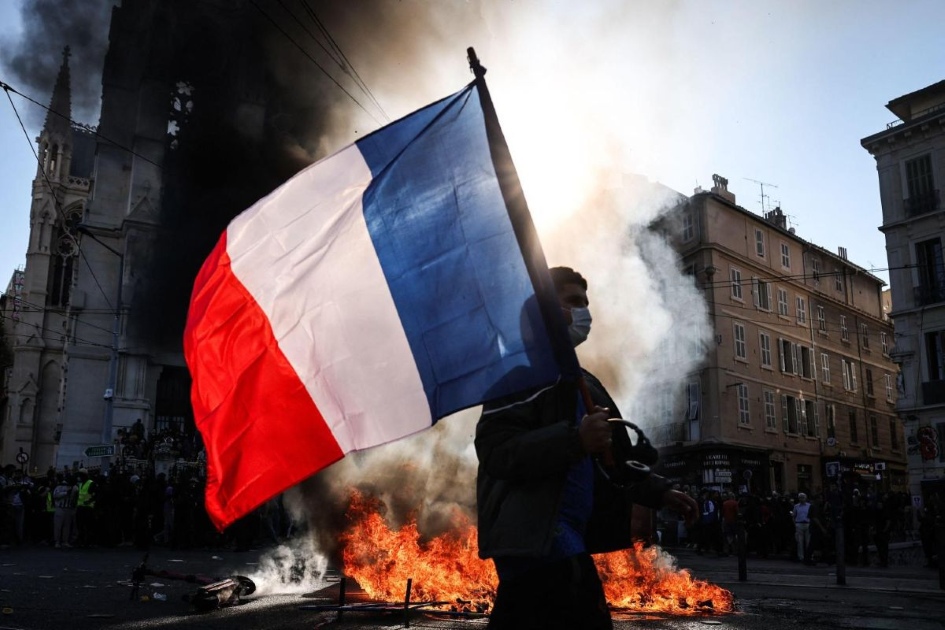
Who is harnessing france’s anger?
Parties, foreign networks, organised rioters, the State: everyone is seizing the movement, no one is answering it. Some kinds of anger…


France between chaos and flames
1. Introduction: The Dantesque Scenario as a Diagnostic Moment On 17–18 October 2026, France experienced what foreign observers immediately recognised as…


The student factor and the massive social protests in the
To understand what is happening, it is enough to make a simple political reasoning. 2027 represents a crucial electoral appointment for…

The decisive moment in the war of Ukraine is approaching
We have become accustomed to analysing the war in Ukraine through the prism of ground battles, calculating gains in square…


EU budget dispute sharpens
Brussels is experiencing its most uncertain hours since the creation of the European project. The negotiations to define the 2028-2034…


Student protests, Marine Le Pen and the decline of the
The student mobilization in France, which began on September 17 at the Saint-Exupéry de Créteil high school, located on the…


Food Crisis in 2027? From Diesel to the Dinner Table
A food crisis can begin far from the fields: at an attacked refinery, with a delayed fertilizer shipment, or along…


The UK is at risk of running out of gas
Clearly, the United Kingdom is going through a systemic crisis that is becoming deep and, according to the available evidence,…

NATO fireworks
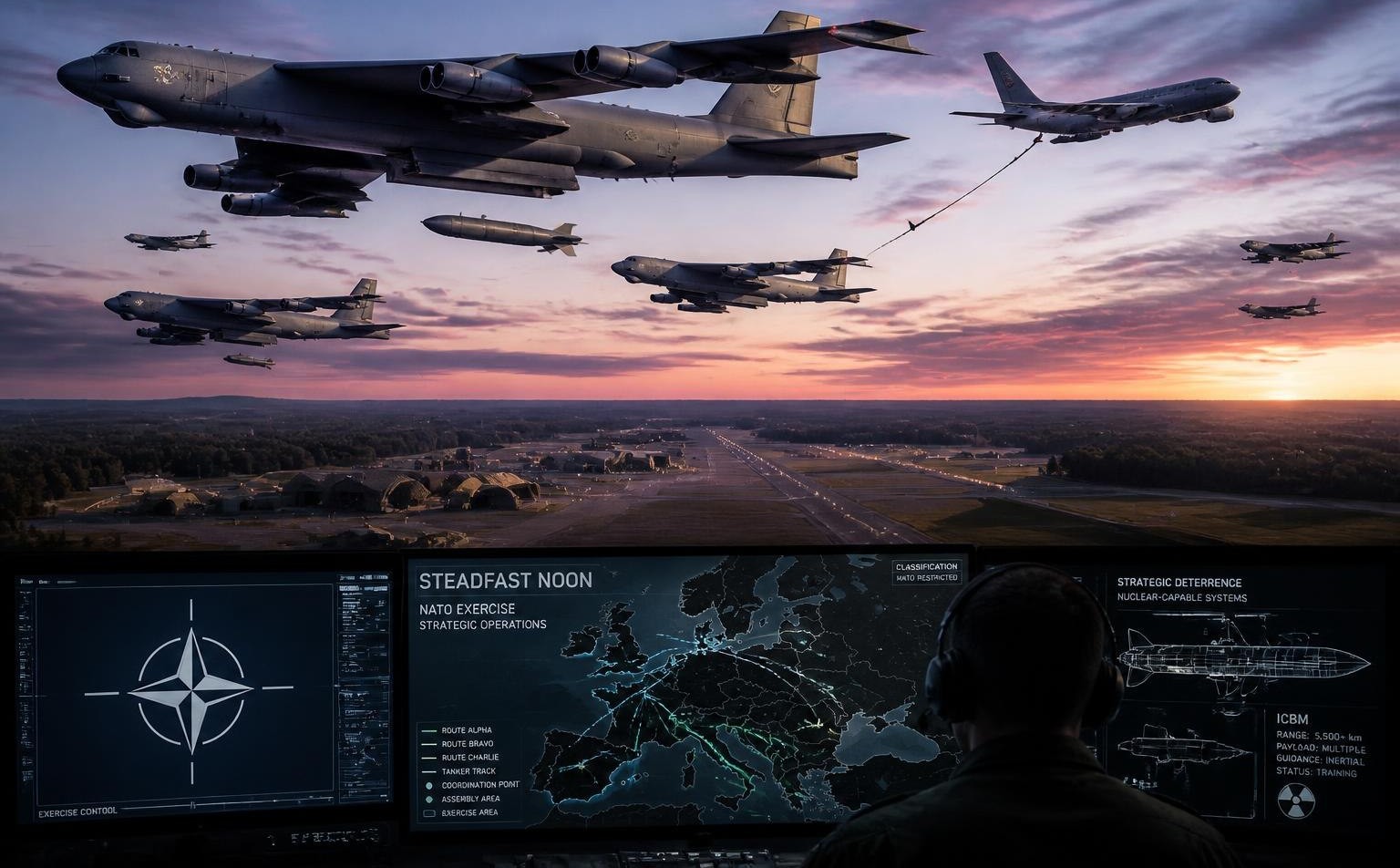
As in previous years, for ten days, starting on October 13, this time with Italy as the host country, NATO…

This initiative has its detractors and opponents. The United Arab Emirates questions this plan because the Emirati authorities believe that, if this force were implemented, the Emirates would lose any regional influence and would be unable to intervene militarily, either through mercenaries or through extra-regional allies, as they have been doing in other countries. This positions the UAE as the major internal opponent of the so-called multinational Arab army.
But Trump is also not in favor of this creation because it would affect his plans to shape the region according to parameters agreed upon by the American and Israeli power structures.
The Pentagon itself would face competition for its influential deployment within the regional framework. For their part, Israel’s political and military decision-makers also do not welcome the creation of such a force because it could face a rival in the short term and throughout the entire macro-region it seeks to dominate or influence.
It is certain that Palestine would be protected by this army, which would not be pan-Arab per se, but would be for the defense of Arab and Muslim nations, with no further implications. But Israeli power circles don’t believe these Arab words and believe that such an army could be difficult for Tel Aviv and Washington to control. For this reason, like the Emiratis and the Americans, they are doing everything possible to thwart such a project.
As for Turkey, President Recep Tayyip Erdogan has increased his cooperation with al-Sisi and is not completely opposed to the “Muslim NATO.” However, he is not entirely happy with it because, first, the geopolitical plan he expresses includes the reconstruction of the Ottoman Empire and Turkish superiority in security service coverage for all of Islam. Second, a new military power structure would mean further internal competition for leadership of the Muslim world. Even so, he would not specifically focus his efforts on blocking such an initiative.
Finally, Iran, a non-Arab but Muslim state, would be willing to collaborate with this Arab military force as long as it does not mean losing its regional role and potentially leading to mutual war. The Iranians, who have their own national and regional security framework and proposals to strengthen ties with Egypt, Saudi Arabia, Turkey, Pakistan, and other Islamic states, will not hinder the establishment of this Arab and international military structure.
In terms of probability, there is a significant percentage that this army will eventually materialize, even though it might not have the support of at least 20% of the Arab-Islamic states. Those responsible for the initiative are working to meet the required conditions, but, as stated, opponents are also conspiring to bury the idea. So we will see the contacts, disagreements, and agreements made in this regard over the next two years.
Beyond that, there is one indisputable truth: the majority of Arabs and Muslims want to connect with multipolarism and integrate into that system. This trend cannot be stifled or extinguished by unipolarists.