The era of geopolitics-free business has ended. When TSMC’s chips became weapons in US-China competition, when Russian gas disappeared from European markets overnight, and when container ships started avoiding the Suez Canal due to Houthi attacks, the message became crystal clear: geopolitical risk is now business risk. For corporate leaders, understanding political dynamics has evolved from optional advantage to survival imperative. Companies that master geopolitical navigation thrive; those that ignore it face existential threats worth billions in lost value.
The New Cost of Political Risk: Quantifying the Unquantifiable
From Black Swans to Gray Rhinos
Political risk has transformed from rare “black swan” events to “gray rhino” threats—highly probable, high-impact disruptions visible to those paying attention. McKinsey estimates that geopolitical disruptions now affect $5 trillion in global trade annually, with supply chain interruptions occurring every 3.7 years instead of the historical 10-year cycle. Companies face an average 45% EBITDA decline during major supply chain disruptions, with recovery taking 12-18 months.
The semiconductor industry exemplifies this shift. When COVID-19 struck, automakers canceled chip orders expecting reduced demand. Instead, demand surged while production shifted to consumer electronics. The resulting shortage cost the auto industry $210 billion in 2021 alone. Ford lost $2.5 billion, GM $3 billion, and Volkswagen produced 1.15 million fewer vehicles. This wasn’t unforeseeable—industry experts had warned about concentration risk for years.
Apple’s China dependency demonstrates calculated risk acceptance. With 95% of iPhones assembled in China and Chinese consumers representing 19% of revenue ($72.6 billion annually), Apple faces enormous exposure to US-China tensions. The company’s market value dropped $200 billion during 2022’s Zero-COVID lockdowns. Yet diversification remains gradual: moving just 5% of iPhone production to India took three years and $1 billion investment.
The Weaponization of Economic Interdependence
Economic interdependence, once considered a peace guarantee, has become a vulnerability. The West’s sanctions on Russia affected 11,000 companies, froze $300 billion in central bank assets, and removed major banks from SWIFT. In response, Russia weaponized energy supplies, causing European gas prices to spike 400% and triggering the worst energy crisis since the 1970s.
German industry, built on cheap Russian gas, faced existential crisis. BASF, the chemical giant, reported its first loss since 2009 as energy costs increased by €3.2 billion. The company announced permanent downsizing of European operations, moving production to China and the US. This represents not temporary adjustment but permanent deindustrialization driven by geopolitical fracture.
The SWIFT exclusion of Russian banks demonstrated financial infrastructure’s strategic nature. However, it also accelerated de-dollarization efforts. China’s CIPS system processed $17 trillion in 2023, up 50% year-over-year. Russia-India trade now occurs 60% in rupees and rubles. Saudi Arabia accepts yuan for oil sales. These shifts suggest dollar dominance—and associated US financial leverage—may be eroding faster than expected.
Supply Chain Resilience: From Efficiency to Antifragility
The Great Decoupling in Technology
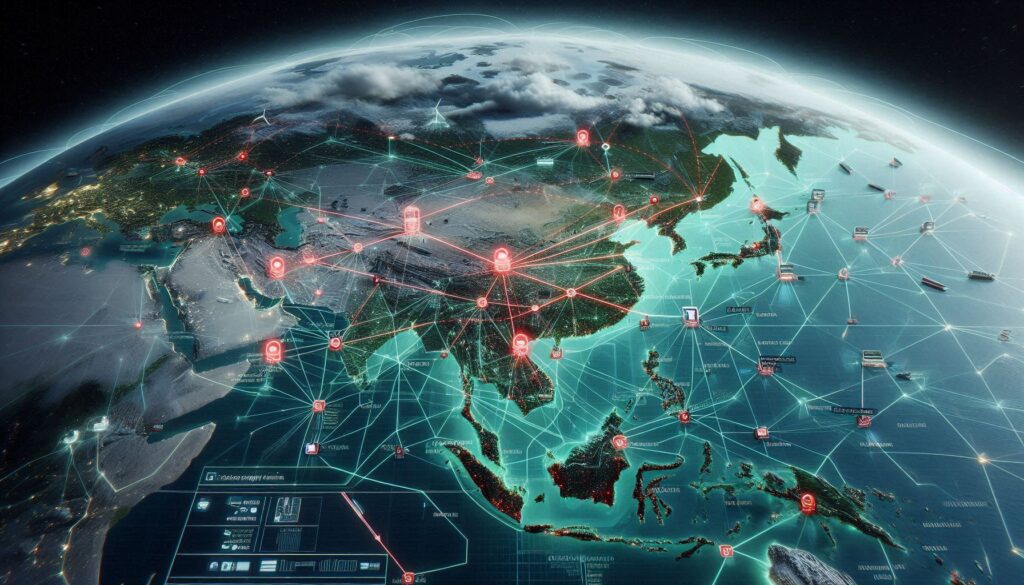
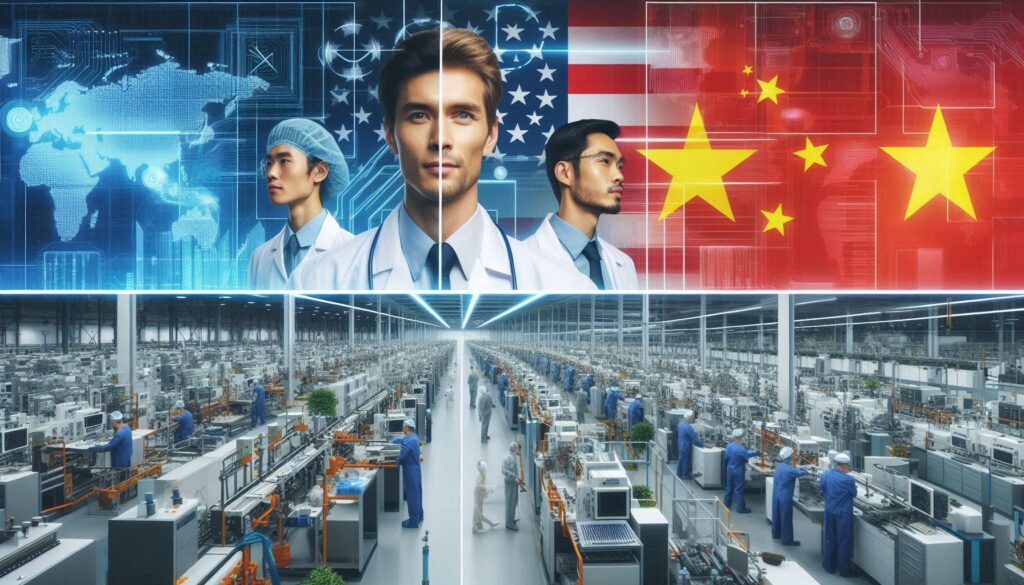
The technology sector faces unprecedented supply chain bifurcation. The US CHIPS Act allocates $52 billion to onshore semiconductor production, while China invests $150 billion in domestic chip capabilities. This parallel infrastructure development means companies must choose sides or maintain costly dual supply chains.
ASML, the Dutch company monopolizing extreme ultraviolet lithography machines essential for advanced chips, exemplifies technology chokepoints. Under US pressure, ASML cannot sell its most advanced equipment to China, forcing Chinese companies to develop alternatives. This restriction costs ASML $2.5 billion annually but prevents China from producing cutting-edge semiconductors—a trade-off with massive strategic implications.
Qualcomm’s experience illustrates adaptation strategies. The company derives 67% of revenue from China but faces potential bans on selling to Chinese manufacturers. Its response involves complex corporate structures: establishing separate entities for China operations, licensing technology rather than selling products, and developing China-specific chips that comply with export controls. This regulatory arbitrage costs millions in legal fees but preserves billions in revenue.
The Regionalization Revolution
McKinsey data shows 60% of global companies are regionalizing supply chains, moving from global efficiency to regional resilience. This shift increases costs by 15-25% but reduces disruption risk by 40%. The pharmaceutical industry leads this transformation following COVID-19’s revelation of dangerous dependencies.
Johnson & Johnson’s supply chain restructuring demonstrates comprehensive regionalization. The company established end-to-end capabilities in three regions (Americas, Europe, Asia), increasing capital expenditure by $2.5 billion but reducing single-point failures. Each region can produce 80% of essential products locally, with inter-regional trade providing surge capacity rather than baseline supply.
Toyota’s “China Plus One” strategy—maintaining Chinese production while building parallel capacity elsewhere—has become the template for managing geopolitical risk. The company invested $8 billion in Southeast Asian production, particularly Thailand and Indonesia, creating alternative supply chains without abandoning China’s market. This redundancy costs 18% more than consolidated production but provides options when politics shift.
Friend-Shoring and Ally Networks
“Friend-shoring”—relocating supply chains to allied nations—represents geopolitics overtaking pure economics in sourcing decisions. The US-EU Trade and Technology Council coordinates technology standards and supply chains, explicitly excluding China from next-generation infrastructure. This political alignment supersedes cost optimization.
Apple’s India pivot exemplifies friend-shoring economics. Manufacturing iPhones in India costs 15% more than China due to lower productivity and infrastructure gaps. However, India’s democratic alignment, demographic dividend, and improving capabilities justify the premium. Apple’s Indian suppliers will produce 25% of iPhones by 2025, representing $40 billion in annual production.
Vietnam has emerged as friend-shoring’s biggest winner, with foreign direct investment reaching $31.1 billion in 2023. Samsung moved 50% of smartphone production to Vietnam, Intel invested $1.5 billion in chip assembly, and numerous Chinese companies relocated to avoid US tariffs. Vietnam’s strategic neutrality—maintaining relationships with both US and China—maximizes its options.
Investment Decisions in a Fragmented World
The New Due Diligence: Political Risk Assessment
Traditional financial due diligence no longer suffices for major investments. Political risk assessment has become equally critical, with specialized firms like Eurasia Group, Control Risks, and Verisk Maplecroft providing analysis worth millions. The average Fortune 500 company spends $12 million annually on political risk assessment, up from $2 million in 2015.
Disney’s Shanghai Disneyland investment illustrates political risk materialization. The $5.5 billion project required unprecedented concessions: 57% Chinese state ownership, technology transfer requirements, and Communist Party cells within operations. COVID-19 lockdowns closed the park for 100+ days in 2022, causing hundreds of millions in losses. Despite profitability, Disney cannot repatriate profits freely, with Chinese authorities controlling capital flows.
Volkswagen’s $2.3 billion Xinjiang factory, operational since 2013, became a liability amid genocide allegations. Pressure from investors, governments, and activists forces impossible choices: abandon the investment and face Chinese retaliation, or continue operations and risk Western sanctions. The reputational damage—regardless of decision—demonstrates how political risk transcends financial calculations.
Stranded Assets and Write-Downs
Geopolitical shifts can instantly transform valuable assets into liabilities. Western companies wrote down $150 billion in Russian assets following the invasion of Ukraine. These “stranded assets” demonstrate investment risk in politically unstable regions.
Shell’s $4.5 billion write-down on Sakhalin-2 LNG project exemplifies stranded asset risk. After 15 years developing the facility, Shell was forced to exit at massive loss. TotalEnergies faced similar pressure but retained its stake, accepting reputational damage for financial preservation. These divergent responses highlight the lack of clear playbooks for geopolitical crises.
BP’s 19.75% Rosneft stake, worth $14 billion before the Ukraine invasion, became untradeable overnight. The company took a $24 billion charge and lost $1 billion in annual dividends. CEO Bernard Looney resigned partially due to this failed Russian strategy. The episode demonstrates how geopolitical misjudgments can end careers and destroy decades of value creation.
European banks’ Russian exposure totaled €75 billion pre-invasion. UniCredit, Raiffeisen, and Société Générale face impossible choices: exit and crystallize losses, or remain and face sanctions risk. Raiffeisen’s attempted exit has taken two years without resolution, illustrating how geopolitical entanglements resist clean solutions.
The Reshoring Calculation
Reshoring—returning production to home countries—involves complex trade-offs between political stability, cost increases, and capability gaps. Boston Consulting Group estimates reshoring increases production costs by 20-40% but reduces supply chain risk by 60%. This calculation increasingly favors reshoring for critical products.
Intel’s $100 billion US investment program demonstrates reshoring’s scale and complexity. Building semiconductor fabs in Ohio, Arizona, and New Mexico costs 40% more than Asian facilities. However, government subsidies ($8.5 billion direct funding, $11 billion loans, 25% tax credits) and supply chain security justify the premium. The investment secures Intel’s position in the US-China tech competition.
General Motors’ $7 billion investment in US battery plants represents strategic reshoring despite higher costs. Chinese battery production costs 30% less, but dependence on Chinese batteries for EVs creates unacceptable strategic vulnerability. The Inflation Reduction Act’s $7,500 EV tax credit, contingent on North American battery production, effectively subsidizes this reshoring.
Pharmaceutical reshoring accelerated after COVID-19 exposed dependencies: 97% of antibiotics, 90% of ibuprofen, and 70% of acetaminophen come from China and India. Civica Rx’s $140 million US generic drug facility costs 3x more than Indian production but provides supply security for essential medications. Hospital systems’ willingness to pay premiums for guaranteed supply demonstrates how geopolitical risk changes procurement priorities.
Case Studies: Winners and Losers in the Geopolitical Game
TSMC: The Silicon Shield Strategy
Taiwan Semiconductor Manufacturing Company has masterfully leveraged geopolitics to become indispensable. Controlling 54% of global chip production and 92% of advanced nodes, TSMC has made Taiwan’s security a global economic imperative. The “silicon shield” strategy—making Taiwan invasion economically catastrophic—demonstrates how companies can shape geopolitics rather than merely react.
TSMC’s calculated expansion balances competing pressures. Its $40 billion Arizona investment satisfies US demands for supply chain security while maintaining technological edge in Taiwan. The company deliberately keeps its most advanced 2nm production in Taiwan, ensuring continued strategic relevance. Meanwhile, Japanese and European fabs provide geographic diversity without threatening Taiwan’s centrality.
The company’s pricing power reflects geopolitical premium. TSMC charges 20% more than competitors yet maintains dominant market share because customers value supply security over cost. Apple alone accounts for 23% of TSMC revenue, paying premium prices for guaranteed allocation. This pricing strategy generates 54% gross margins, funding R&D that maintains technological leadership.
However, TSMC faces growing challenges. US demands for technology transfer, Chinese efforts to build alternatives, and Taiwan’s political uncertainty create strategic complexity. The company’s response—selective compliance, strategic ambiguity, and irreplaceable excellence—provides a masterclass in corporate geopolitical navigation.
Unilever: The Localization Imperative
Unilever’s response to geopolitical fragmentation demonstrates successful adaptation through radical localization. Following Russian sanctions and supply chain disruptions, the company restructured from global integration to local autonomy. Country managers gained unprecedented authority over sourcing, production, and pricing.
In Russia, Unilever initially attempted to maintain operations while complying with sanctions—a strategy that satisfied neither side. After 18 months of criticism, the company sold Russian operations at a €500 million loss but retained repurchase options, hedging against regime change. This pragmatic approach preserved optionality while addressing stakeholder pressure.
The company’s India strategy shows localization benefits. By developing India-specific products, sourcing 95% locally, and adapting to local preferences, Unilever India generates €5 billion revenue with 40% EBITDA margins—double global averages. This success required accepting lower control for higher returns, challenging traditional multinational governance models.
Unilever’s “5x5x5” strategy—five regional hubs, five business groups, five key markets—represents organizational adaptation to geopolitical fragmentation. This structure increases complexity and costs but provides resilience. When Myanmar’s coup disrupted operations, regional resources enabled rapid response without corporate intervention.
Maersk: Navigating Literal and Figurative Straits
Maersk, the shipping giant, faces geopolitical risk at every port. The company lost $500-600 million quarterly from Red Sea diversions as Houthi attacks forced 12,000-mile detours around Africa. Insurance costs increased 10x for vessels transiting the region. Yet Maersk’s strategic positioning has turned crisis into opportunity.
The company’s investment in alternative routes proved prescient. Maersk’s partnership in the International North-South Transport Corridor through Russia, Iran, and India provides options when Suez becomes impassable. Despite sanctions complications, maintaining operational flexibility justifies regulatory complexity.
Maersk’s digital transformation—providing end-to-end supply chain visibility—has become differentiator in uncertain times. Customers pay 15% premiums for TradeLens blockchain documentation and Captain Peter AI-powered routing that adapts to geopolitical developments. These digital services generate 35% margins compared to 5% for traditional shipping.
The company’s green transition intersects with geopolitics. Maersk’s $1.4 billion investment in green methanol vessels positions it for European carbon regulations while reducing dependence on fossil fuel chokepoints. The strategy costs billions upfront but provides competitive advantage as environmental regulations become trade barriers.
Strategic Frameworks for Political Risk Management
The Three-Horizon Model
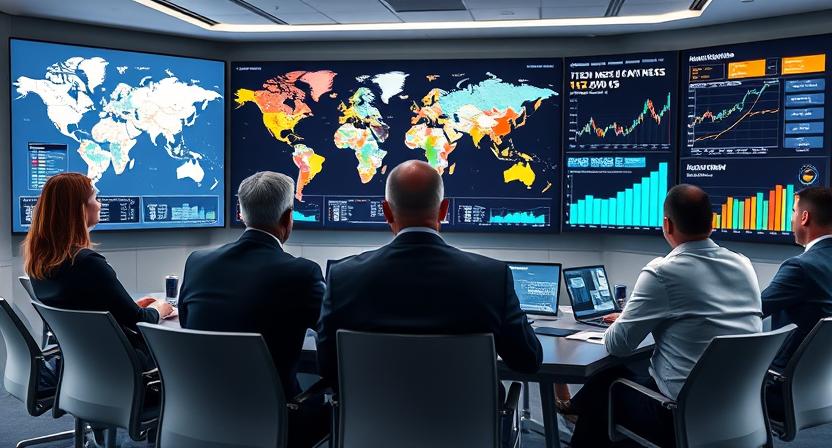
Leading companies adopt three-horizon planning for geopolitical risk: immediate response (0-6 months), adaptation (6-24 months), and transformation (2-5 years). This framework enables tactical flexibility while maintaining strategic direction.
Microsoft’s China strategy exemplifies three-horizon thinking. Immediately, the company segregated Chinese operations to comply with data localization. Medium-term, it developed China-specific products avoiding sensitive technologies. Long-term, it’s building alternative Asian markets to reduce China dependence. This staged approach manages risk while preserving options.
Horizon 1 focuses on crisis management: supply chain buffers, financial hedging, and scenario planning. Companies maintain 3-6 months inventory for critical components, establish credit facilities for crisis response, and conduct monthly scenario updates. This operational resilience costs 2-3% of revenue but prevents catastrophic disruption.
Horizon 2 involves structural adaptation: supplier diversification, market rebalancing, and capability building. BMW’s strategy of limiting any market to 30% of revenue and any supplier to 20% of category spending exemplifies this approach. The company sacrifices economies of scale for reduced concentration risk.
Horizon 3 requires strategic transformation: business model evolution, technology substitution, and market creation. Saudi Aramco’s $500 billion investment in renewable energy represents long-term hedge against oil demand destruction. This transformation acknowledges that geopolitical value of oil will decline regardless of near-term prices.
The Scenario Planning Revolution
Static forecasting has become obsolete in volatile geopolitical environments. Leading companies employ dynamic scenario planning, continuously updating assumptions and strategies. Shell, which pioneered scenario planning in the 1970s, now updates scenarios quarterly rather than annually.
Amazon’s scenario planning encompasses 50+ geopolitical variables affecting its operations. The company models everything from US-China conflict to Indian data localization to European tax changes. Each scenario triggers specific responses: inventory adjustments, capacity shifts, and investment changes. This systematic approach enabled rapid COVID-19 response that gained two years’ market share in two quarters.
Scenario planning must balance comprehensiveness with actionability. Boston Consulting Group recommends five scenarios maximum, each with clear triggers and responses. Probability assessments matter less than impact magnitude—low-probability, high-impact events deserve equal preparation as likely disruptions.
War gaming has evolved from military exercise to business necessity. Companies conduct simulated responses to geopolitical crises, testing decision-making processes and communication protocols. JPMorgan’s quarterly war games revealed gaps in sanctions compliance that would have cost billions in fines. These exercises cost millions but prevent billions in losses.
Building Organizational Geopolitical Capability
Most companies lack organizational infrastructure for geopolitical analysis. The average Fortune 500 board has zero directors with geopolitical expertise. Senior management typically lacks international experience beyond traditional markets. This capability gap creates blind spots that become costly mistakes.
Leading companies are establishing Chief Geopolitical Officer roles or equivalent functions. Standard Chartered’s CEO sits on a Geopolitical Council meeting monthly. Siemens created a Geopolitical Office reporting directly to the CEO. These structures ensure political risk receives C-suite attention rather than being buried in risk management.
Employee networks provide invaluable geopolitical intelligence. IBM’s 350,000 employees across 170 countries serve as early warning system for political changes. The company’s “Beehive” platform aggregates employee observations, providing ground truth that supplements formal intelligence. This crowdsourced approach identified supply chain risks months before they materialized.
External partnerships augment internal capabilities. The World Economic Forum’s Regional Business Councils provide peer intelligence sharing. Industry associations coordinate responses to common threats. These collective approaches multiply individual companies’ geopolitical capacity.

The Competitive Advantage of Political Fluency
First-Mover Advantages in Chaos
Geopolitical disruption creates opportunities for prepared companies. When sanctions hit Russia, McDonald’s exited while losing $1.4 billion. Local competitor Vkusno i Tochka acquired 850 restaurants at distressed prices, gaining instant national scale. This demonstrates how one company’s crisis becomes another’s opportunity.
Turkish companies have leveraged their country’s strategic neutrality to become intermediaries in sanctions trade. Turkish exports to Russia increased 100% post-sanctions, with many products originating elsewhere but transshipped through Turkey. While legally complex and reputationally risky, this positioning generates billions in additional revenue.
Indian refiners have captured enormous value from Russian oil discounts. By purchasing Russian crude at $35/barrel discounts and refining for global markets, companies like Reliance and Nayara Energy have generated windfall profits. India’s oil imports from Russia increased from 1% to 40% in 18 months, saving $10 billion while maintaining Western relationships.
The Trust Premium
In uncertain times, reliability commands premium valuations. Companies demonstrating supply chain resilience, stakeholder protection, and crisis management capability trade at 20-30% higher multiples than peers. This “trust premium” rewards geopolitical competence.
Johnson & Johnson’s handling of multiple crises—from talc lawsuits to COVID-19 vaccine complications—demonstrates trust preservation. Despite challenges, the company maintains AAA credit rating and trades at premium valuations. Its systematic crisis management, transparent communication, and stakeholder focus preserve long-term value despite short-term turbulence.
Swiss companies benefit from Switzerland’s political neutrality and stability. Nestlé, Novartis, and Roche command valuation premiums partially due to Swiss governance and geopolitical positioning. This “Switzerland premium” is worth approximately 15% in market capitalization—hundreds of billions in aggregate value.
Building Geopolitical Moats
Some companies create competitive advantages through geopolitical positioning that competitors cannot replicate. These “geopolitical moats” provide sustainable differentiation beyond traditional business strategy.
SpaceX has leveraged US government contracts and export restrictions to dominate commercial launch markets. By serving US defense needs, SpaceX gained technology and funding that enabled commercial leadership. Competitors cannot access US military contracts or technology, creating insurmountable advantages.
Saudi Aramco’s integration with Saudi foreign policy creates unique opportunities. The company’s investments in refineries across Asia secure long-term oil demand while advancing Saudi diplomatic objectives. This government-corporate alignment enables strategies purely commercial entities cannot execute.
CATL, the Chinese battery giant, has become indispensable to global EV transition despite geopolitical tensions. By controlling 37% of global battery production and licensing technology rather than exporting products, CATL maintains access to Western markets while satisfying Chinese government priorities.
Future-Proofing: The Next Decade of Geopolitical Business Risk
The Technology Cold War Intensifies
The US-China technology competition will force every tech company to choose sides or maintain costly dual operations. Export controls will expand beyond semiconductors to quantum computing, artificial intelligence, and biotechnology. Companies must prepare for complete technological decoupling.
The bifurcation extends beyond hardware to digital ecosystems. China’s Digital Silk Road promotes Chinese standards for 5G, AI, and smart cities across 100+ countries. The US CLEAN Network initiative pressures allies to exclude Chinese technology. This standards war determines future technology architecture.
Intellectual property becomes national security issue. The Committee on Foreign Investment in the United States (CFIUS) now reviews any transaction involving “emerging technologies.” China’s National Intelligence Law requires companies to share data with government. These frameworks make technology transfer increasingly difficult.
Companies should assume zero technology sharing between US and Chinese ecosystems by 2030. This requires fundamental strategic choices: focus on one ecosystem, maintain parallel development, or seek neutral ground in third markets. Each path involves significant trade-offs.
Climate Geopolitics Reshapes Business
Climate change will drive resource conflicts, migration crises, and trade wars that dwarf current disruptions. Water scarcity affects 2 billion people by 2030, creating operational challenges for water-intensive industries. Agricultural disruption from changing weather patterns will restructure global food systems.
Carbon border adjustments become trade weapons. The EU’s Carbon Border Adjustment Mechanism, charging tariffs based on embedded carbon, will generate €14 billion annually by 2030. This precedent encourages carbon protectionism that advantages green producers while punishing carbon-intensive imports.
The energy transition creates new dependencies potentially worse than oil. China controls 80% of solar panel production, 70% of battery manufacturing, and 90% of rare earth processing. The West’s green transition depends on Chinese supply chains, creating vulnerability comparable to Europe’s Russian gas dependence.
Companies must integrate climate considerations into geopolitical planning. Physical climate risks (facilities, supply chains) intersect with transition risks (regulations, technologies) and geopolitical risks (resource conflicts, protectionism). This three-dimensional challenge requires sophisticated modeling and adaptive capacity.

The worsening of the situation in France
What is the origin of the discontent? The wallet of the French. In a recent study commissioned by the renowned…


Who is harnessing france’s anger?
Parties, foreign networks, organised rioters, the State: everyone is seizing the movement, no one is answering it. Some kinds of anger…


France between chaos and flames
1. Introduction: The Dantesque Scenario as a Diagnostic Moment On 17–18 October 2026, France experienced what foreign observers immediately recognised as…


The student factor and the massive social protests in the
To understand what is happening, it is enough to make a simple political reasoning. 2027 represents a crucial electoral appointment for…


The decisive moment in the war of Ukraine is approaching
We have become accustomed to analysing the war in Ukraine through the prism of ground battles, calculating gains in square…

EU budget dispute sharpens
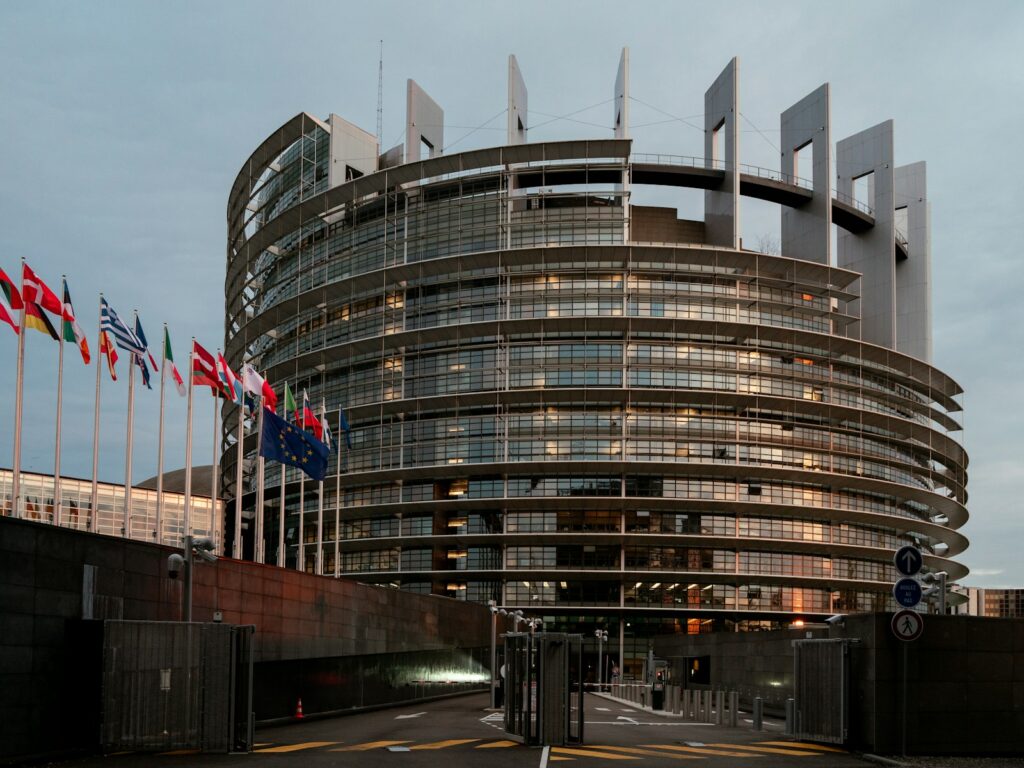
Brussels is experiencing its most uncertain hours since the creation of the European project. The negotiations to define the 2028-2034…


Student protests, Marine Le Pen and the decline of the
The student mobilization in France, which began on September 17 at the Saint-Exupéry de Créteil high school, located on the…


Food Crisis in 2027? From Diesel to the Dinner Table
A food crisis can begin far from the fields: at an attacked refinery, with a delayed fertilizer shipment, or along…


The UK is at risk of running out of gas
Clearly, the United Kingdom is going through a systemic crisis that is becoming deep and, according to the available evidence,…

The Rise of Economic Blocs
The global economy is fragmenting into competitive blocs with distinct rules, standards, and currencies. The US-led democratic bloc emphasizes rule of law and market economics. The China-centered authoritarian bloc prioritizes state control and technological sovereignty. A non-aligned bloc seeks advantage through strategic neutrality.
This fragmentation multiplies complexity for global companies. Different accounting standards, data regulations, and ESG requirements across blocs create compliance nightmares. Currency fragmentation as dollar alternatives proliferate complicates treasury management. Technology standards divergence requires multiple product versions.
Regional integration accelerates within blocs. The African Continental Free Trade Area, RCEP in Asia, and renewed US-EU cooperation create mega-markets with internal coherence but external barriers. Companies must choose which blocs to prioritize, as serving all becomes increasingly difficult.
Supply chains will reorganize around these blocs. The era of single global supply chains ends, replaced by parallel regional networks. This reduplication increases costs by 30-40% but becomes necessary for market access. Companies that efficiently manage multi-bloc operations will gain competitive advantage.
Conclusion: From Risk Management to Strategic Advantage
Geopolitics has permanently altered business strategy. The comfortable separation between politics and commerce that defined the post-Cold War era has ended. Today’s CEOs must be part diplomat, part intelligence analyst, part risk manager. Companies that master this new reality will thrive; those that don’t will become casualties of forces beyond their control.
The transformation requires fundamental organizational change. Boards need directors with geopolitical expertise. Management teams need international experience beyond traditional markets. Organizations need sensing mechanisms to detect political changes before they materialize. Investment in these capabilities is no longer optional but essential for survival.
Success demands abandoning old mental models. The assumption that economic interdependence prevents conflict proved false when Russia invaded Ukraine despite European energy dependence. The belief that business remains neutral in great power competition ended when companies faced “choose-a-side” ultimatums. The expectation that globalization inevitably advances collapsed as regionalization accelerated.
Yet within challenge lies opportunity. Geopolitical disruption creates competitive advantage for prepared companies. While competitors scramble to respond, those with robust scenarios and flexible strategies capture market share. Political risk management becomes source of alpha rather than cost center.
The winners will be companies that embrace geopolitical reality rather than lamenting lost stability. They will build resilience through diversification, create options through strategic flexibility, and develop capabilities for navigating political complexity. Most importantly, they will recognize that geopolitical fluency has become core competency for 21st-century business.
Looking ahead, geopolitical volatility will intensify rather than moderate. Climate change, technological disruption, and demographic transitions will create cascading political crises. Companies must prepare for a world where political risk is permanent feature rather than temporary disruption. This requires not just tactical adjustment but strategic transformation.
The stakes couldn’t be higher. In an era where geopolitics determines market access, supply chain viability, and investment returns, political risk management becomes existential necessity. Companies that develop sophisticated geopolitical capabilities will shape the emerging world order. Those that don’t will become its victims.
The message for business leaders is clear: geopolitics is now your business. The question isn’t whether political risk will affect your company but when and how severely. The time for preparation is now, before the next crisis makes today’s disruptions seem quaint by comparison. In the great game of geopolitical business strategy, there are no neutral players—only winners and losers.