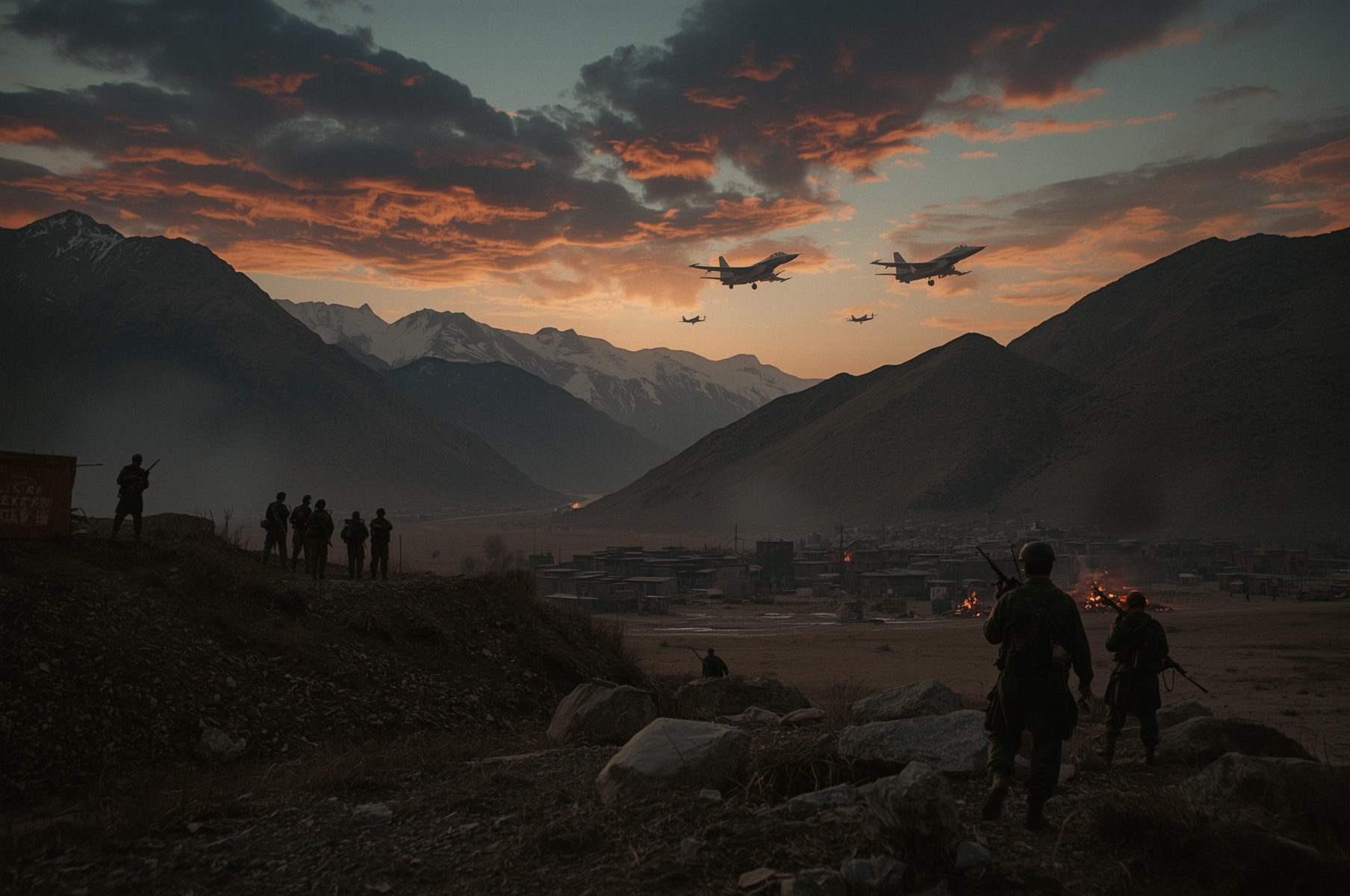
Pakistan and Afghanistan are immersed in a series of historical and geopolitical contradictions that come from the past – even the remote one – and that, by a natural dynamic, was recently expressed in a military clash.
Some time ago, the Taliban in Kabul proposed to the government in Islamabad a plan to contribute to Pakistan’s security, but in exchange they asked for a counterpart of billions of dollars to cover the cost of that security framework; Islamabad understood that Kabul was extorting money from him and rejected such a proposal that if it had materialized, it would probably not have reached the situation of this round of military clash that cost the lives of military personnel from both countries and, according to publicly available information, the Taliban military infrastructure of Afghanistan would have suffered the most damage due to the bombings of the Pakistani air force as Pakistan sought to establish a new balance with the the Taliban.
When we talk about terrorist formations and their operations in West, Central and South Asia, we must always keep in mind the reality that the security apparatuses of many of the states in the three regions created, infiltrated, sustain or collaborate with organizations classified as terrorist either to harass their enemies, to offer such resources to Western powers or to reduce the damage that these organizations could do against the strategic security of those same regional states.
In itself, there is a very thin line between the tops and middle levels of terrorist organizations and the intelligence structures of a significant number of these states.
No state wants to be reduced by state-sponsored terrorism. No intelligence apparatus wants to see its power lost in the face of the advance of its counterpart in a hostile or competing country. The Iranians reported that they suffered attacks, inside their territory, by the ISIS Khorosan camp that would be run by Pakistani agencies.
The Indians, for their part, stated that Islamabad propagates the terrorism of these groups against the interests of India. These issues led the Afghan Taliban and the Indian government to increase their cooperation to seal a strategic partnership that undermines Pakistan’s interests and enables India in its projection in Central Asia.
In the last Indo-Pakistani limited war confrontation, New Delhi was affected because it could not match the accurate blows coming from the Pakistani armed forces and, therefore, it also raises this association with the Taliban.
But also in this turbulent scenario, the Trump administration is participating to reduce the importance of the rise of Modi’s India, to conclude a strategic agreement with macro-regional effects with Pakistan to the detriment of India and to put the brakes on China’s influence in, for example, Afghanistan and India.
Who is harnessing france’s anger?
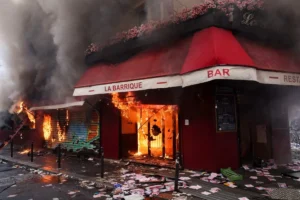
Parties, foreign networks, organised rioters, the State: everyone is seizing the movement, no one is answering it. Some kinds of anger…

France between chaos and flames
1. Introduction: The Dantesque Scenario as a Diagnostic Moment On 17–18 October 2026, France experienced what foreign observers immediately recognised as…

The student factor and the massive social protests in the
To understand what is happening, it is enough to make a simple political reasoning. 2027 represents a crucial electoral appointment for…

The decisive moment in the war of Ukraine is approaching
We have become accustomed to analysing the war in Ukraine through the prism of ground battles, calculating gains in square…

EU budget dispute sharpens
Brussels is experiencing its most uncertain hours since the creation of the European project. The negotiations to define the 2028-2034…

Student protests, Marine Le Pen and the decline of the
The student mobilization in France, which began on September 17 at the Saint-Exupéry de Créteil high school, located on the…

Food Crisis in 2027? From Diesel to the Dinner Table
A food crisis can begin far from the fields: at an attacked refinery, with a delayed fertilizer shipment, or along…

The UK is at risk of running out of gas
Clearly, the United Kingdom is going through a systemic crisis that is becoming deep and, according to the available evidence,…

NATO fireworks
As in previous years, for ten days, starting on October 13, this time with Italy as the host country, NATO…



As part of this novel but difficult to succeed plan, Washington is demanding that the Taliban return control of Bagram Air Base to the Americans in exchange for some benefits. This demand was rejected by the Taliban, who want to have control of all of Afghanistan and join the global multipolar project that harms US plans.
In the midst of all these geopolitical machinations and once mutual damage was done on the battlefield, the Afghan Taliban and Pakistani partners of China and, now, Trump, decided to freeze the cycle of war in large part due to the precise efforts of Arabs, Turks, Russians, Chinese and Iranians, who do not believe that the phases of regional terrorism and full-scale confrontation between the states of the region regional developments must prevail, dominate.
All these mediators advocate regional stability and a diplomatic and power resolution mechanism to prevent chaos and wars from spreading across West, Central and South Asia. Because of this, a temporary truce was established in Doha and the intention of the protagonists of the war to move forward in a format of dialogue for stability and lasting peace both among themselves and in the region.
Initially, these ongoing negotiations slowed the escalation of the conflict and, secondly, reduced the disruptive potential of external powers that do not want regional stability and peace.
For the status quo to be stable and relatively peaceful, the multipolar powers and their regional allies must continue to work on real alternatives that will make Asia truly a multipolar destination, destroying the distorting and destructive projects of globalist hegemons or those related to them.