At the beginning of August, the US government’s decision to impose 50% tariffs on Brazilian products came into effect. This decision followed a lawsuit filed by the Brazilian Attorney General’s Office (PGR) against former President Jair Messias Bolsonaro in the Brazilian courts for an alleged coup attempt.
The question is inevitable: were the tariffs adopted for purely economic reasons or for political reasons, such as putting pressure on the Brazilian justice system in favor of former President Jair Bolsonaro?
Politics or economics?
The trade tariffs adopted by Trump have always been accompanied by an unfriendly diplomatic tone and tainted with a hostile political undertone. China, Mexico, and even European allies have been his targets—the latter subjected to pressure to increase its share of NATO military spending. In the Brazilian case, the issue becomes more complex because Bolsonaro, despite being out of office, remains a relevant player in the domestic political landscape and a convenient geopolitical ally. Attacking the Brazilian economy could be a way to put him back on the political stage.
This may interest you
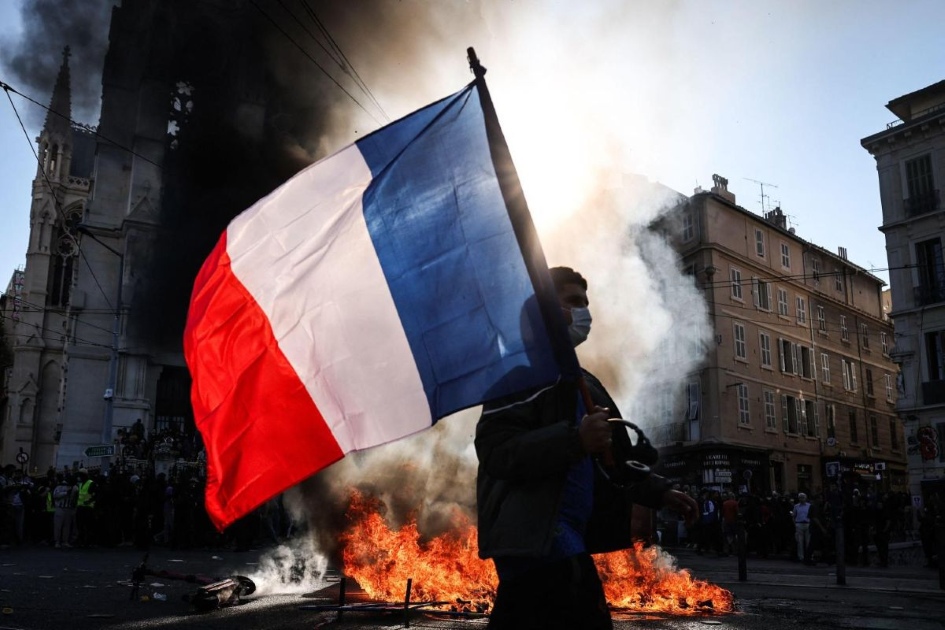
Who is harnessing france’s anger?
Parties, foreign networks, organised rioters, the State: everyone is seizing the movement, no one is answering it. Some kinds of anger…


France between chaos and flames
1. Introduction: The Dantesque Scenario as a Diagnostic Moment On 17–18 October 2026, France experienced what foreign observers immediately recognised as…


The student factor and the massive social protests in the
To understand what is happening, it is enough to make a simple political reasoning. 2027 represents a crucial electoral appointment for…


The decisive moment in the war of Ukraine is approaching
We have become accustomed to analysing the war in Ukraine through the prism of ground battles, calculating gains in square…

EU budget dispute sharpens
Brussels is experiencing its most uncertain hours since the creation of the European project. The negotiations to define the 2028-2034…


Student protests, Marine Le Pen and the decline of the
The student mobilization in France, which began on September 17 at the Saint-Exupéry de Créteil high school, located on the…

But it’s also important to remember that protectionism is part of Trump’s political DNA. He presents himself as the defender of American industry, and such measures strengthen his image among his electoral base. In other words, it may be less about Bolsonaro and more about Trump’s electoral popularity.
How long can this last?
Resolving this crisis quickly is possible, but unlikely. Brazil can rely on diplomacy, seek sectoral agreements, or even take the issue to the WTO, which has little chance of producing positive results, since since 2017 the US has vetoed the appointment of new judges to the appellate body, enjoying a disproportionate influence within the institution. However, everything indicates that the impasse could drag on. If Trump sees electoral advantage in maintaining the pressure, the crisis could last until 2026, coinciding with the Brazilian presidential elections. In this scenario, the tariff becomes a bargaining chip and a political instrument.
Does Brazil have alternatives?
Despite the importance of the US, Brazil’s hands are not tied. China is already its main trading partner, especially in soybean, mineral, and meat exports. Mercosur remains a negotiating space, although the agreement with the European Union still faces obstacles.
Furthermore, the BRICS have increasingly strengthened, with the participation of new, relevant players on the international stage, such as the United Arab Emirates (UAE), Egypt, and Saudi Arabia, which have established themselves as important markets for food and renewable energy. Brazil’s challenge is not only external: it also involves improving infrastructure, reducing bureaucracy, and investing in economic diplomacy.
Only then will it be possible to transform these alternatives into concrete results. Whether this will be a passing storm or a prolonged crisis until 2026, it is still too early to say. But one thing is already clear: Brazil needs to learn to play more autonomously on the global stage.