The recent meetings between Chinese President Xi Jinping as host to President Putin and several other Asian and Middle Eastern leaders, and President Trump’s meeting in Washington with European Union leaders regarding the end of the war in Ukraine, undoubtedly reveal a new geopolitical reality, a new multipolar world order, as Professor Alexander Dugin has argued since the last century, and also with practical and direct diplomacy.
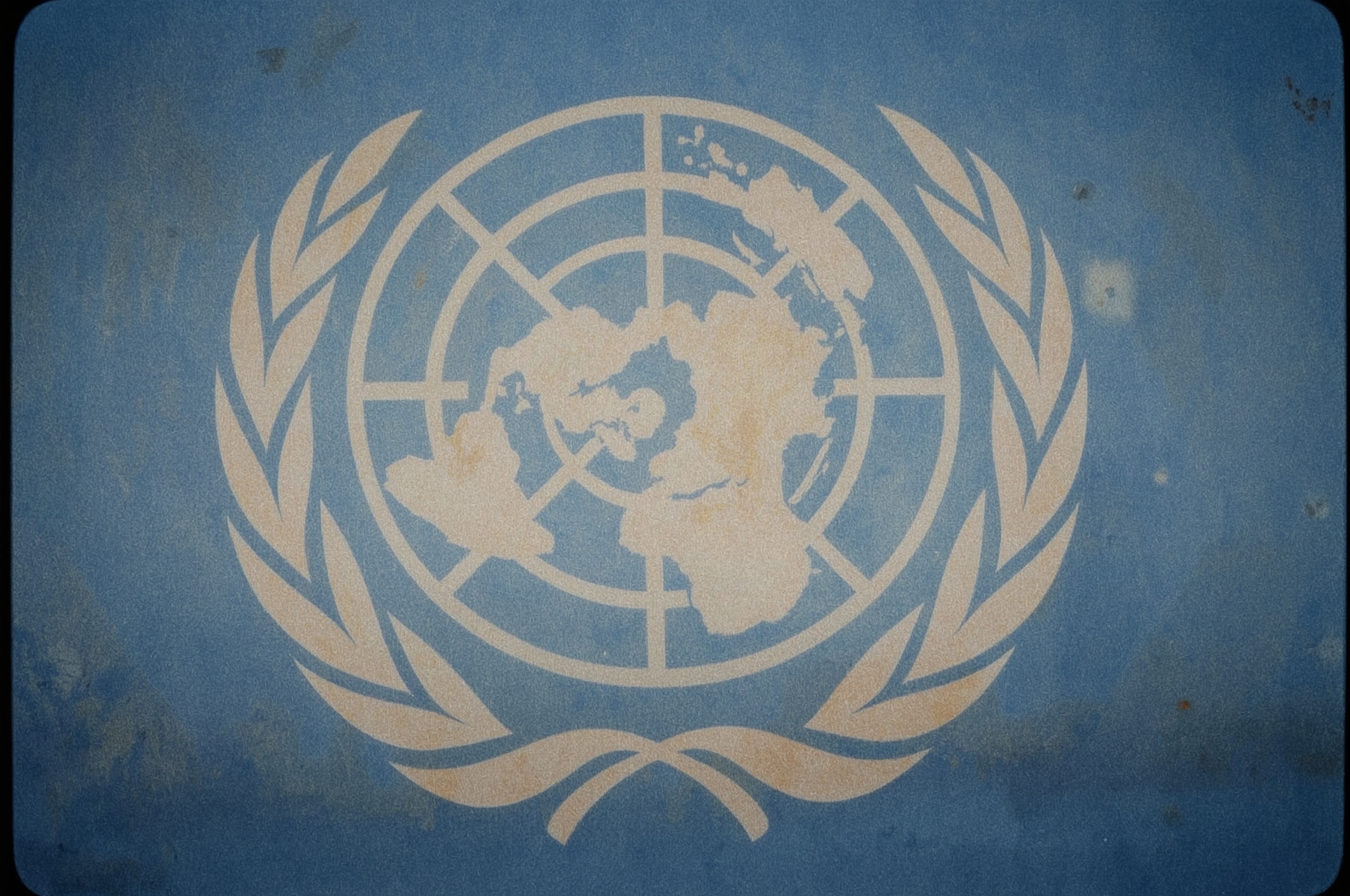
Such a configuration of the world map leads us to consider the need to maintain the old structures of the old unipolar or bipolar international order, to reform them, or simply to build new ones by completely abandoning them. The comprehensive system of the United Nations is the most important global political form that emerged after the Second World War, with the purpose of maintaining peace and contributing to the well-being of the planet, upholding the doctrine of human rights as its moral foundation.
Obviously, aside from the aforementioned change in the international landscape, no one can doubt the ineffectiveness and ineptitude of such an organization in achieving its ends. Here it would be good to consider what several perceptive European and North American intellectuals have pointed out in the past.
On the one hand, Max Weber and Robert Michels warned us about how modern rationality would necessarily generate a vast bureaucracy if the institution wanted to grow and propagate its aims and beliefs.
This may interest you
Who is harnessing france’s anger?
Parties, foreign networks, organised rioters, the State: everyone is seizing the movement, no one is answering it. Some kinds of anger…

France between chaos and flames
1. Introduction: The Dantesque Scenario as a Diagnostic Moment On 17–18 October 2026, France experienced what foreign observers immediately recognised as…

The student factor and the massive social protests in the
To understand what is happening, it is enough to make a simple political reasoning. 2027 represents a crucial electoral appointment for…

The decisive moment in the war of Ukraine is approaching
We have become accustomed to analysing the war in Ukraine through the prism of ground battles, calculating gains in square…

EU budget dispute sharpens
Brussels is experiencing its most uncertain hours since the creation of the European project. The negotiations to define the 2028-2034…

Student protests, Marine Le Pen and the decline of the
The student mobilization in France, which began on September 17 at the Saint-Exupéry de Créteil high school, located on the…

Thus, little by little, all those involved would be more occupied with fulfilling their assigned task within the structure than achieving the end for which it was all created. This is how a global bureaucratic monster would ultimately be created. On the other hand, James Burnham, in his “The Managerial Revolution,” written in the 1940s, predicted what we are experiencing today: a world managed rather than governed by a managerial elite that would become the new political class, as a result of the development of capitalism.
In this sense, the United Nations and all its many satellite organizations have only served to corroborate and amply confirm the prophecies of Weber, Michels, and Burnham. However, all this does not exhaust the central problem with this institution. It is not only the change in the global landscape or the conditions of modernity and capitalism that are liquidating it, but also the ideology that underlies it.
The United Nations has been moving toward a form of global or world state, just as in the case of the global economic order—as stipulated by the capitalist system—rejecting a truth they refuse to acknowledge: “the world is not one universe but a pluriverse” (Schmitt dixit), which today is reflected in the new reality of multipolarity described at the beginning of the text.
Finally then, and for all that has been said, it is not possible to think about a reform or update of the United Nations system. It is time to directly question its existence as well as all the decisions that have been imposed on member States, such as the famous Sustainable Development Goals (SDGs), one more way of spreading its globalist and unipolar ideology.