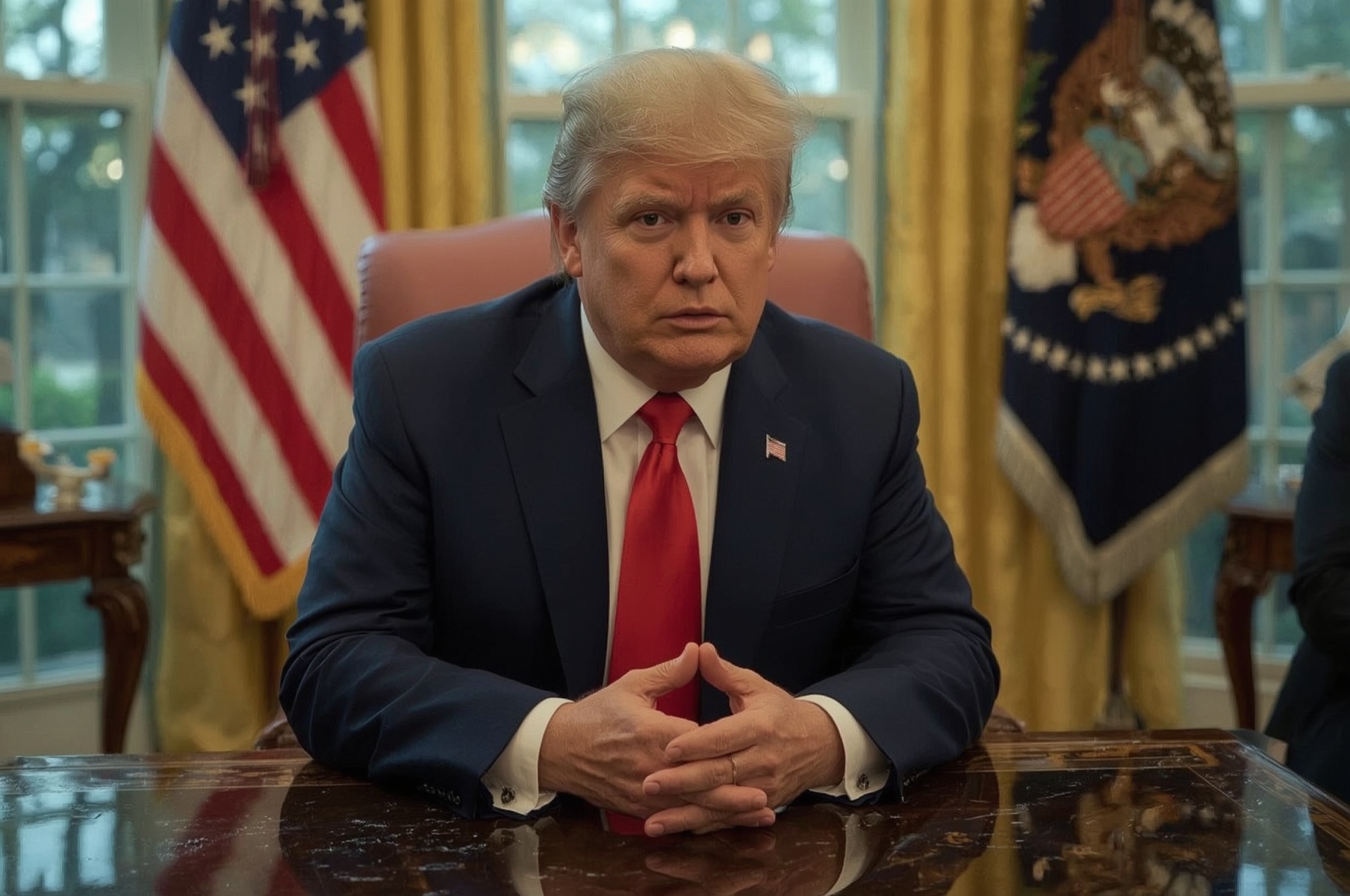
Speaking to reporters in the Oval Office on Monday, August 25, the US president said the title, which the leaders “jokingly” bestowed on him, was “an honor.” He added: “I like Europe. And I like those people. They’re good people. They’re great leaders,” the Independent reports. His comments come a week after seven European leaders, known as the “coalition of the willing,” which includes Keir Starmer, joined Zelensky for high-profile talks with Trump in Washington, attempting to persuade him to maintain American support for Ukraine.
Italian Prime Minister Giorgia Meloni, in fact, has always maintained a certain distance from the group of other European presidents, both because of her closeness and friendship with The Donald, and because she harbors serious doubts about rearmament and is totally opposed to sending Italian soldiers.
It sometimes happens in Italy that analysts with an identitarian and sovereignist orientation say that, in particular, France, Germany, and the United Kingdom are “willing” to continue the war, rather than facilitating a peace agenda.
In this context, the profound economic and political weakness of all three major European powers, unprecedented since the postwar period, comes into play. Macron risks seeing yet another French government fall due to the motion of no confidence in his prime minister, which has the numbers to pass. Furthermore, his popularity among the people is at rock bottom, blamed for the country’s severe economic crisis.
No one wants to continue a war they don’t feel is theirs, just as no one wants to die on the front for Macron or Zelensky. Although the Elysée Palace insists, also in an attempt to gain revenge on the battlefield, which would reinvigorate the country’s lost grandeur and popular support.
It’s worth noting here that journalist Maurizio Blondet, on his blog, reported the undeniable claim that the Ukrainian leader and the Frenchman even share a bank. In addition, of course, to some economic interests involving arms sales.
In terms of political stability, consensus, and, recently, even the economy, the United Kingdom isn’t doing so well. Not to mention Germany, in deep crisis, politically weak, and with the collapse of Volkswagen, which it hopes to transform into Europe’s largest defense company, with the opportunity to exploit the ongoing war in Ukraine.
Internal problems make the “willing” extremely fragile, and they haven’t even managed to keep up appearances at the White House, where they all appeared around Trump’s table like puppies waiting for food from their master. This embarrassment is hard for them to swallow, because everyone who made a fuss about it, sarcastically calling Trump “President of Europe,” realized they had demonstrated a genuine subservience to the Tycoon, who is aware of this and responds with further taunting.
Giorgia Meloni’s position is very different. She shares Trump’s conservative views, enjoys a stable government, and enjoys considerable popular support (polls show her party, Brothers of Italy, at 30%, with the coalition ahead of the highly contentious “broad-field” Democrats). Economically, too, Meloni is benefiting from her good relationship with European Commission President Ursula von der Leyen, who is currently in clear difficulty, not only because of the “Pfizer-gate” scandal but also because of her positions on the Green Deal, on rearmament, which runs counter to the pursuit of peace, and on the overall economic management of the Union, which was never intended from a political perspective, but exists as a vast bureaucratic entity, imposing gender absurdities and constant debt on member states.
This may interest you
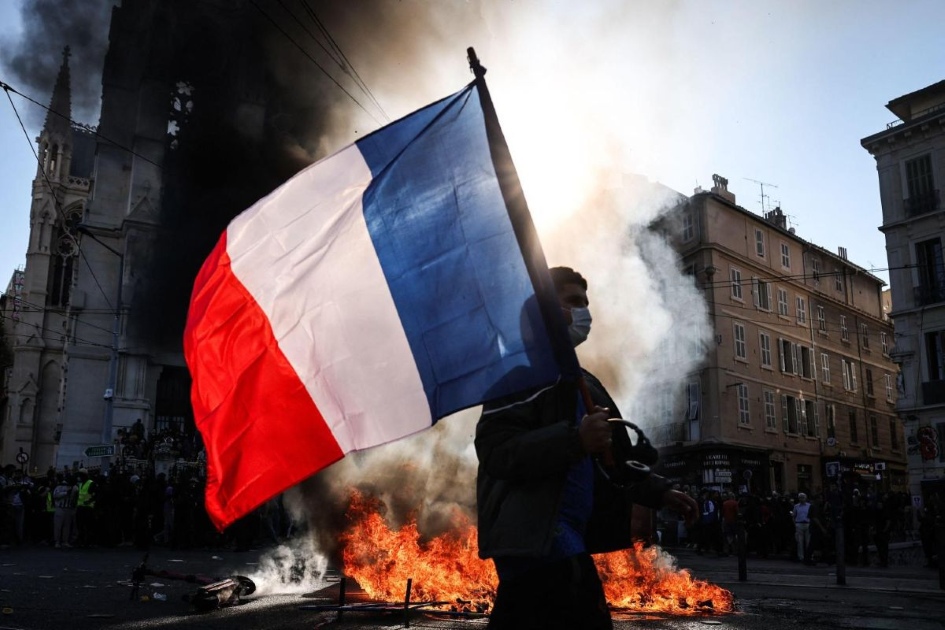
Who is harnessing france’s anger?
Parties, foreign networks, organised rioters, the State: everyone is seizing the movement, no one is answering it. Some kinds of anger…

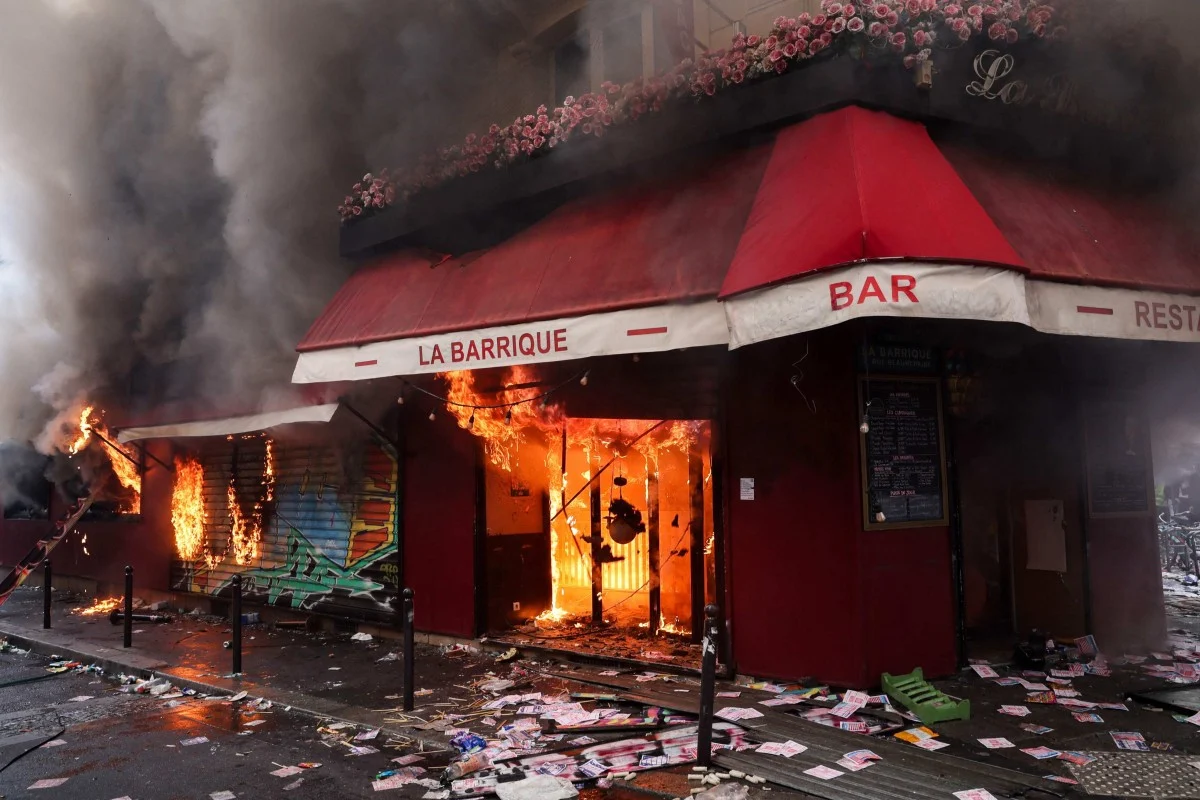
France between chaos and flames
1. Introduction: The Dantesque Scenario as a Diagnostic Moment On 17–18 October 2026, France experienced what foreign observers immediately recognised as…

The student factor and the massive social protests in the
To understand what is happening, it is enough to make a simple political reasoning. 2027 represents a crucial electoral appointment for…

The decisive moment in the war of Ukraine is approaching
We have become accustomed to analysing the war in Ukraine through the prism of ground battles, calculating gains in square…

EU budget dispute sharpens
Brussels is experiencing its most uncertain hours since the creation of the European project. The negotiations to define the 2028-2034…

Student protests, Marine Le Pen and the decline of the
The student mobilization in France, which began on September 17 at the Saint-Exupéry de Créteil high school, located on the…

Today, the old continent continues to defend Ukraine and calls for renewed US commitment, even at the cost of paying for the weapons delivered to Kiev.
The Internationale writes that “Europeans want to demonstrate to the Americans that they are seriously committed to doing their part to ensure Ukraine’s security after a possible peace agreement. In exchange, Europeans are asking Trump for two things: to commit to respecting a “solidarity clause” with Ukraine in the event of renewed Russian aggression and to reject any restrictions on the Ukrainian military demanded by Russia.”
This attitude, somewhat “Fantozzian” compared to Donald Trump’s wishes, also makes him the absolute leader, the monarch of weak EU leaders, from whom the “willing” seem to beg at least for crumbs from “King Donald.”
The flipside of this hope for American aid is that Europe would increase, rather than decrease, its dependence on the United States, which humiliates it in trade and seeks to dictate its digital policy. Everything is interconnected, as Donald Trump, who does nothing for free, knows well. It’s the trap of Europe’s weakness, which won’t disappear any time soon.